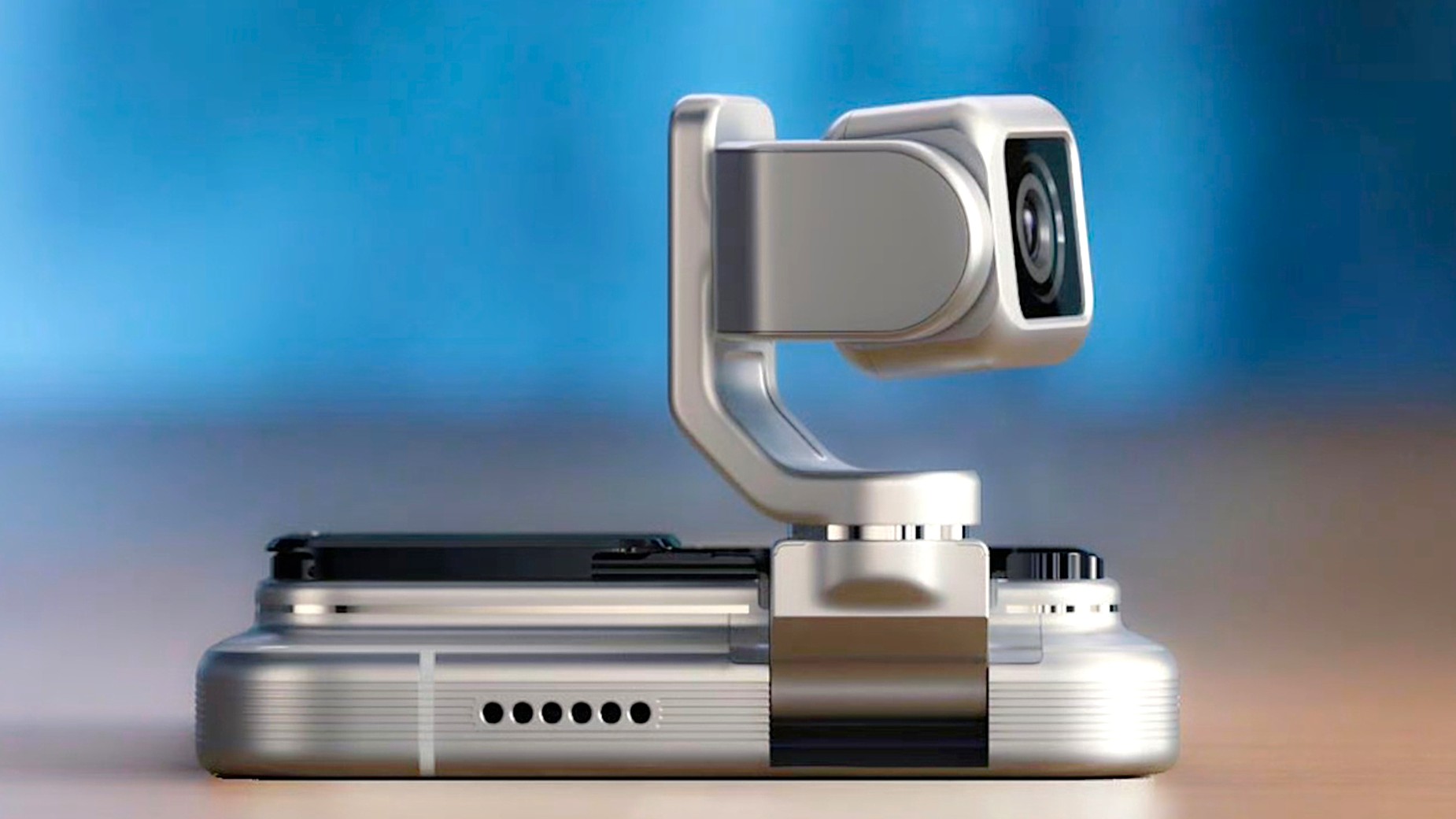
Honor has officially launched its ambitious Robot Phone in China, featuring a motorized three-axis stabilization system, an ARRI partnership, and a starting price of RMB 9,999 (approximately $1,480 USD). While early hands-on testing highlights exceptional gimbal tracking, the device will be produced only in limited quantities.
Built on more than 100 patents and packing a multitude of industry-first technologies into a single chassis, the device bridges the gap between conventional mobile flagships and standalone cinema gear. Although it officially launched in China on August 18, 2026, following months of teaser campaigns and an initial appearance at Mobile World Congress earlier in the year, prospective buyers outside mainland China face strict regional limitations and steep import premiums.
Engineering the Agile Gimbal and Camera Hardware
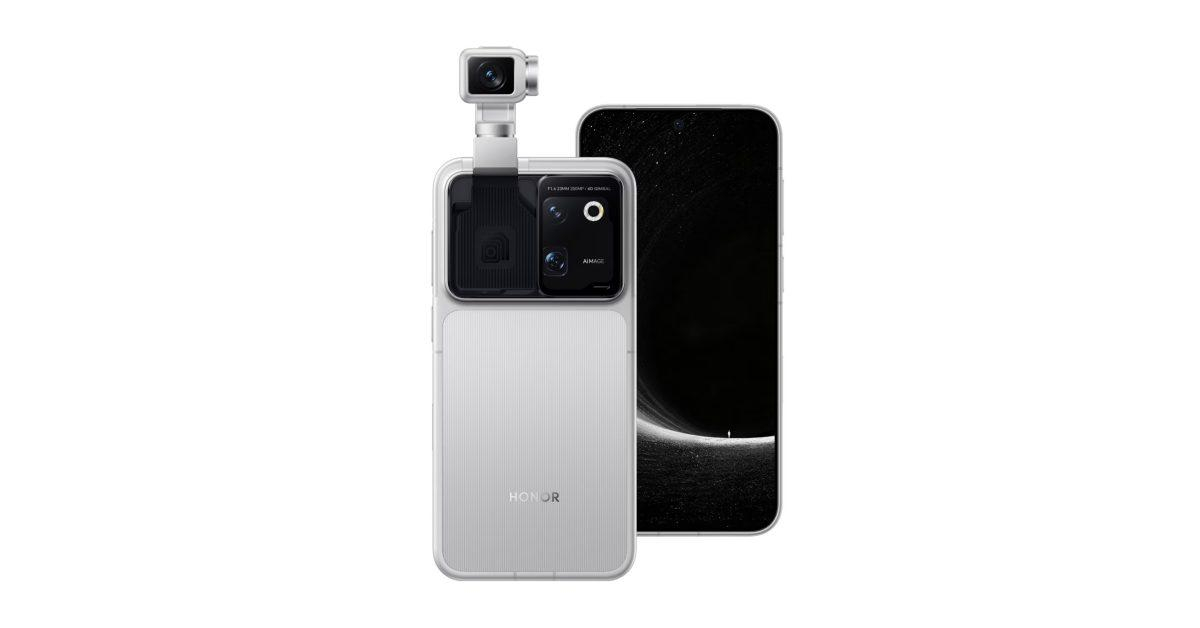
The defining centerpiece of the Robot Phone is its motorized stabilization assembly, which Honor describes as the world’s most compact gimbal. Weighing just 2.6 grams and measuring a mere 6 millimeters thin, the 4-DoF mechanical system is roughly 65 percent smaller than the comparable DJI Osmo Pocket series. Despite its diminutive footprint, the arm houses a 200MP main camera with an f/1.6 aperture on a large 1/1.28-inch sensor.
Engineering this system required substantial manufacturing precision. According to technical details published during hands-on testing, the device integrates more than 100 components across 60 separate manufacturing processes. A titanium gimbal motor drives control speeds of up to 360 degrees per second, while a dedicated Super Steel flip motor delivers a torque density of 120 N·m/L. The entire mechanism can extend and become ready for use in just 0.8 seconds.
The main gimbal sensor is paired with two auxiliary rear cameras fixed firmly to the phone chassis: a 2.7x periscope telephoto lens utilizing a 200MP 1/1.4-inch sensor and a 50MP ultrawide shooter equipped with macro capabilities.
Real-World Stabilization and Comparison Against the iPhone 17 Pro Max
Physical stabilization changes what a pocket-sized device can capture. Early field evaluations demonstrate that the mechanical arm delivers noticeably smoother footage during high-movement activities like running and walking compared to purely software-based stabilization systems.
When tested directly against the iPhone 17 Pro Max, the Robot Phone excelled particularly in subject tracking. The motorized gimbal physically rotates to keep a locked-on person centered in the frame without requiring the user to reposition the phone body. Yet the device involves distinct compromises in other imaging environments.
| Feature | Honor Robot Phone | Apple iPhone 17 Pro Max |
|---|---|---|
| Primary Stabilization | Physical 3-axis motorized gimbal | Software-based stabilization |
| Subject Tracking | Physical gimbal rotation follows subject | Software framing |
| Low-Light Performance | Higher visible noise in dark conditions | Superior low-light clarity |
| Vertical Video Resolution | ~2.8K cropped from landscape sensor | True 4K up to 120fps |
| Battery Capacity | 7,060 mAh | Smaller cell |
As outlined in the comparison data, the iPhone maintains an edge in low-light photography, where the Honor flagship introduces more visible noise. Furthermore, vertical video creators face a physical limitation: while the phone supports vertical shooting, its 200MP sensor remains horizontally oriented, forcing the device to crop into the landscape image for an approximate 2.8K vertical resolution rather than true 4K.
ARRI Partnership and Cinema-Grade Color Profiles
Beyond its mechanical movement, the device incorporates professional imaging pipelines through a partnership with cinema equipment manufacturer ARRI. The smartphone supports native Log-C3 video encoding, ARRI Wide Gamut 3 color space, and dedicated LUT color grading options designed to emulate footage captured on high-end professional cinema cameras.
Reviewers note that Honor is utilizing the Robot Phone as an open-world testing ground for these cinematic color profiles before implementing them across its broader Magic9 series. Powering these features is a Snapdragon 8 Elite Gen 5 chipset paired with a bright 6.3-inch LTPO OLED screen featuring an anti-reflective coating. Keeping the heavy hardware running is a large 7,060 mAh battery supporting 120W wired and 90W wireless charging.
The engineering complexity is not without trade-offs. The device weighs 248 grams, which is substantial for a 6.3-inch handset. Testers also observed that the glass protecting the gimbal mechanism can occasionally be shifted manually, causing the arm to lock its position as a safety precaution until reset via an on-screen warning.
Pricing, Limited Production, and International Import Costs
Honor has structured the device as a technology showcase rather than a mass-market commercial product. Official domestic pricing in China starts at RMB 9,999 (approximately $1,480 USD) for the 12GB/512GB configuration, with the top-tier 16GB/1TB model priced at RMB 12,999 (around $1,927 USD). With no official global launch scheduled, acquiring the hardware outside China requires turning to specialized cross-border importers.
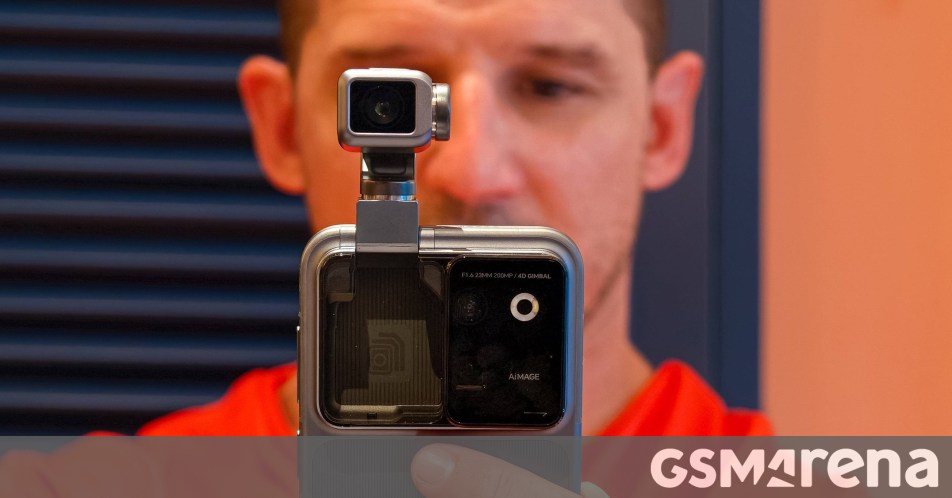
Retailers including AverageDad, Trinity Electronics, and Giztop have listed the smartphone for international delivery, though prices reflect significant markups. Entry-level import costs range from 1,740 euros to 1,790 euros (roughly US$ 1,999 to US$ 2,072), while the 16GB/1TB variants span from 2,203 euros to 2,385 euros (US$ 2,549 to US$ 2,763). This represents roughly a 30 to 36 percent increase over domestic Chinese pricing, though select importers bundle local taxes into the final retail fee for European buyers.
Related reading
PC Partner Forecasts Severe Budget GPU Shortages for Late 2026
PC Partner Group has warned that entry-level graphics cards will face severe shortages and skyrocketing average selling prices...

Pixel 11 Launches With Tensor G6 Chip And Limited AI Pro Promotion
Google has introduced the Pixel 11 lineup powered by the custom Tensor G6 processor, promising faster web browsing...

Block Shares Drop Despite 65 Percent Jump in Adjusted Earnings
Block shares dropped roughly six percent following its second-quarter earnings report on August 5, 2026, despite a 65...
Rivian Autonomy+ Beats GM Super Cruise on Highways But Lags Tesla FSD
Rivian Automotive’s Autonomy+ driver-assistance system outperforms General Motors’ Super Cruise on highways but trails Tesla’s FSD (Supervised) on...