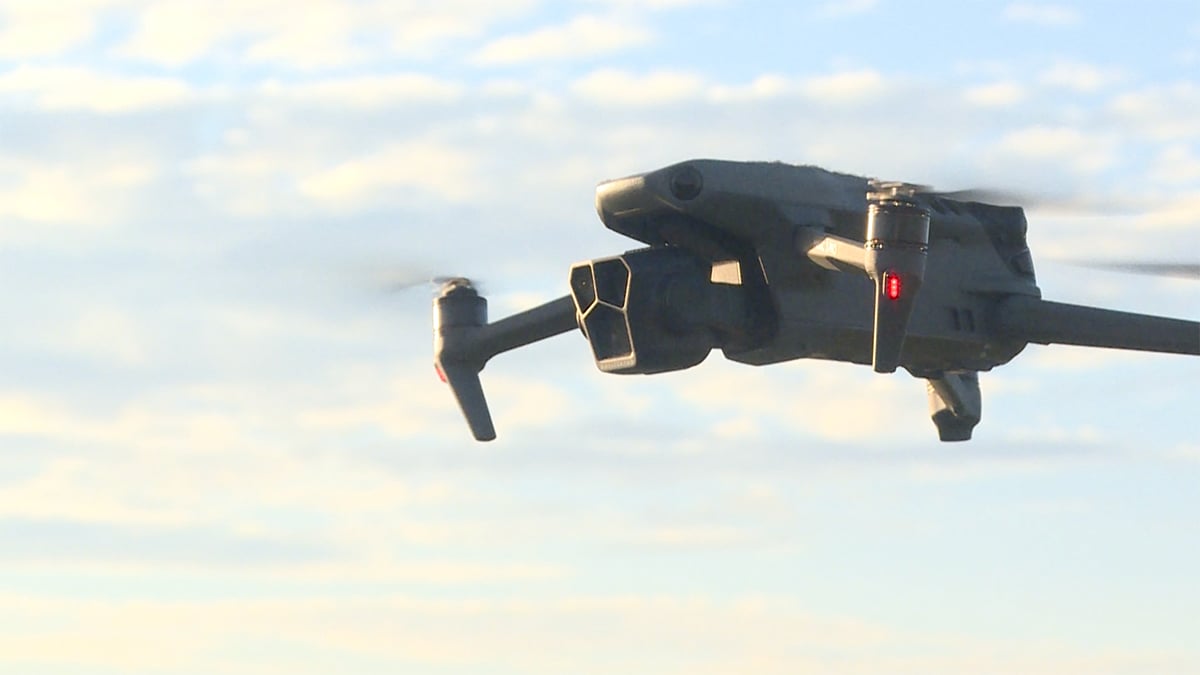

Federal regulators have rejected a Chinese drone maker’s attempt to bypass the United States foreign drone ban by importing a modular vlogging camera that converts into an unmanned aircraft system. The Federal Communications Commission revoked the device’s approval, calling the workaround illegal.
The regulatory clash centers on the Versa, a handheld, gimbal-stabilized vlogging camera developed by HoverAir, an imprint of China’s Zero Zero Robotics. The device debuted on Indiegogo alongside an optional Flight Kit designed to extend the HoverAir Versa’s capabilities and convert it into a flying camera. Initially, the company announced that the hardware had cleared U.S. regulatory hurdles.
That approval proved short-lived.
The Piecemeal Workaround and Regulatory Rejection
HoverAir attempted to exploit a structural loophole by separating the camera module from the flight accessories. Because the camera could operate independently as a handheld vlogging tool and the modular flight accessories contained no radio frequency transmitters, the company argued the setup bypassed the strict identification requirements normally mandated for unmanned aircraft systems.
“The Flight Kit is an accessory designed to extend the HoverAir Versa’s capabilities, but because it contains no RF transmitters, it does not require a separate FCC ID or individual listing in the FCC database.”
HoverAir representative, via PCMag
The argument did not hold up under regulatory scrutiny. The federal agency clarified that importing, marketing, or selling the product violates U.S. law, noting that the camera itself serves as the critical electronic brain of an unmanned aircraft system. Because the core hardware is tied to a prohibited category, the clearance was rescinded.
“The device in question is on the FCC’s Covered List: the Versa camera alone is a prohibited UAS critical component produced in a foreign country and, when the Flight Kit is included, the device falls under the ban on UAS produced in a foreign country. The certification for this device was granted erroneously and has been set aside by the FCC and removed from our public database.”
FCC representative, via PCMag
Beyond blocking the hardware, the federal agency stated it is considering further action against HoverAir for apparently willfully violating the established Covered List restrictions. Officials also issued guidance to all Telecommunications Certification Bodies to tighten due diligence and prevent similar approvals from slipping through in the future.
Cracking Down on Front Companies and Testing Labs
The regulatory pressure extends well beyond a single crowdfunding campaign. Federal regulators have turned their attention toward what industry observers term front companies allegedly established to help dominant Chinese manufacturers skirt restrictions. Major brands like Dà-Jiāng Innovations (DJI) face mounting scrutiny over hardware imports.

In a coordinated enforcement action, the federal agency fined eight firms $25,000 each after they failed to respond to official inquiries regarding whether they are marketing restricted radio equipment in the United States. Those penalized entities include Cogito Tech, Fixaxo Technology, Lyno Dynamics, Skyhigh Tech, Spatial Hover, SZ Knowact, WaveGo Tech, and Xtra Technology. The targeted companies were given a strict ten-calendar-day deadline ending Monday, July 20th, to reply before facing harsher penalties.
Investigators are also scrutinizing the testing laboratories responsible for processing equipment certifications. The agency moved to disqualify SGS Shenzhen as an accredited test lab because a portion of the organization is owned by a corporate group wholly owned by the China National Institute of Standardization, which federal trade officials classify as operating within a foreign adversary jurisdiction.
Broader Industry Impact on U.S. Markets
The sweeping restrictions stem from a broader federal push to secure national airspace and encourage domestic alternatives. In December, the Federal Communications Commission added all foreign drone manufacturers to its Covered List, preventing new equipment authorizations for companies deemed national security risks. This regulatory wall builds upon an interim procurement rule enacted by the Department of Defense, General Services Administration, and NASA under the American Security Drone Act.
While older, previously authorized equipment continues to operate legally under current rules—as FCC Chairman Brendan Carr emphasized regarding previously authorized drones that do not pose a risk—the chokehold on newly introduced hardware reshapes the market. Industry estimates indicate that DJI traditionally manufactured at least 70% of drones globally, leaving domestic sectors heavily reliant on its affordable and technologically advanced hardware.
Where Regulators and Manufacturers Clash
The clash highlights a persistent game of cat-and-mouse between regulators and hardware makers attempting to reach American creators. While platforms like Indiegogo recorded more than $350,000 in pledges for the Versa, U.S. backers face canceled pledges or undeliverable goods as the ban takes full effect.

Meanwhile, alternative distribution channels continue testing boundaries. Brands such as Xtra have aggressively marketed products comparing the Xtra Muse directly to mainstream devices, while taking deposits for unreleased gear widely seen as disguised DJI hardware. However, with digital filings vanishing from public databases and laboratories facing disqualification, the window for sneaking restricted consumer technology past federal inspectors is closing rapidly.
Keep reading

PNP Partners with DOJ and Meralco to Boost Electricity Theft Convictions
The Philippine National Police revealed that fewer than five percent of electricity theft cases result in convictions since...

Pinchas Idan Denies Role in Ben-Gurion Airport Shutdown as Netanyahu Petitions
Israel Airports Authority workers’ union chairman Pinchas Idan has publicly rejected allegations that he orchestrated a shutdown at...
US and Canada Trade Talks Collapse as Trump Imposes Tariffs on Goods
Trade talks between the United States and Canada collapsed following unsuccessful negotiations in Washington between Canadian minister for...

Bitcoin Surges Past $75,000 Amid Treasury Buybacks and Short Squeeze
The price of Bitcoin soared past $75,000 late on a Thursday, crossing the threshold for the first time...