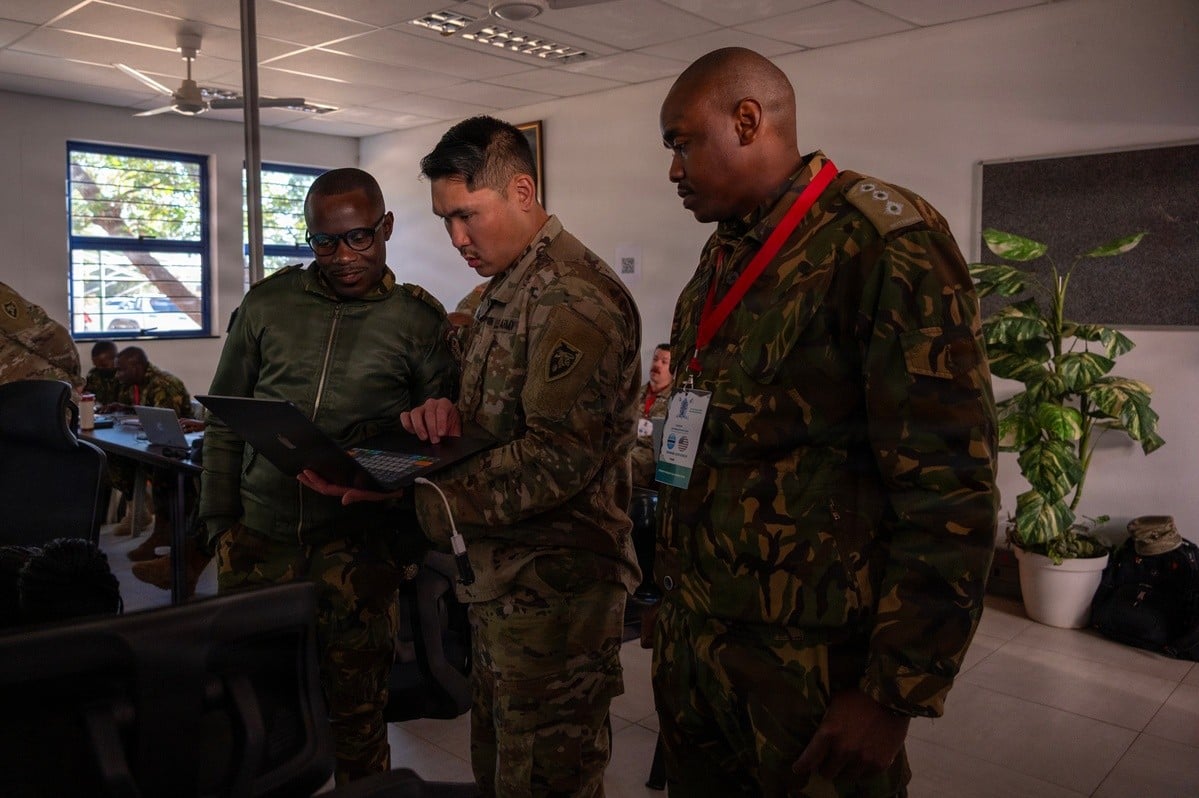
Exercise Southern Accord 2026 concluded on August 15 at Gaborone Technical College in Botswana, uniting military personnel from the United States and the Botswana Defence Force. The biennial training deepened bilateral cooperation by focusing on multi-domain planning, cyber defense integration, and space operations within the framework of their long-standing State Partnership Program.
While previous iterations of the exercise concentrated heavily on humanitarian assistance and disaster relief, this year marked a distinct shift toward complex, multi-domain integration. The gathering brought together U.S. and Botswana forces to tackle modern security threats through coordinated planning.
Expanding Interoperability at Gaborone Technical College
The biennial exercise ran from August 10 to August 15, 2026, culminating in a mid-August closing ceremony at Gaborone Technical College. The program united personnel from the Botswana Defence Force and various American military branches to enhance regional security and foster mutual readiness. Grounded in a partnership that began in 2008 under the United States State Partnership Program, the engagement provided a foundation for professional development, military exchanges, and joint training.
Van Vranken noted that while Southern Accord 2024 strengthened how the two nations train together, the 2026 exercise successfully strengthened how they plan together.
Multi-Domain Planning and the Introduction of Space Operations
A defining feature of the 2026 exercise was the incorporation of complex, multi-domain operations that integrated media personnel, Botswana government ministries, civil agencies, the United States Africa Command, the North Carolina National Guard, and, for the first time, the United States Space Force. Participants established distinct functional cells dedicated to cyber defense, intelligence, and space operations.
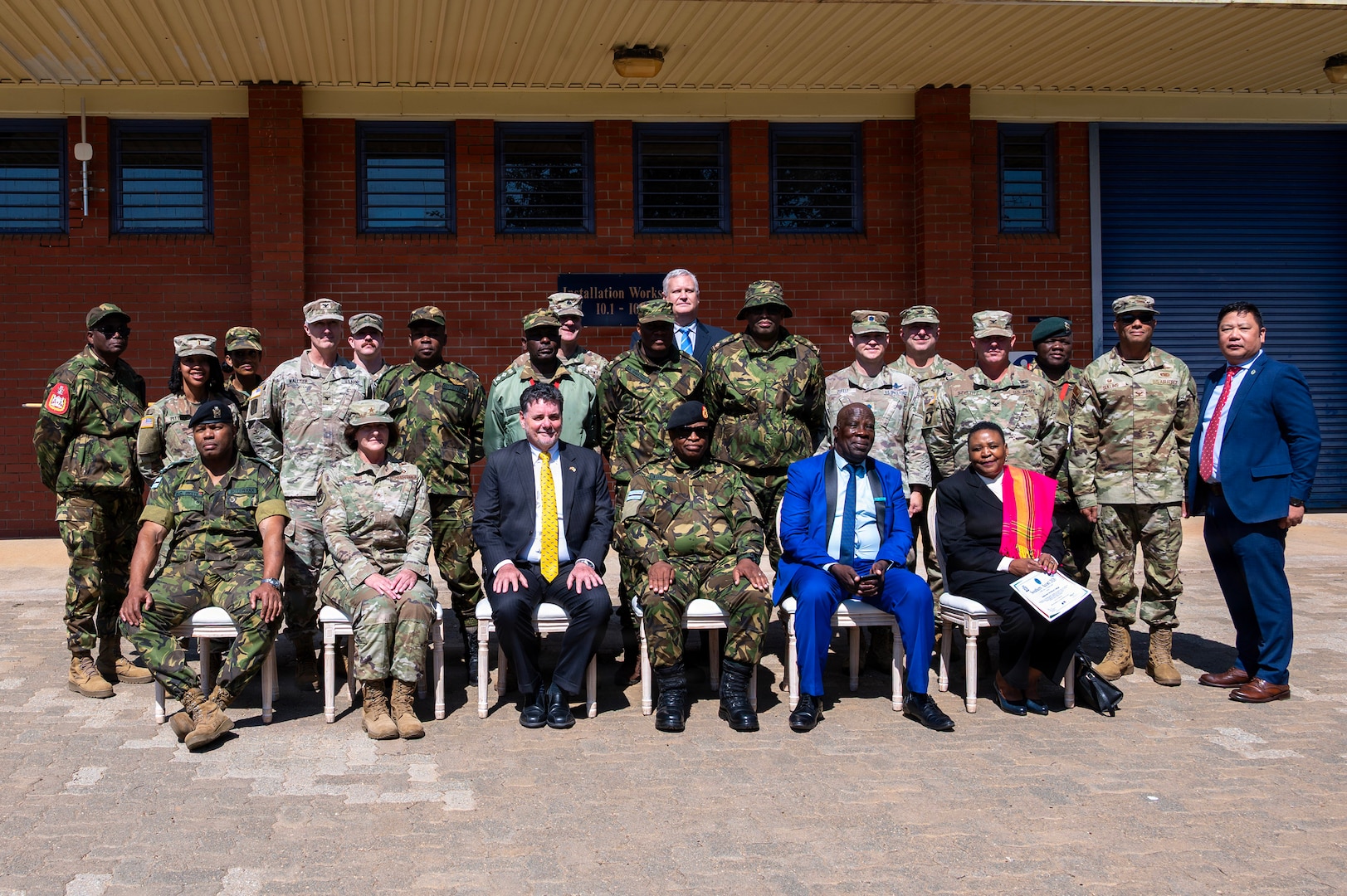
The rigor of this exercise challenged participants to learn new concepts in cyber defense and space operations. Their ability to work as a team to plan a complex, multi-domain operation like the one you saw demonstrated here today. We integrated plans for the media, Botswana government ministries, Botswana civil agencies and departments, United States Africa Command, United States Space Force and the North Carolina National Guard into one joint task force staff.
Members of the Botswana Defense Force also attended specialized courses on space-based intelligence, surveillance, and reconnaissance taught by instructors from the National Security Space Institute. This broader technical exposure underscores a deliberate effort to expand partner capabilities beyond traditional ground-based military tactics into modern informational and orbital domains.
Strengthening Cybersecurity Readiness and Defense Infrastructure
The cyber syndicate formed a core pillar of the exercise, designed to help Botswana cyber personnel protect military and national resources against emerging digital threats. Instruction relied on defensive cybersecurity practices currently utilized by the North Carolina National Guard, including penetration testing and vulnerability assessments that replicate adversary tactics.

The collaboration builds upon institutional frameworks established years prior. Since 2019, Botswana has maintained a national Computer Security Incident Response Team acting as a central point of contact for government departments and internet service providers handling digital security incidents.
Leadership Perspectives on Regional Security and Future Milestones
Speaking at the closing ceremony, leadership from both nations emphasized the broader humanitarian and diplomatic value of their ongoing cooperation. The partnership extends far beyond combat readiness, encompassing civilian engagement in science, technology, agriculture, and education.
The 2026 exercises directly succeeded prior collaborative efforts, including a 2025 hurricane-response symposium where Botswana participated alongside other State Partnership Program nations to examine lessons learned from Hurricane Helene. That spirit of shared operational learning culminated in the successful completion of the August drills.
Today marks the successful completion of an exercise that has demonstrated our collective commitment with national security, military professionalism, cooperation and partnership. Over the past days, we have witnessed not only the strengthening of operational capabilities, but also the upbuilding of trusting relationships founded on trust and shared purpose.
Building Toward the Next Biennial Exercise
With the conclusion of the August 2026 schedule, military planners are already setting their sights on the long-term trajectory of the partnership.
Related reading

Quntis Monitor Light Bar Glow Features RGB LEDs and Ultrawide Support
The Quntis Monitor Light Bar Glow introduces a 20.1-inch metallic gray lighting system featuring an 88-front LED task...

Police Hunt Roommate After Waitress Jovia Namuwulya Murdered in Bukoto
Police in Kampala are investigating the murder of 22-year-old waitress and TikTok content creator Jovia Namuwulya, whose body...

China Recalls Millions of Teslas Over Flush Door Handles
Minimalist electronic door latches and flush exterior handles have defined the modern electric vehicle aesthetic since Tesla popularized...

Southern District Prosecutors File 107 Border Cases Amid Drug and Smuggling Busts
Federal prosecutors in the Southern District of California filed 107 border-related cases this week, highlighting multiple drug seizures...