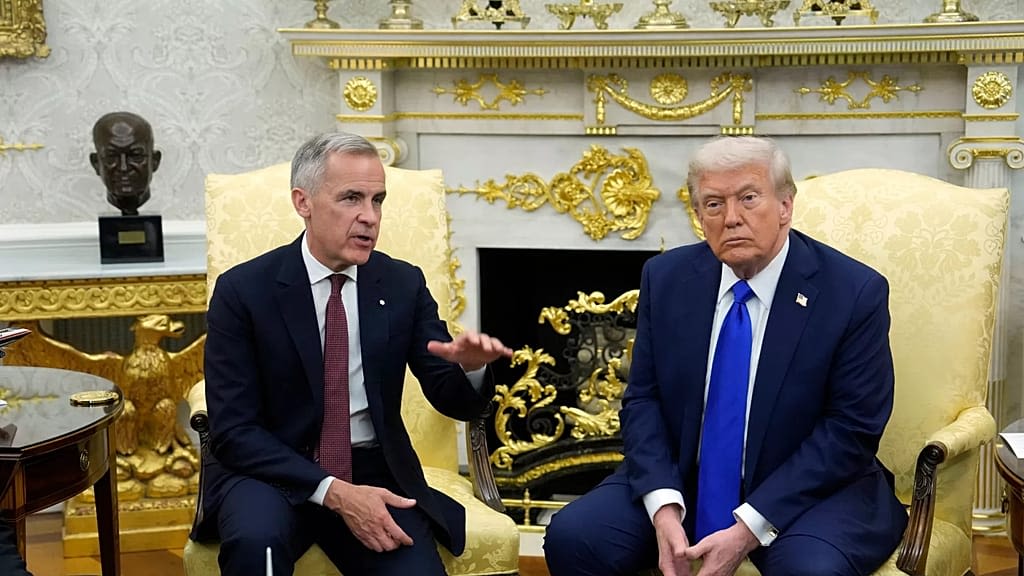
US President Donald Trump announced on Monday that United States tariffs on all Canadian cars, trucks, automotive parts, and steel will increase to 50 per cent starting on January 1st, 2027. The announcement follows the collapse of trade negotiations over the weekend, which fell apart on Friday amid disputes regarding whether US tariff relief would apply to medium or heavy-duty-trucks, as well as accusations from both sides regarding last-minute changes and walkbacks.
Collapse of Bilateral Trade Talks Triggers Escalation
Prior to the breakdown, a potential trade deal on the table would have reduced the top-line tariff rate on Canadian cars and light-duty trucks from 25 per cent to 15 per cent, while lowering aluminum and steel tariffs from 50 per cent to 25 per cent. Following the collapse of those talks, the Office of the United States Trade Representative described the outcome as a missed opportunity
for Canada, stating that Ottawa maintained a prolonged retaliation
against the US and upended a careful balance through new demands.
Tariff Standoff and Retaliation Measures
The escalating trade standoff reached a flash point when 50 per cent levies ordered by Trump on $20 billion in Canadian products took effect on Saturday. In response, Canadian Prime Minister Mark Carney declared that Canada was engaged in a trade war during a Saturday news conference on Parliament Hill in Ottawa, stating, You’re at war when you get attacked. We got attacked.
Carney announced that Ottawa would match the US tariffs dollar for dollar to protect workers and businesses, warning that Canadian retaliation would concentrate on sectors such as steel, dairy, appliances, agricultural equipment, pulp and paper, and electronics. Additionally, Canada scheduled its own tariffs on select US goods to begin on September 8th.
Prime Minister Carney stated that Canada was forced to walk away from a bad deal, asserting, We cannot accept what they’ve offered, and we will not give what they’ve asked.
Economic Interdependence and Supply Chain Risks
Canada has consistently ranked as one of the top two US trading partners. Last year, total US goods and services trade with Canada reached $872.3 billion, marking a 4.6 per cent decline. Canada exports more than three-quarters of its goods to the US while importing nearly half of its goods from America.

US automotive production is heavily integrated with Canada and Mexico, and industry experts warn that the proposed tariffs could cause drastic disruptions. Flavio Volpe, president of Canada’s Automotive Parts Manufacturers’ Association, cautioned about the impact on assembly lines, stating, A threatened US tariff on Canadian auto parts will be paid by [the] US auto assembly. Without those specific parts, auto assembly throughout the US would halt.
The trade standoff has already led to a 22 per cent reduction in Canadian imports of US vehicles, and numerous automakers have announced or are considering plans to scale back Canadian auto production.
Political Rhetoric and Skepticism Among Executives
In his public statements on Truth Social and other platforms, Trump accused Canada of ripping off the United States for years, writing, Build in the U.S. and there are ZERO TARIFFS. Canada will be treated like a State no longer!
Trump also asserted that Canada is among the worst Nations in the World to deal with
and claimed that WE DON’T NEED CANADA, THEY NEED US!
Trump has previously suggested that Canada should become the 51st state.

Major automakers did not immediately comment on Trump’s latest announcement. However, auto executives speaking anonymously to Reuters expressed skepticism, pointing out that Trump has previously threatened large tariffs that never materialized and that levies of that magnitude would likely trigger severe Canadian retaliation. Executives also noted that the January implementation date falls months after November’s midterm elections, suggesting the threats could be a tactical move to restart negotiations.
Similar past disputes included a January threat by Trump to decertify Bombardier Global Express business jets and impose 50 per cent import tariffs on Canadian aircraft until Canadian regulators certified planes built by US rival Gulfstream. While those tariffs were never implemented, Canada certified several Gulfstream planes the following month.
Related reading

Australia Updates Skilled Visa Processing Priorities Under Direction 119
Australia has introduced Ministerial Direction 119, reshaping skilled and employer-sponsored visa processing from July 25, 2026.

Syria and Israel Hold US-Mediated Talks in Jordan to De-escalate Tensions
Syrian and Israeli delegations met in Jordan under U.S. mediation on Sunday, August 23, 2026, to discuss de-escalation...

Guinea Landfill Collapse in Conakry Kills 30 People
At least 30 people have been killed after a mountainous heap of refuse collapsed at the largest landfill...
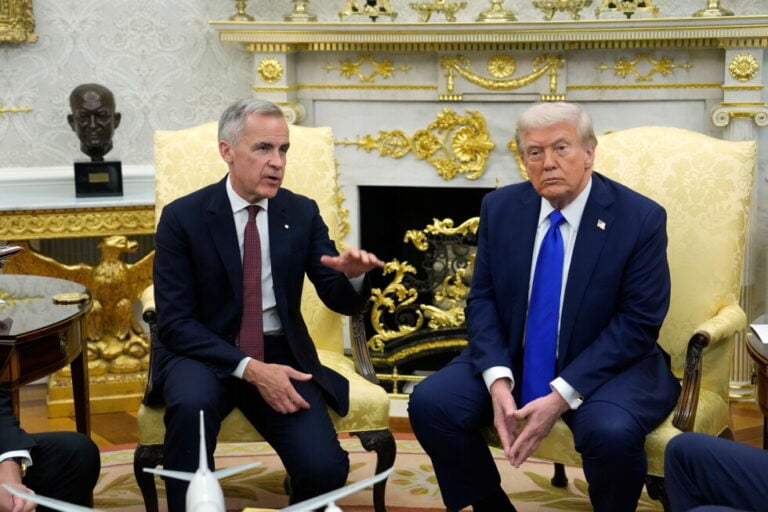
US Imposes 50% Tariffs on $20 Billion in Canadian Goods After Talks Collapse
The United States and Canada plummeted into a trade war on Saturday, August 22, 2026, as the U.S.