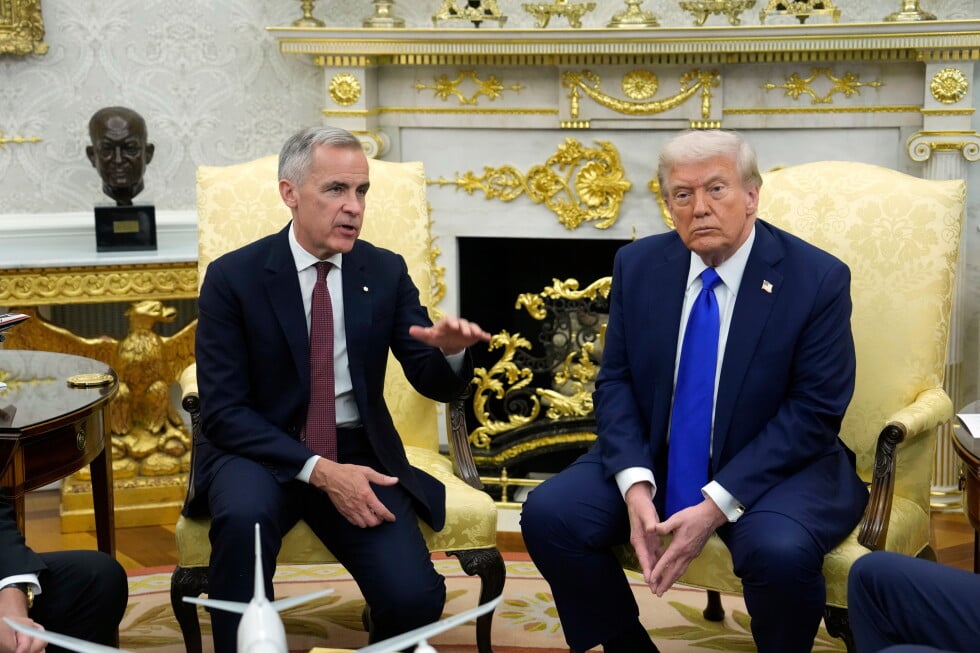
The United States and Canada plummeted into a trade war on Saturday, August 22, 2026, as the U.S. imposed a 50% tariff on roughly $20 billion in Canadian goods following the sudden collapse of bilateral negotiations in Washington. Canada announced retaliatory measures to begin on September 8.
The Collapse of Washington Negotiations and the 50 Percent Tariffs
What began as high-level bilateral discussions in Washington late Friday ended in a total breakdown of talks leading the U.S. to impose 50% tariffs on $20 billion worth of Canadian goods. Prime Minister Mark Carney said Ottawa would respond with targeted penalties starting September 8, focusing on exposed industries such as steel, dairy, appliances, agricultural equipment, pulp and paper, and electronics.
The sudden escalation hits roughly 5% of all Canadian shipments heading south annually, touching items ranging from hockey sticks to tongue depressors. With no further talks scheduled, the historic allies find themselves locked in an active trade dispute marked by bitter recriminations and immediate economic fallout.
Dueling Accusations Over Unacceptable Demands
Each capital pointed the finger at the other for the sudden rupture. Prime Minister Mark Carney accused Washington of utilizing economic integration as a weapon
and lamented that America’s trade signature was written in pencil.
Resorting to stark language, Carney declared during a news conference on Parliament Hill in Ottawa that his country had been attacked, stating that you’re at war when you get attacked.
According to the Canadian leader, Ottawa had offered meaningful concessions, including dropping remaining retaliatory tariffs on U.S. steel, aluminum, and autos if Washington substantially lowered its own duties, alongside encouraging Canadian provinces to restore American alcohol sales. However, Carney balked at last-minute U.S. terms that would have curtailed tariff relief for Canadian-made vehicles, restricted independent trade deals, and weakened domestic protections for language, culture, and sovereignty.
“They asked too much and offered too little.”
Prime Minister Mark Carney
Conversely, the Trump administration defended the aggressive stance as a necessary response to prolonged trade frictions. U.S. Trade Representative Jamieson Greer argued that the administration offered to reduce duties on politically sensitive Canadian exports like steel, autos, and lumber in exchange for a deal, asserting that Canadian officials simply rejected favorable terms.
“We’ve said enough, and so we’ve taken countermeasures. Our interest is in protecting American workers and protecting American supply chains.”
Jamieson Greer, U.S. Trade Representative
The Historic and Legal Framework Behind Section 338
The current U.S. duties rest on an obscure statute dusted off from the early 20th century. On July 20, President Donald Trump became the first president in history to invoke Section 338 of the Tariff Act of 1930, better known as the Smoot-Hawley Tariff Act. Legal scholars Peter Harrell and Jennifer Hillman note that until this second term, few trade practitioners realized the provision remained active.
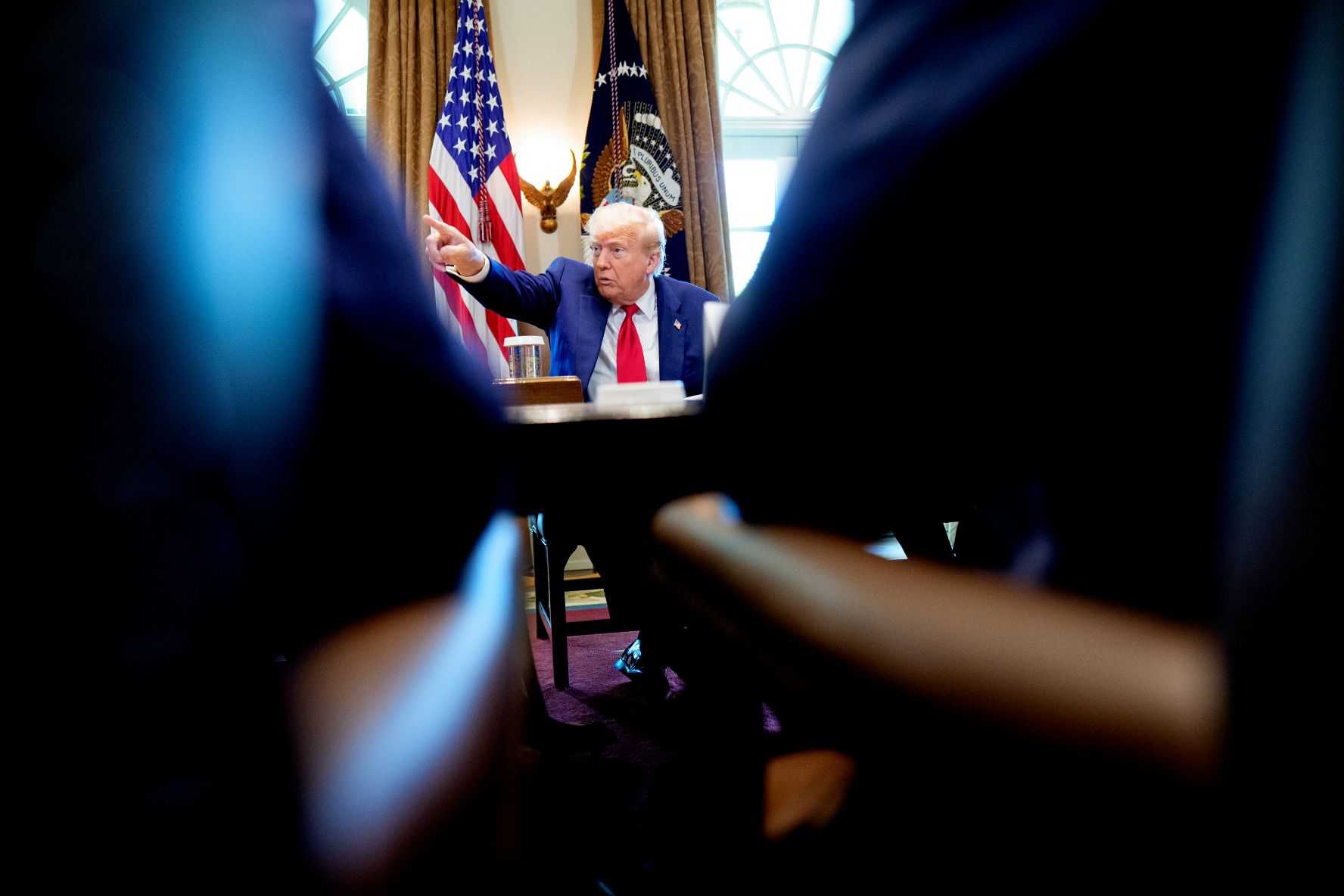
Enacted originally as Section 317 of the Tariff Act of 1922 and re-adopted in 1930, Congress designed the mechanism to give the executive branch leverage in securing most-favored-nation treatment from foreign trade partners. While past administrations—including the State Department in 1932 regarding Spain and in 1949 regarding Communist China—contemplated using the statute, no prior president moved past internal discussions to actually levy tariffs under Section 338 during its 96-year history.
Legal Vulnerabilities and Economic Shockwaves
Legal experts anticipate that if the new duties remain in force, they will immediately draw domestic and international legal challenges aimed at narrowing their scope. The statutory threshold requires the president to find as a fact that a foreign country maintains any unreasonable charge, exaction, regulation, or limitation which is not equally enforced upon the like articles of every foreign country,
or otherwise places American commerce at a distinct disadvantage.
The Future of the USMCA and What to Watch Next
The breakdown in trade talks casts a long shadow over the broader trilateral trade architecture linking the United States, Canada, and Mexico. Prime Minister Carney acknowledged that the failed negotiations provide Ottawa with an entirely new perspective
on Washington’s goals regarding the trade pact.
With bilateral channels currently frozen, attention turns directly to September 8, the scheduled implementation date for Canada’s retaliatory tariffs. Observers will monitor whether ongoing economic friction overrides regional supply chains or if legal challenges in U.S. courts materialize to test the outer limits of executive tariff authority under Smoot-Hawley.

FlyDubai Co-Pilot Attacks Captain on Flight to Israel, Lands in Saudi Arabia
Out of 172 passengers and crew aboard a Boeing 737 MAX plunging from 33,000 feet to 17,000 feet...

Can Xue and Anne Carson Lead Nobel Literature Betting Markets
The 2026 Nobel Prize in Literature will be announced on October 8, with Can Xue and Anne Carson...

IEA Board to Meet Wednesday on Oil Stock Release, say EU Diplomats
European Union diplomats confirmed that the governing board of the International Energy Agency will hold an informal meeting...

Yemeni Government Forces Launch Offensive Against Houthis Near Bab el-Mandeb
Yemeni government forces and a Saudi-led coalition launched Operation Dawn of Yemen, advancing on the strategic Bab el-Mandeb...