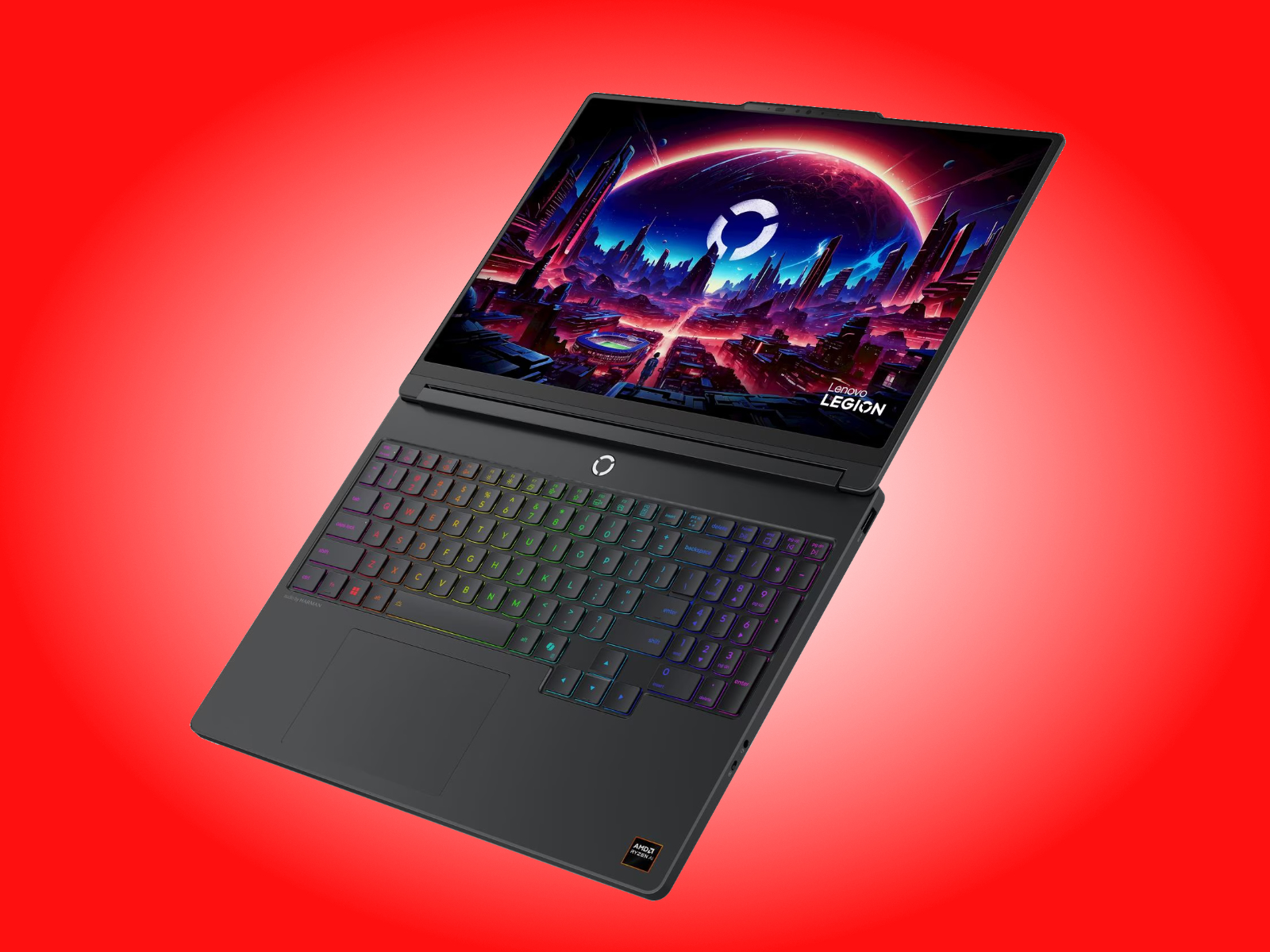
The Lenovo Legion 9i Gen 10 (18IAX10) serves as the top dog in Lenovo’s gaming laptop stable. It is an 18-inch machine engineered to pack in top-end CPU and GPU options, providing the power to run them both at full tilt. The laptop features a 3,840×2,400 IPS display that offers a 240Hz refresh rate, with a dual-mode option providing 1080p/440Hz. While it is an IPS panel, it provides both 2400p/240Hz and 1200p+/440Hz modes. Although Lenovo’s product details mention a glasses-free 3D display option, that feature was not available on any preconfigured models or in custom configurations at the time of writing.
Lenovo Legion 9i Gen 10 Hardware and Internal Connectivity
The Legion 9i Gen 10 is a heavy machine, weighing 7.8 pounds (3.5 kilograms), though this weight almost feels reasonable considering all that the 18-inch chassis squeezes in. The body is thick, but it remains relatively easy to place into an appropriately large backpack. The internal layout includes four RAM and storage slots for upgrades, and the machine comes with 2TB of PCIe Gen5 SSD storage, Wi-Fi 7, Bluetooth 5.4, and a variety of ports including two Thunderbolt 5 ports, three USB-A 10Gbps ports, and 2.5Gb Ethernet.
Performance and Benchmarking
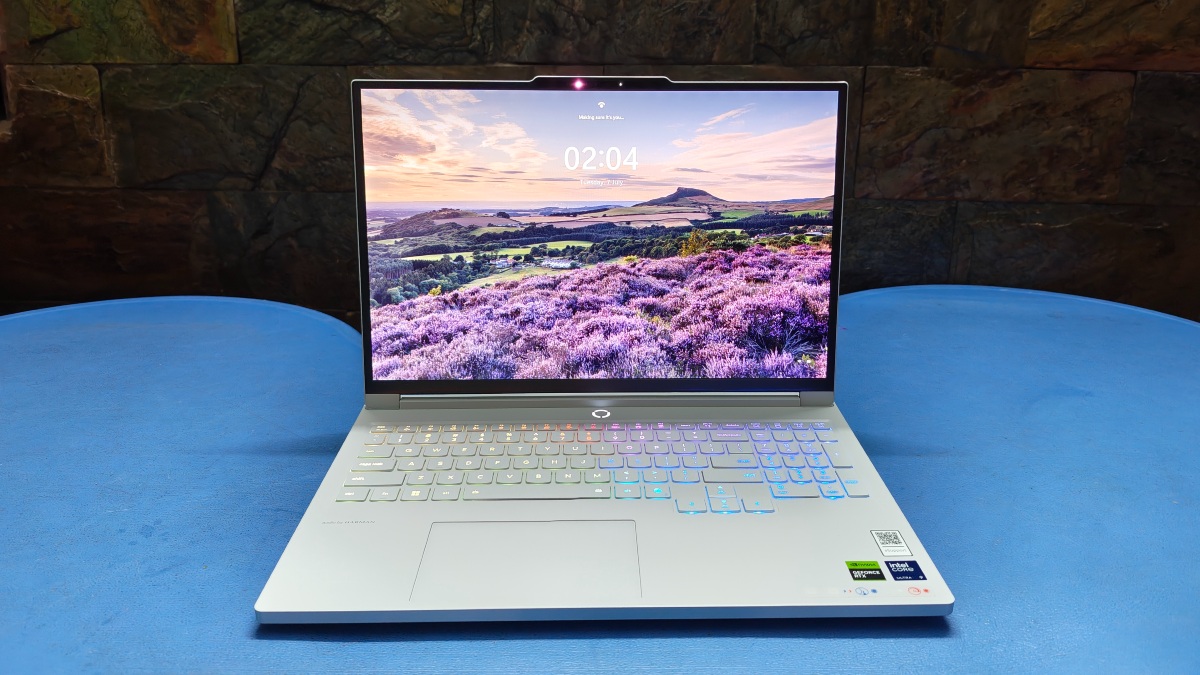
The Intel Core Ultra 9 275HX processor proves mighty, offering extreme single- and multicore performance. The machine’s strength lies in its ability to combine that CPU performance with a potent Nvidia GeForce RTX 5080 16GB (175 watts) while keeping both components cool. In testing, the Legion 9i proved up to the task of maintaining smooth and stable framerates in Assassin’s Creed: Shadows and Forza Horizon 6 with demanding graphics settings. It maintained triple-digit framerates in all game benchmarks except Assassin’s Creed: Shadows, which hit 84 fps. Gaming at 4K was also doable, with the system running Shadow of the Tomb Raider at its native 3,840×2,400 resolution with an average of 100 fps.
To achieve full power, users must ensure both Windows and LegionSpace performance modes are enabled. In Performance mode, the system maintained 98.8% consistency during 3DMark’s Steel Nomad Stress Test, with scores ranging from 5,588 to 5,658 points. In Balanced mode, scores were lower, ranging from 3,647 to 3,848, with a 95% consistency rating, which is technically considered a failure. However, this lower setting provides a way to enjoy performance without maximum fan noise.
Pricing Tiers for Lenovo Legion 9i Gen 10 Configurations
Pricing and Configuration
The Legion 9i Gen 10 is a premium investment, with prices ranging from $4,680 to nearly $7,000 when fully loaded. The machine reviewed was priced at $5,685. Lenovo does not offer this specific configuration as a preconfigured model; instead, it offers a base configuration with 32GB of memory and 1TB of storage for $4,680. Doubling the memory adds $650, and doubling the storage adds $355. Lenovo also offers a second 2TB PCIe 4.0 SSD for an additional $510. Furthermore, for $785, the GPU can be upgraded to an RTX 5090 24GB. A $50 upgrade to Windows 11 Pro unlocks the option to select 192GB of memory, which carries a $3,770 uptick from the 32GB base price.
Lenovo Legion 5 15AGP11 and Legion 7i Display Specifications
Broader Lineup and Comparisons
Lenovo is also expanding its portfolio with the Legion 5 15AGP11, which will be available globally with a GeForce RTX 5070 12GB laptop GPU. This GPU will be configurable with AMD’s Ryzen AI 7 450 or Ryzen AI 9 465 processors. The Legion 5 15AGP11 retains an 80 Wh battery, a 165 Hz OLED display, and dual M.2 2280 and DDR5 SODIMM slots within a 1.87 kg housing. Regarding the Legion Pro 5i, Lenovo has added the Core Ultra 7 251HX and Core Ultra 9 290HX Plus from Intel’s Arrow Lake HX refresh. Benchmarks suggest these processors provide about 7% higher CPU performance than Core Ultra 9 275HX models.

Separately, the Lenovo Legion 7i features a 16-inch WQXGA (2560 × 1600 pixels) OLED display with a 16:10 aspect ratio. This panel supports a 240Hz refresh rate, a 1ms response time, and NVIDIA G-SYNC. The display covers the DCI-P3 color gamut, reaches 500 nits of peak brightness, and carries VESA DisplayHDR True Black 1000, Dolby Vision, X-Rite, and TÜV Rheinland certifications. While it uses high-frequency PWM dimming, the glossy finish can be reflective under direct lighting.
Ultimately, while cheaper gaming laptops may offer better returns and gaming desktops provide more performance for the money, the Legion 9i Gen 10 is positioned for users who need all the performance they can get and must take it on the road.
Find more reporting in our Technology section.
Related reading

Apple iPhone 18 Pro To Feature Uniform Aluminum Design And Four Colors
When Apple unveils the iPhone 18 Pro and iPhone 18 Pro Max, the design will remain a central...

Amazon Raises Prices for Echo, Fire TV, and Kindle Devices by Up to 60%
Amazon has quietly raised prices across its hardware lineup by up to 60 percent, hitting Echo smart speakers,...
Texas A&M Researchers Build Cryogenic Quantum Detectors for Dark Matter
Researchers are tackling physics and mathematical bottlenecks using advanced particle detectors, quantum algorithms, and photonic circuits. Scientists at...

Samsung Schedules August 27 Virtual Event for Expected Galaxy S26 FE Launch
Samsung has scheduled a virtual Galaxy Event for August 27, 2026, where the company is widely expected to...