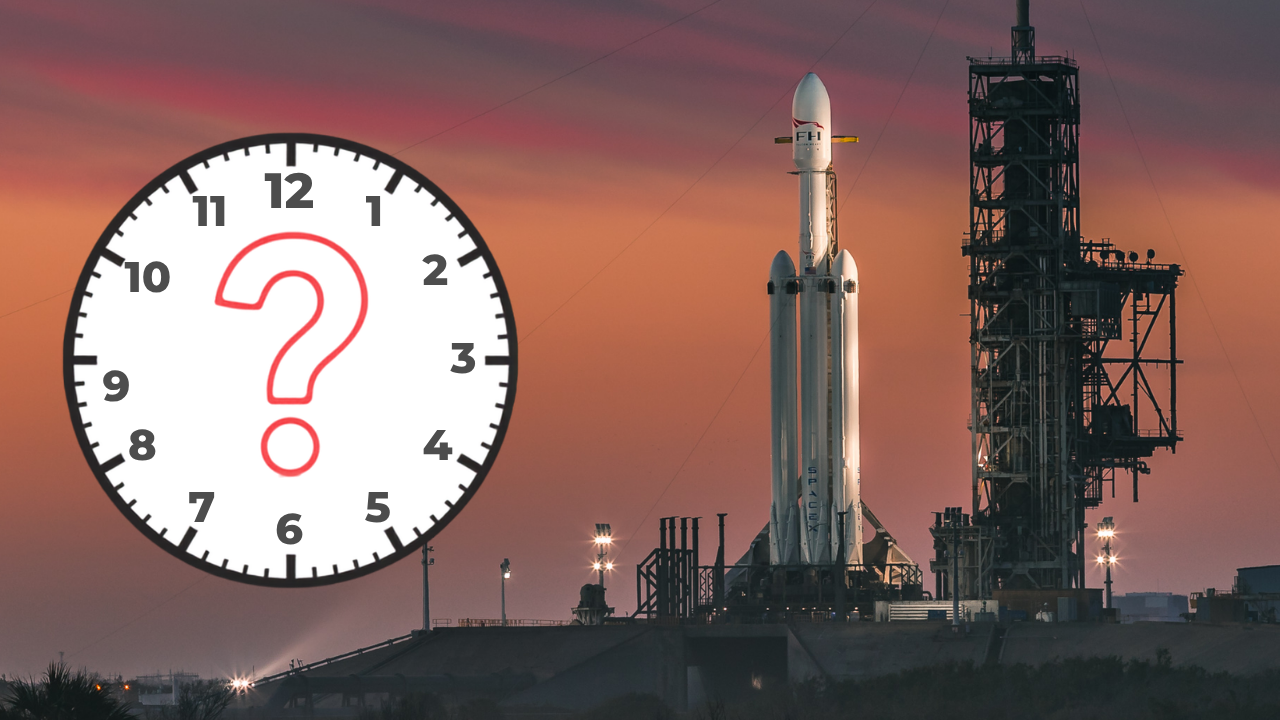
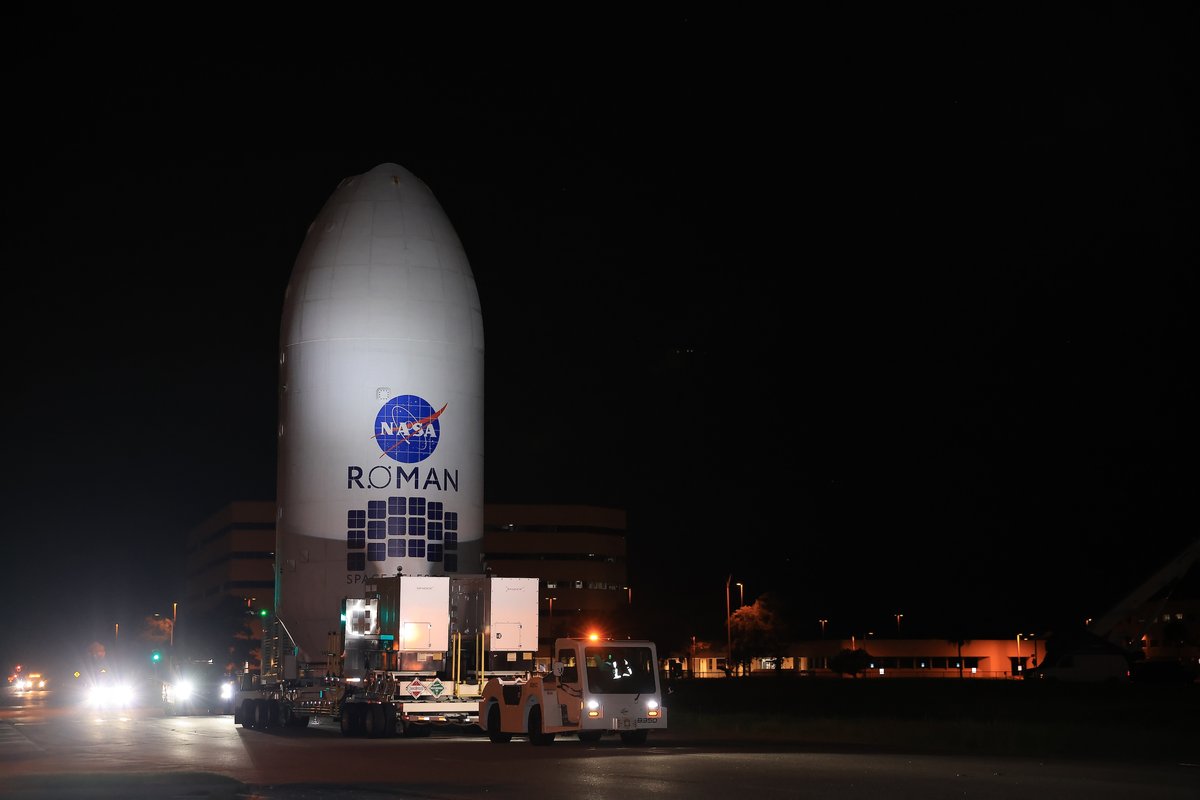
NASA’s Nancy Grace Roman Space Telescope is scheduled to launch aboard a SpaceX Falcon Heavy rocket on August 30, 2026, from Launch Complex 39A in Cape Canaveral, Florida. The $4.3 billion observatory will survey billions of galaxies, investigate dark energy and dark matter, and hunt for distant exoplanets.
The observatory, named after pioneering astronomer and NASA’s first chief astronomer Nancy Grace Roman, stands 42 feet tall and weighs approximately 18,000 pounds. Liftoff is targeted for 7:26 a.m. EDT, according to SpaceX mission schedules, with a backup window available on Monday, August 31, at 7:22 a.m. EDT if weather interferes.
Mission Profile and SpaceX Falcon Heavy Launch Details
The Falcon Heavy rocket will lift off from Launch Complex 39A at the Kennedy Space Center in Florida. Forecasters with the National Weather Service noted a 50% chance of thunderstorms at the site ahead of the weekend window, though backup plans are ready if delays occur. If that happens, a second launch window is available Monday (Aug. 31) at 7:22 a.m. EDT, when there is a reduced risk of thunderstorms. A few hours later, the telescope will be released from the rocket’s second stage and be exposed to the vacuum of space for the first time.
Unusual Origins as a Surplus Intelligence Satellite
The observatory carries an unexpected pedigree. The National Reconnaissance Office reached out to NASA after determining it no longer required the hardware for future spy satellite missions. The intelligence agency offered the unused instrument to the space agency, suggesting it be pointed upward rather than downward. The intelligence agency no longer needed the hardware for its future missions, so it sent the unused telescope to NASA.
NASA accepted the hardware in 2012 and spent over a decade modifying the structure. Because of its spy satellite lineage, the observatory possesses unusually fast optics, featuring a short focal length relative to its mirror diameter. This design provides the telescope with a wide field of view that can capture an area roughly one hundred times larger per image than the Hubble Space Telescope, despite sharing a similar mirror diameter.
The agency completed construction in December 2025 within its initial $4.3-billion budget, keeping the project on track ahead of its original 2027 projection.
Investigating Dark Energy and Cosmological Tension
Scientific goals for the five-year mission center on fundamental cosmic mysteries, including dark energy and dark matter. Cosmologist Daniel Scolnic noted that the telescope will examine whether current scientific models regarding universe expansion require revision. The National Reconnaissance Office reached out to NASA,
Scolnic says, saying, 'We have this amazing satellite sitting in a hangar that we're not using. And what what do you guys think about instead of pointing downwards, we point upwards, and you guys use it?'
Researchers also aim to address the “Hubble tension” by precisely measuring galaxy speeds, alongside examining whether dark energy is slowly fading away—a tentative finding suggested by projects like the Dark Energy Survey and the Dark Energy Spectroscopic Instrument. Roman will greatly increase the number of galaxies.
Exoplanet Surveys and Wide-Area Capabilities
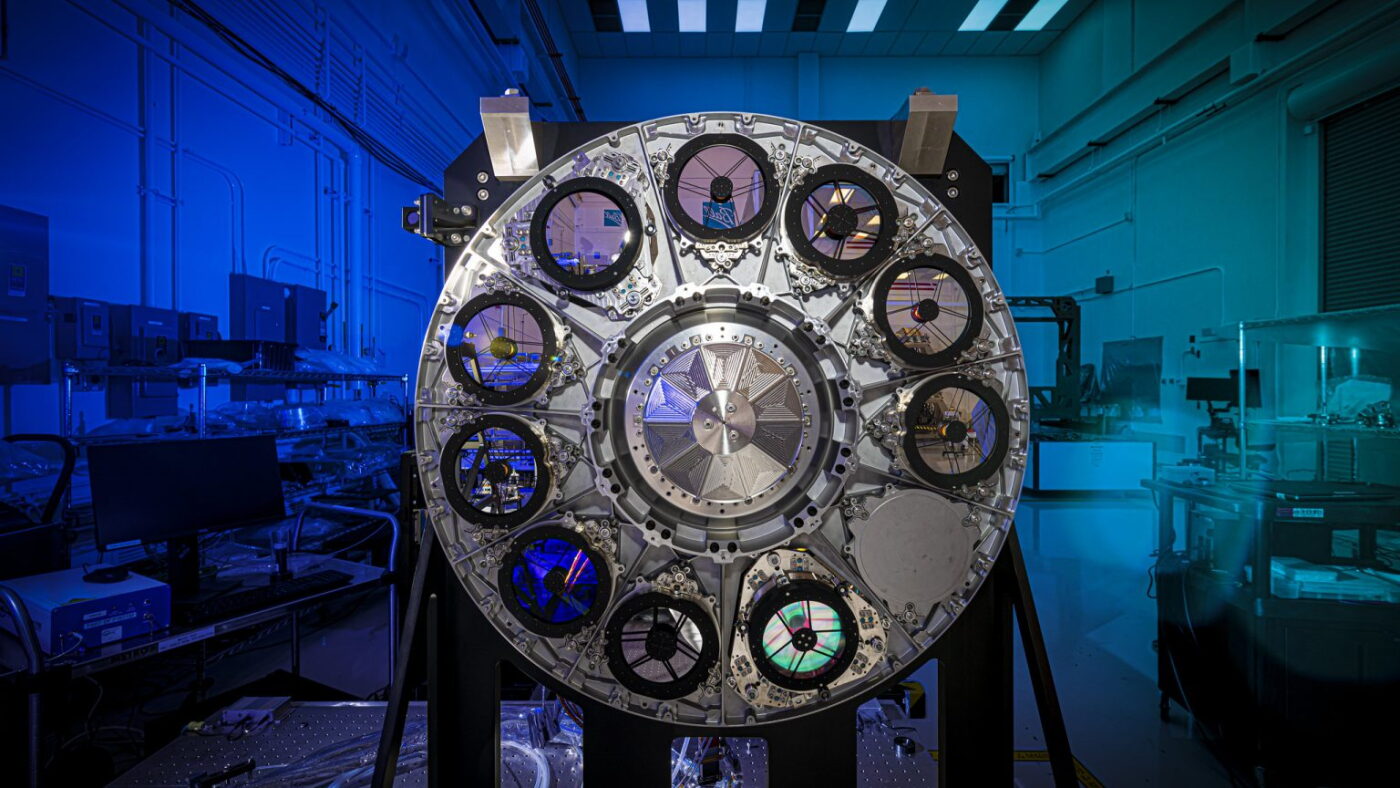
Project scientists emphasize that the mission’s wide survey capability will generate massive public datasets. “Roman’s deep, sweeping surveys will help investigate dark energy and dark matter, discover and characterize planets beyond our solar system, map billions of galaxies, study black holes and share enormous amounts of data with both scientists and the public,” NASA said in an update Friday (Aug. 28), after clearing Roman for launch.
Keep reading

Washington State University Researchers Develop 3D-Printed Electronic Skin
Researchers at Washington State University have developed a 3D-printed electronic skin that senses pressure and temperature at ten...

JWST Finds Planet Formation Is a Race Against Time in 72 Young Star Systems
Using the James Webb Space Telescope (JWST), astronomers have studied 72 young, sun-like stars to investigate how protoplanetary...
NASA’s Swift Observatory to Crash After Katalyst Space Technologies Failure
NASA's aging Neil Gehrels Swift Observatory is set to plunge into Earth's atmosphere later this year after a...
NASA and Katalyst Abandon Plan to Boost Swift Observatory Due to Failures
NASA and Katalyst Space announced they have abandoned plans to use a commercial spacecraft to boost the ailing...