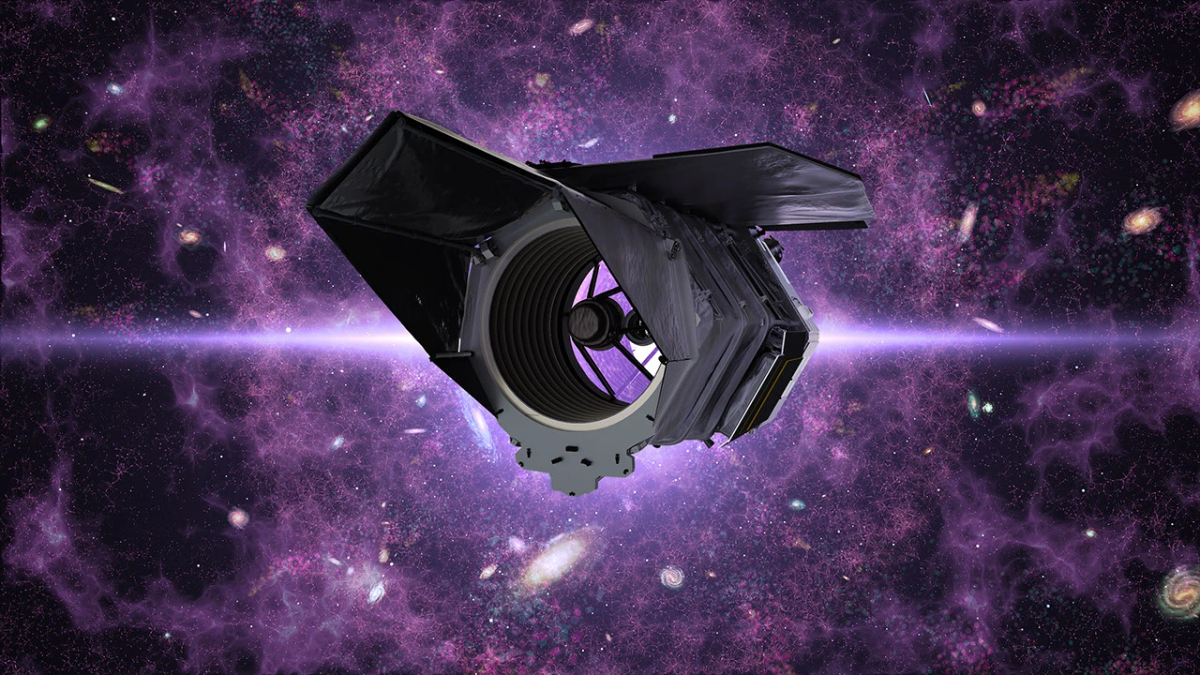
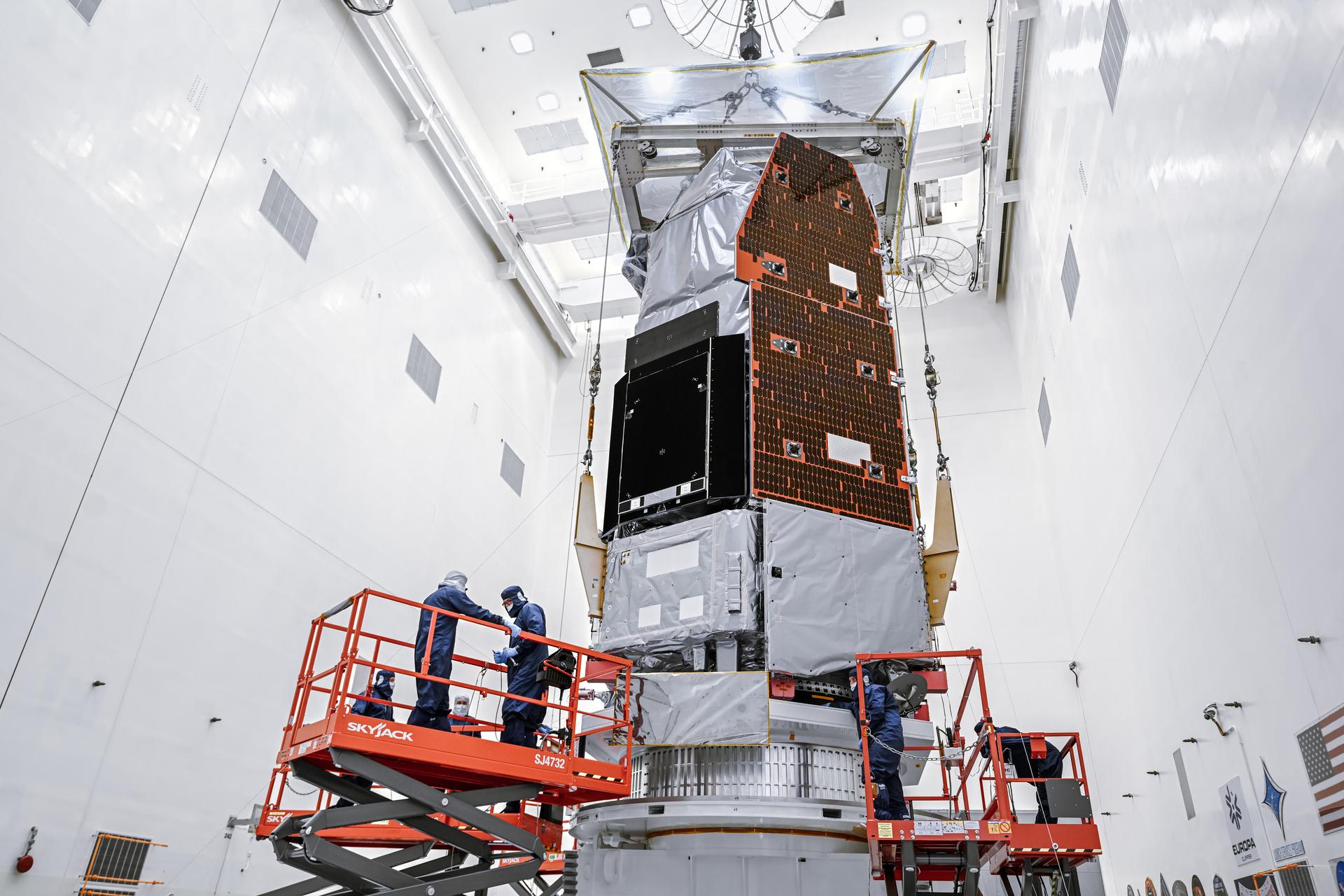
NASA is scheduled to launch its next-generation flagship observatory, the Nancy Grace Roman Space Telescope, on August 30, 2026, according to Space Daily. Liftoff from Launch Complex 39A at Kennedy Space Center in Florida is currently targeted for 7:26 a.m. EDT (11:26 UTC), carried by a SpaceX Falcon Heavy rocket as reported by Azernews. Following launch, the spacecraft will travel to a position 1.5 million kilometers from Earth at the Sun-Earth L2 Lagrange point.
NASA Prepares for August 30 Launch of the Nancy Grace Roman Space Telescope
The mission is named in honor of Dr. Nancy Grace Roman (1925–2018), who served as NASA’s inaugural Chief of Astronomy starting in 1959 as the agency’s first female senior executive, and who was instrumental in conceiving the Hubble Space Telescope program. Originally proposed in 2010 as the Wide Field Infrared Survey Telescope (WFIRST), the observatory was later renamed in her honor.
Wide-Field Capabilities and Observatory Partnership
The Roman Space Telescope features a primary mirror 2.4 meters in diameter, matching the size of the mirror on the Mashable, which has operated in orbit since 1990. However, Roman’s Wide Field Instrument combines 18 infrared detectors into a 288-megapixel focal plane, yielding a field of view that is at least 100 times larger than Hubble’s comparable imaging camera.
NASA associate administrator for science Nicky Fox noted that Roman will execute fundamentally distinct science rather than merely accelerating Hubble and Webb operations, describing the missions as complementary. Julie McEnery, senior project scientist, noted during an April news conference covered by Mashable that Roman can serve as a finding chart to locate targets that researchers can subsequently examine in greater detail using the James Webb Space Telescope.
Primary Scientific Objectives and Exoplanet Surveys
The observatory’s primary mission lifetime is planned for five years, during which it will investigate dark energy, dark matter, and exoplanets. By mapping the distribution and evolution of galaxies and galaxy clusters, the mission aims to clarify why the universe’s expansion is accelerating and to examine weak gravitational lensing caused by massive objects distorting distant light.
To detect planets beyond our solar system, the mission will utilize a Galactic Bulge Time-Domain Survey directed toward the center of the Milky Way, monitoring roughly 100 million stars for hundreds of days. Through planetary transits and gravitational microlensing—where foreground stars magnify background light and reveal orbiting bodies—NASA’s exoplanet forecasts point to discovering thousands of worlds, including potential detections of small planets beyond the snow line.
Mission Specifications and Public Data Access
The telescope measures 12 meters in length and 4 meters in width, with development costs totaling approximately $3 billion. The spacecraft will transmit about 1.4 terabytes of science data daily. NASA has confirmed that Roman’s survey data will be made publicly available without a proprietary period, allowing researchers worldwide immediate access to the observations.

| Feature | Hubble Space Telescope | Nancy Grace Roman Space Telescope |
|---|---|---|
| Launch Date / Status | 1990 (Active) | August 30, 2026 (Scheduled) |
| Primary Mirror Diameter | 2.4 meters | 2.4 meters |
| Field of View | Baseline | At least 100x Hubble |
| Deployment Location | Earth orbit (500 km altitude) | 1.5 million km from Earth (L2) |
| Planned Mission Duration | 15-year initial (36+ years active) | 5 years (primary mission) |
Ahead of the launch, NASA research astrophysicists including James Rhoads, Sangeeta Malhotra, and Ami Choi have engaged with the public at Grand Teton National Park to discuss the mission’s technical capabilities, spectroscopic instruments, and goals for observing the early universe.
Worth a look

Moon Passes in Front of Jupiter During Rare Occultation
Observers across North America watched the Moon conceal Jupiter on Tuesday morning in a rare planetary occultation that...
Researchers Suggest Animals May Have Evolved 200 Million Years Earlier
Using scanning electron microscopy on more than 140 samples, researchers analyzed the Kheseen Biota in Mongolia to test...
University of Copenhagen Researchers Reveal Earth and Mars Formed Differently
Earth and Mars formed side by side from the same cosmic cloud roughly 4.5 billion years ago, yet...
Moon to Occult Jupiter Over Eastern North America on October 6
Skywatchers across much of eastern North America can watch a rare lunar occultation early Tuesday morning as a...