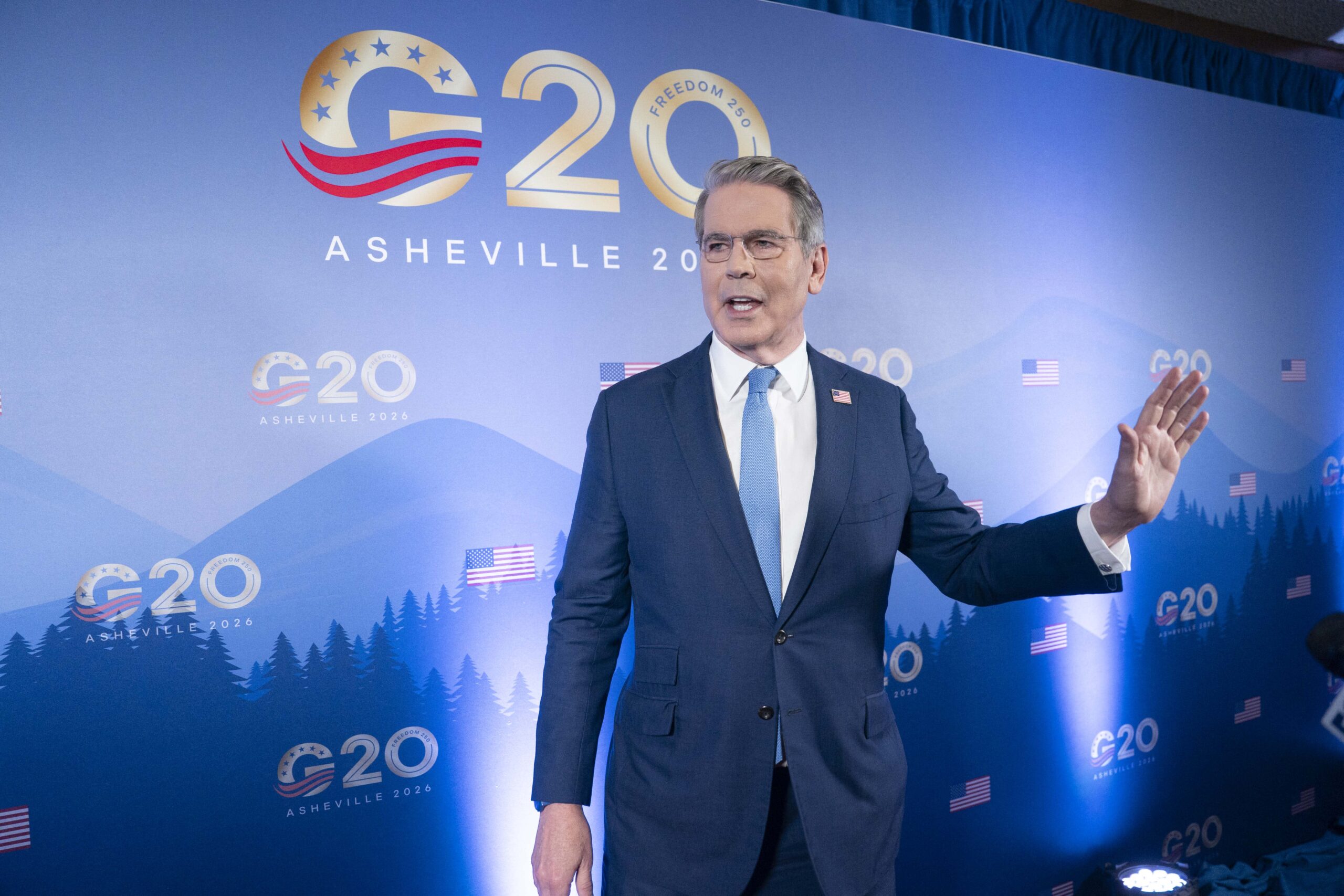
Treasury Secretary Scott Bessent gathered at the G20 Finance Ministers Meeting in Asheville, North Carolina, where U.S. bond yields, international debt, and economic growth strategies took center stage amid newly included private sector CEOs.
U.S. Bond Yields and the National Debt Debate
As international officials gathered in Asheville, North Carolina, for the G20 Finance Ministers and Central Bank Governors’ meeting, discussions quickly turned to the state of the American debt market. Treasury Secretary Scott Bessent insisted that Treasury yields have remained flat since the Trump administration took office, pointing to the 10-year yield during an interview with Sara Eisen on the sidelines of the summit. According to reporting from the source articles, Bessent defended the market by noting that Fitch Ratings had affirmed its AA+ grade on U.S. debt, arguing that investors would otherwise be fleeing to foreign markets if structural problems truly plagued American bonds.
Yet that assessment contrasts with market metrics showing movement upward. Yields on government debt, which recently passed $40 trillion, have faced persistent volatility driven by tariffs and inflation pressures. The benchmark 10-year yield has climbed roughly 15 basis points since January 2025, while the 30-year yield has risen by some 40 basis points over the same timeframe. Fitch Ratings itself cautioned that high fiscal deficits and a substantial interest burden continue to constrain the rating, noting that lawmakers in Washington have not taken meaningful action to tackle the deficit.
Goldman Sachs CEO David Solomon offered a calmer perspective on the numbers, telling CNBC that current elevated Treasury yields are not out of the ordinary considering fundamentals. If you have any kind of a historical context, Treasury premiums can be higher, and it’s not a calamity,
Solomon said, emphasizing that the underlying focus must remain on long-term economic growth and future fiscal policy decisions.
Private Sector Titans Join G20 Discussions for First Time
For the first time in the history of the G20 finance meetings, prominent American business leaders joined policymakers at the invitation of the U.S. Treasury. A senior Treasury official noted that the administration leveraged its G20 presidency to promote direct engagement with the private sector. The high-profile delegation included Goldman Sachs CEO David Solomon, JPMorgan CEO Jamie Dimon, incoming Truist Bank CEO Mike Lyons, Eli Lilly CEO David Ricks, Deere & Co. CEO John May, Medtronic CEO Geoff Martha, and 3M CEO Bill Brown.
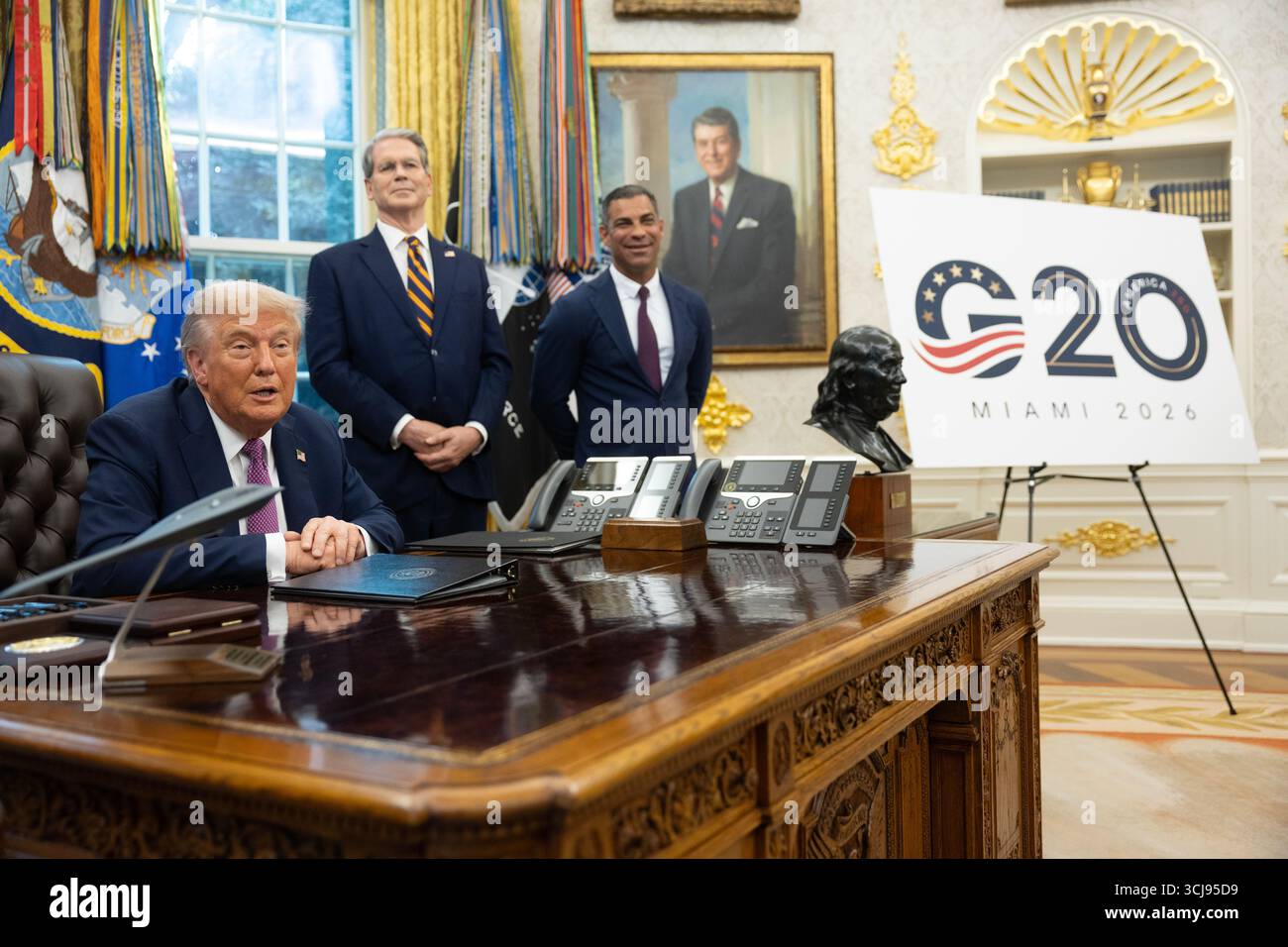
During a growth-focused breakout session, Bessent outlined the G20’s primary obstacles to economic expansion. He pointed to excessive regulatory burdens, poorly designed tax systems, internal market fragmentation, and workforce skill gaps as key impediments, asserting that the U.S. is setting the pace in resolving those policy failures.
Eli Lilly CEO Highlights Economic Reach of GLP-1 Medications
Among the corporate executives in attendance, Eli Lilly CEO David Ricks brought a distinct healthcare perspective to the economic summit, discussing the broader commercial and macroeconomic footprint of blockbuster obesity and diabetes treatments. Ricks told CNBC that the economic impact of GLP-1 drugs likely hasn’t yet been fully realized.
Ricks noted that while an estimated 25 million to 30 million people globally currently use the drugs, the addressable market encompasses more than a billion potential customers. Beyond individual health outcomes, he suggested that widespread adoption could eventually slow healthcare spending by reducing obesity-related diseases, while reshaping consumer markets by pressuring industries tied to unhealthy foods and boosting healthy lifestyle sectors.
The pharmaceutical giant has leaned heavily into expansion, pursuing more deals this year than throughout all of last year. This momentum includes a cash acquisition of privately held Merida Biosciences for up to $2.88 billion, a move designed to fortify Lilly’s immunology pipeline.
Bessent Interchanges With Warren and Addresses International Sanctions
Away from the main growth panels, Bessent engaged in sharp exchanges on domestic policy and foreign sanctions. He renewed his criticism of Sen. Elizabeth Warren, D-Mass., over an error in her August 13 letter questioning U.S. intervention to support the Japanese yen. Bessent pointed out that Warren serves on the Senate Finance Committee and asserted that she had not responded to the factual mistake in her opening paragraph, which incorrectly suggested Japan could owe money to the U.S. Treasury.
On foreign policy, Bessent pushed back against skepticism regarding U.S. sanctions aimed at choking Iran’s economy. Responding to narratives that the strategy cannot succeed without the cooperation of Beijing, Tehran’s top trade partner, Bessent insisted that unilateral pressure can work, pointing to a blockade leaving only 30 million barrels of Iranian oil left on the water.
The Treasury Department also confirmed that Bessent discussed the Trump administration’s peace plan during a bilateral meeting with Russian Finance Minister Anton Siluanov in Asheville.
Worth a look

Edinburgh Grassmarket Tops JDM Retail Ranking of UK Independent Shop Hotspots
Soho has secured a spot in the top five UK locations for independent shops, according to retail research...

Coinbase CEO Brian Armstrong Forecasts Bitcoin Could Hit $400,000 by 2030
Coinbase CEO Brian Armstrong predicts Bitcoin could reach between $300,000 and $400,000 by 2030, driven by regulatory progress...

FCA Expands Misconduct Rules to 40,000 British Financial Firms
Nearly 40,000 financial firms are racing to overhaul internal reporting frameworks before a September expansion by the Financial...

DRC Grants Mota-Engil 30-Year Railway Concession in $1.25B Deal
The Democratic Republic of Congo has granted Mota-Engil a 30-year concession to rehabilitate and operate the Dilolo-Sakania railway.