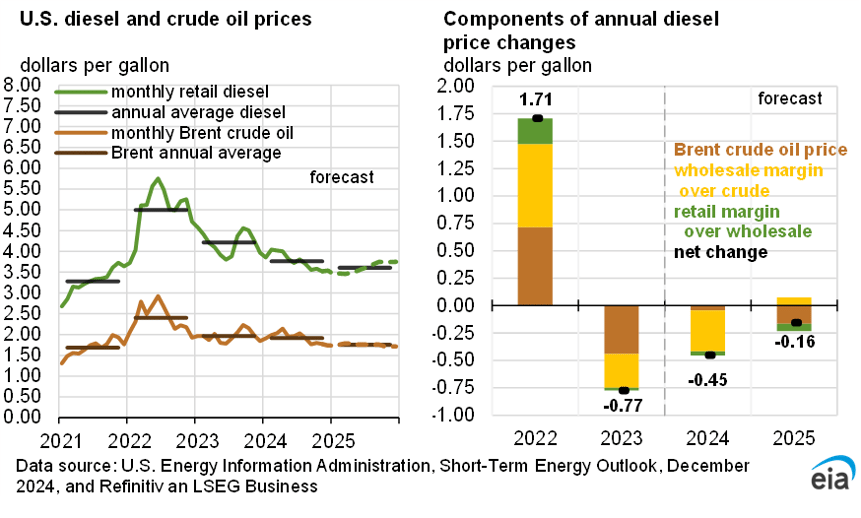
Global crude oil surpassed $97 per barrel on Thursday, driving U.S. diesel fuel to $5.78 per gallon—a 53% surge since late February. The energy price shock, fueled by the war in Iran and Russian export bans, threatens higher agricultural and consumer costs while stoking persistent inflation concerns.
Energy markets faced renewed pressure as international oil benchmark Brent climbed almost 10% since the beginning of the week. According to data tracked by NBC News, the national average for unleaded gasoline reached $4.14 per gallon, up two cents from Wednesday. Yet the sharpest strain falls on distillates, which power the machinery behind global transportation, logistics, and agriculture.
Refined Fuel Supplies and Distillate Inventories Tighten
In Europe, diesel refining margins—measured by the spread between refined fuel and crude costs—jumped by approximately 10%.
Underpinning these increases are historically lean inventories. U.S. distillate stockpiles, encompassing heating oil and diesel, stood at 107.2 million barrels as of July 31. That figure represents the lowest level for that time of year in three decades, leaving refiners and distributors with little cushion against sudden geopolitical disruptions.
Geopolitical Stalemates Choke Maritime Arteries
Two major conflicts continue to drive the global energy squeeze. Chief among them is the ongoing war in Iran, which analysts describe as a stalemate that has choked critical maritime trade routes. Following attacks on vessels in the Strait of Hormuz and retaliatory U.S. strikes, daily vessel traffic in the waterway remains minimal. Before the conflict, approximately 20% of the world’s oil supply passed through the strait.
Compounding the Persian Gulf bottleneck is the escalation of the war in Ukraine. Following Ukrainian drone strikes on domestic refineries, Russia banned diesel exports until the end of September amid domestic supply concerns. ING commodities analysts noted the severe global implications of that decision, pointing out that Russia ranks as the world’s second-largest diesel exporter.
“Following Ukrainian drone attacks on refineries, Russia has banned diesel exports until the end of September amid domestic supply concerns,” wrote ING commodities analysts. “This matters because Russia is the world’s second-largest diesel exporter. Combined disruptions are equivalent to around 20% of global seaborne diesel trade.”
On Wednesday, President Donald Trump commented on the U.S. military posture in the Middle East, stating that the latest round of strikes would not last too long while adding that the U.S. remains prepared to do another one any time we want
. He also noted that U.S. forces were bringing lots of boats out
of the Strait of Hormuz each day. Despite those remarks, energy markets registered little relief. While Goldman Sachs Research estimated that Persian Gulf oil exports recovered to about two-thirds of pre-war levels, ING pegged the recovery closer to 50% on Thursday.
Economic Fallout and Inflation Pressures
Because diesel powers everything from freight trains and 18-wheelers to farm equipment and maritime vessels, the price surge carries direct consequences for everyday goods. The planting and harvesting of crops rely heavily on diesel-powered machinery, meaning elevated fuel costs today could translate to higher grocery prices later this fall.

The broader energy price shock has reinforced investor expectations that inflation will remain elevated, pushing up sensitive U.S. Treasury yields. Although bond yields dipped slightly as markets weighed the odds of an upcoming interest rate hike, consumer borrowing costs remain high, with the average 30-year fixed mortgage rate hitting 6.91% late Wednesday.
Federal Reserve Outlook on Disinflation
Even as wholesale gas prices climbed 1% in early Thursday trading alongside natural gas, Federal Reserve governor Christoper Waller offered a measured assessment of the broader inflationary impact at an event hosted by the Reuters news agency.
“So far energy [prices have] not bled into other goods and prices.”
Waller stated that he expects consumer and wholesale inflation readings in the upcoming weeks to remain reasonable, signaling optimism that price pressures will moderate. However, he cautioned that if August inflation data comes in hot, I would consider a rate hike
, invoking a familiar musical reference to underscore his policy stance.
Waller concluded by emphasizing that the Federal Reserve will continue to monitor economic data closely before deciding whether further policy adjustments are necessary to stabilize inflation.
Keep reading

Anthony Joshua Injured, Two Friends Die in Nigeria Car Crash
Two-time heavyweight boxing champion Anthony Joshua was injured and two of his close friends died in a Monday...

Iran Warned US That Israeli Attack on Ali al-Taher Ridge Would Trigger Response
Iran has delivered a warning to the United States indicating that any full-scale Israeli offensive targeting the Ali...

USS Abraham Lincoln Sailors Dock in Thailand After 286-Day Deployment
Thousands of sailors aboard the USS Abraham Lincoln docked at Thailand's Laem Chabang Port on Wednesday for a...

China’s Carbon Emissions Fall as US-Israeli War on Iran Cuts Oil Use
China’s carbon dioxide emissions fell by 1% in the second quarter of 2026, driven by a sharp drop...