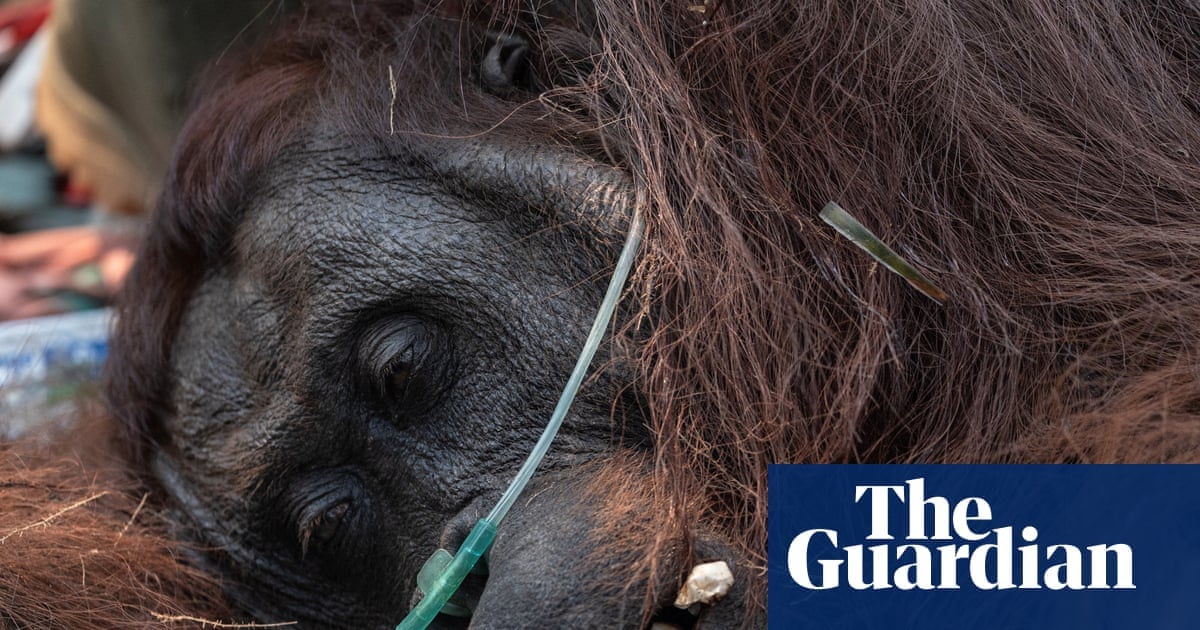
Intentionally set land-clearing fires driven by an extreme El Niño are sweeping through Indonesia’s Gunung Palung National Park, threatening the Rangkong research station and endangering a critical population of wild Bornean orangutans as flames close in on decades of continuous primate field research.
Flames Approach Decades of Primate Research in West Kalimantan
Wildfires burning across Indonesia have reached within 200 metres of the Rangkong research station, a satellite facility of the Cabang Panti research station located in Gunung Palung National Park in West Kalimantan province. More than 2,500 orangutans are estimated to inhabit the park, where many areas of which are now on fire. All three orangutan species remain critically endangered. Scientists warn that without large firebreaks or immediate intervention, the advancing inferno will reach the main Cabang Panti research station within 20 days.
El Niño Conditions Drive Exceptionally Hot and Dry Weather and Peat Fire Risks
The fires began as deliberate land-clearing burns, a recurring practice on the island. However, an extremely strong El Niño warming event in the equatorial Pacific Ocean has generated exceptionally hot and dry weather across the country, causing agricultural fires to escape control. Certain districts in West Kalimantan have experienced months with little to no rainfall.
When surface flames reach peat swamp terrain, the fire can smoulder underground for months after visible flames subside. Keeping the peat wet is therefore a key defence against subsurface spread.
“The issue has surpassed any local organisation’s capacity,” said Caitlin O’Connell, deputy director of the Gunung Palung orangutan conservation programme. “We need large-scale water bombing and skilled firefighters.”
Field Teams Fight Back With Improvised Sprinkler Lines and Firebreaks
A team consisting of more than 40 field assistants, staff members, and local villagers is working around the clock to defend the Rangkong station, fighting day and night to stave off the encroaching inferno. Workers recently constructed a protective firebreak and set up an improvised sprinkler system using a punctured hose line around the station to saturate the surrounding peat.
Scientists emphasize that preserving physical structures alone will not suffice if the surrounding habitat degrades. As solitary animals, orangutans require large ranges and live at low population densities, meaning researchers can’t just shove them all together in what remains of the forest,
according to Prof Cheryl Knott, a biological anthropologist at Boston University who has been leading scientific research on orangutans at Cabang Panti for 32 years.
Government Response, Monitoring, and Wildlife Rescue Operations
The Indonesian Ministry of Environment and Forestry sees the impact of forest fires on the Bornean orangutan wildlife as a serious issue, aware that fire and haze have the potential to damage vegetation and reduce the availability of food, nesting sites, water sources, and habitat connectivity for orangutans. The ministry addressed a recent monitoring finding by Geopix that 60 percent of the orangutan habitat was burned between June 1 and August 28, requesting that the figure be examined and verified, especially related to the data source, analysis period, habitat classification, hotspot confidence level, and the method of determining the extent of the burned area,
according to Ristianto Pribadi, Head of the Bureau of Public Relations and Foreign Cooperation at the Ministry of Forestry.
Through the Conservation of Natural Resources Agency and regional technical implementing units in Kalimantan, the ministry has increased monitoring in orangutan habitats, wildlife movement corridors, fire-affected areas, as well as plantations and settlements around forest areas. In areas facing high risks, the frequency of wildlife rescue patrols has also been increased to daily, including educating the public about how to respond when encountering orangutans or other affected wildlife.
Prior to the case of the Sempurna orangutan found weak in Kuala Satong Village, Ketapang Regency, and eventually died, the Ministry of Environment and Forestry had also taken preventive rescue measures in Ketapang Regency. On August 21, 2026, a joint team evacuated and translocated three Bornean orangutans from around residential areas and plantations in Tanjung Pura Village, Muara Pawan Subdistrict, releasing them in the Gunung Palung National Park in a habitat considered to be larger, safe, and with adequate food availability. Furthermore, the West Kalimantan Natural Resources Conservation Agency followed up on public reports of an orangutan passing through residents’ plantations in Pemangkat Village, North Kayong Regency, deploying a team to spatially verify the report.
Emergency Contacts and the Road Ahead for Kalimantan’s Forests
The Ministry of Environment and Forestry also strengthens a 24-hour wildlife rescue call center. Ristianto mentioned that the public can contact the Natural Resources Conservation Center (BKSDA) in West Kalimantan at 0811-577-6767, the Central Kalimantan BKSDA at 0811-5218-500, and the East Kalimantan BKSDA at 0821-1333-8181. Any reports of weak, injured, trapped, or displaced orangutans will be followed up with an assessment, as handling is tailored to the individual’s condition and the level of threat at the location, as evacuation is not the only option because anesthesia and relocation also carry risks.

Related reading

Imran Khan’s Sons Accuse Army Chief Asim Munir of Vendetta Against Father
Imran Khan’s sons have accused Pakistan army chief Asim Munir of a personal vendetta and expressed fears that...

PSC Announces 1000 Paid Internship Vacancies for Ministry of Education
The Public Service Commission announced 1,000 paid internship vacancies within the Ministry of Education's State Department for Basic...

BJP Beats Congress in Rajasthan Urban Local Body Polls With 4,179 Wards
The ruling Bharatiya Janata Party (BJP) emerged ahead of the opposition Congress in Rajasthan's urban local body elections,...

Uganda Reverses Boycott to Compete in Birmingham Invictus Games
Uganda's military will participate in Prince Harry's Invictus Games next year in Birmingham after Buckingham Palace reassured leaders...