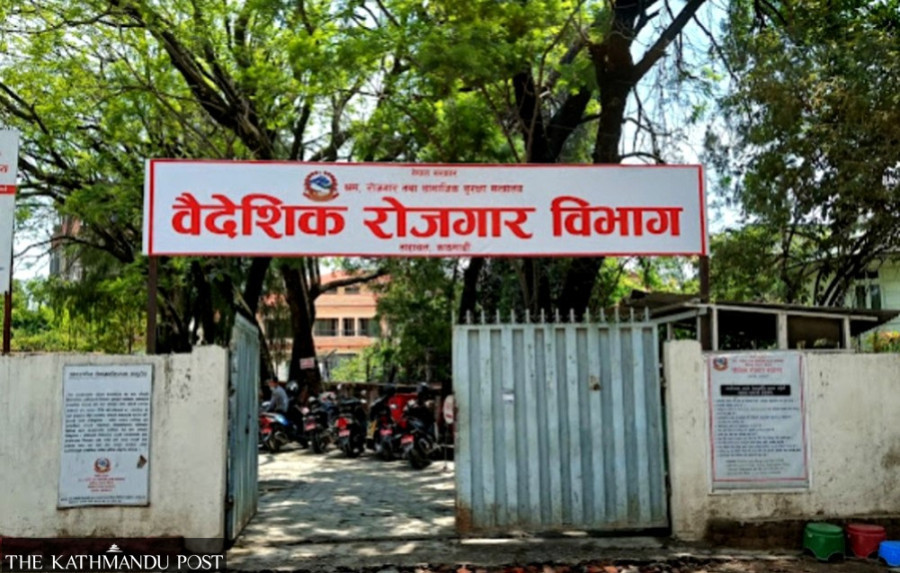
Nepal’s Department of Foreign Employment is investigating 275 recruitment agencies after Malaysia authorized a restricted framework for hiring workers through its Centralised Management System on August 22. The crackdown freezes pre-approvals for 250 agencies while diplomatic talks seek to restore broad market access.
Department of Foreign Employment Targets 275 Agencies Over FWCMS Affiliations
The government in Kathmandu has launched a sweeping investigation into the licensed recruitment sector following Malaysia’s rollout of a centralized worker management framework. In addition to targeting the 25 principal firms, regulators have temporarily frozen the processing of new pre-approvals for Malaysia across 250 affiliated or associate agencies. Officials are specifically investigating whether the arrangement violates Nepal’s Foreign Employment Act of 2007 and its associated 2008 rules by restricting fair market competition. The department has asked the 25 agencies to provide factual evidence confirming that they have withdrawn from the system and has barred them from establishing new affiliations. The department said it is investigating the transactions and selection criteria of the 25 principal agencies, their past involvement in recruiting workers for Malaysia and the process they used to affiliate other agencies. The department has also stopped giving preliminary approval for the verification of demand letters submitted through the selected agencies for Malaysia since August 22. Compliance with the directive issued under Section 37 of the Foreign Employment Act, 2007, is mandatory. Any violation of the directive or prevailing law could result in action under Section 54 of the Act and other applicable laws, including cancellation of recruitment licences. Despite the freeze on new paperwork, the government confirmed that departure procedures remain completely uninterrupted for workers who have already finalized their documentation and obtained prior labor approvals. Recruitment is currently proceeding only under quotas issued by Malaysia before that date. Recruitment through the new system has not begun in Nepal.
Diplomatic Friction and Bilateral Pushback From Kathmandu
The regulatory confrontation stems from a policy shift enacted on August 21, when Malaysia’s Ministry of Human Resources announced that it had authorised a specified number of recruitment agencies to recruit workers from 10 labour-source countries, including Nepal. It said applications for foreign worker quotas would have to be submitted through a new system. Nepal’s Ministry of Labour, Employment and Social Security has not accepted Malaysia’s unilateral selection of Nepali recruitment agencies, prompting the ongoing investigations and a simultaneous diplomatic offensive.
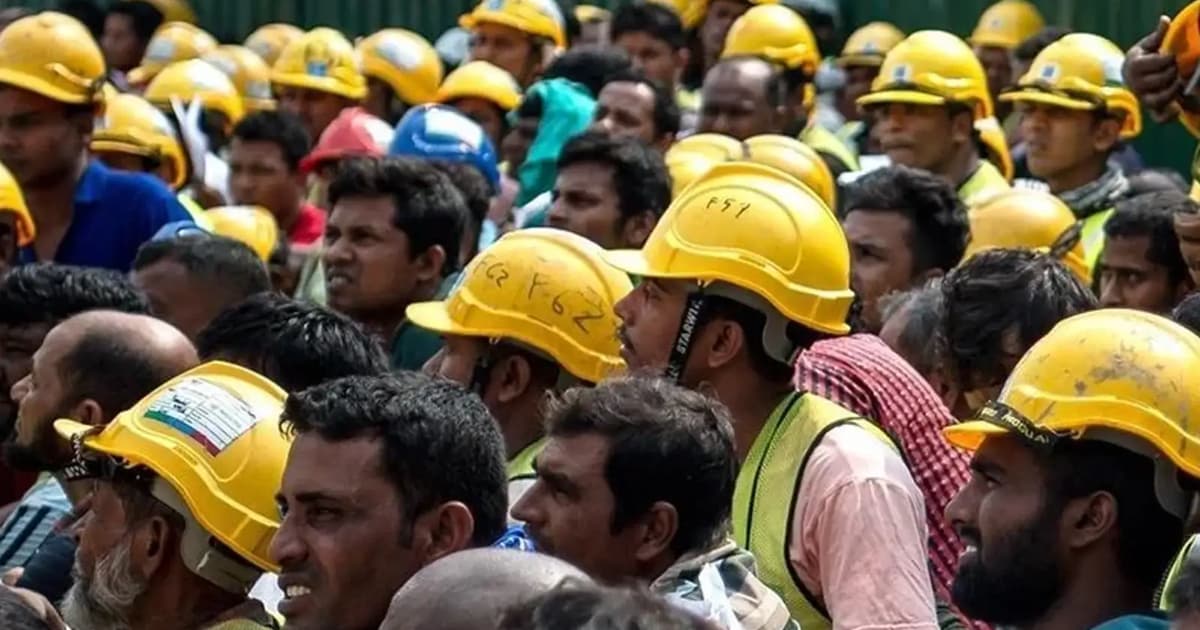
The Ministry of Foreign Affairs dispatched a formal diplomatic note to Malaysia asking it to resume the recruitment process under the previous arrangements. We have sent a letter seeking to resolve the issue concerning labour matters between Nepal and Malaysia through bilateral discussions,
said Lok Bahadur Poudel Chhetri, spokesperson for the foreign ministry. We expect a positive response.
Industry Associations Raise Monopoly Concerns With International Labor Bodies
The policy has also galvanized recruitment associations across South Asia. Four foreign recruitment associations have urged Putrajaya to allow all licensed recruitment agencies to recruit foreign workers for Malaysia. In a joint statement, recruitment associations from Nepal, Bangladesh, Myanmar and Pakistan said access to Malaysia’s Foreign Worker Centralised Management System should be fair, transparent and non-discriminatory, with proper regulatory oversight. Malaysian employers were previously free to recruit Nepali workers through any agency licensed by Nepal but can now recruit only through 25 agencies listed on FWCMS.

The associations called on Putrajaya and the governments of the four source countries to clarify the legal and institutional basis for any arrangement governing access to FWCMS and related recruitment processes. They said the eligibility criteria, selection mechanism, legal authority, contractual arrangements, scope of the agencies’ authority and relationship between the system operator and selected recruitment agencies should be disclosed, with the arrangements subject to appropriate regulatory oversight. They also called for an impartial review and investigation into any arrangement that may prevent legitimate agencies from accessing recruitment opportunities on an equal and transparent basis.
The Nepal Association of Foreign Employment Agencies on Monday also raised the issue with the International Labour Organization (ILO), alleging that Malaysia had selected recruitment agencies unilaterally and without sufficient transparency.
Malaysia’s move has created a monopoly. Our demand remains that participation, transparency and equal opportunities be ensured for all recruitment agencies.
Dik Bahadur Khatri, president of the Nepal Association of Foreign Employment Agencies
Former Klang MP Charles Santiago questioned the move, calling on the human resources ministry to disclose the criteria used to select the 25 Nepali agencies and the eligibility requirements they had to meet.
Worth a look

China’s Defence Minister Dong Jun Urges Cooperation in AI and Outer Space
Chinese Defence Minister Dong Jun used the opening of the 13th Beijing Xiangshan Forum on September 16, 2026,...
South Africa Investigates Deaths of Seven Women Amid Serial Killer Fears
South African law enforcement agencies are investigating the deaths of seven women whose bodies were discovered in and...

Russia and Ukraine Trade Energy Strikes Despite Donald Trump Announcement
NATO fighter jets shot down a drone in Lithuanian airspace originating from Belarus, while Russia and Ukraine exchanged...

British Tourist Drowns While Swimming at Crystal Bay Beach on Nusa Penida
A 54-year-old British tourist drowned while swimming at Crystal Bay Beach on Nusa Penida island near Bali during...