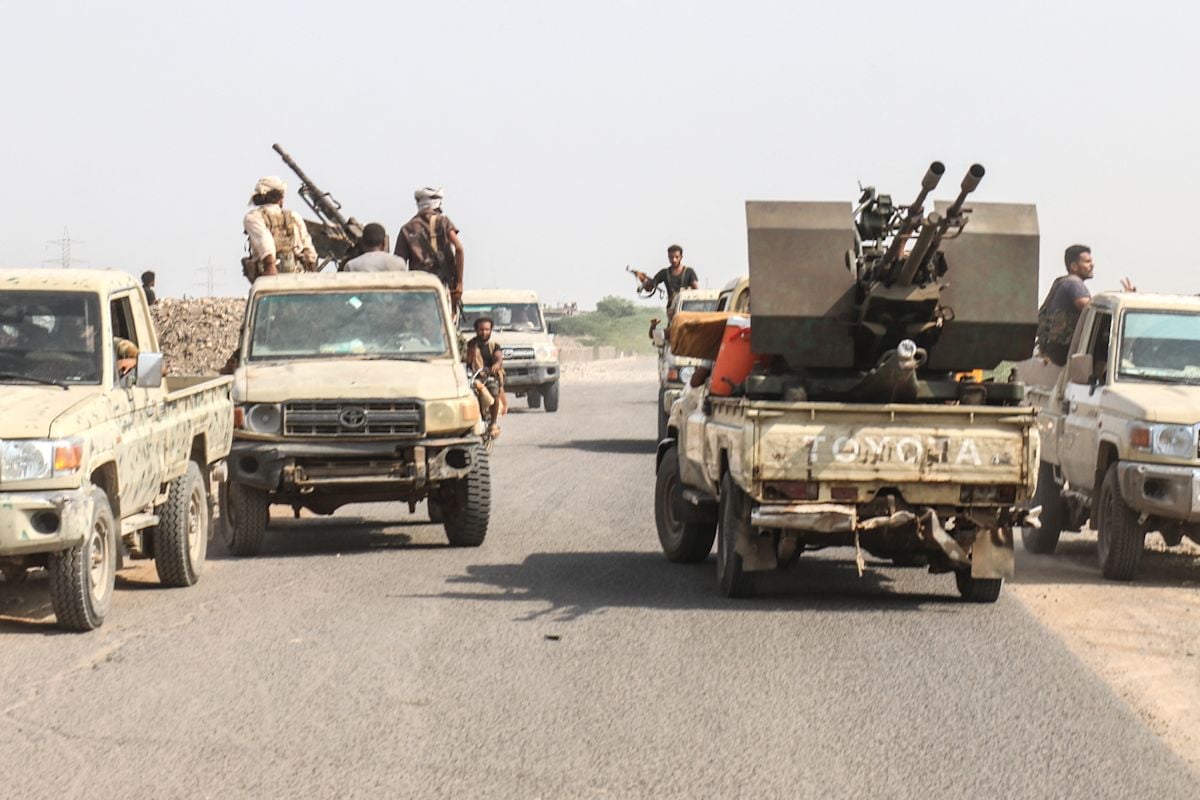
Thirteen Yemeni soldiers died in two days of fierce clashes with Houthi forces across Taiz and Lahj, the army reported Saturday. The fighting unfolds amid a broader military escalation, compounding a severe humanitarian crisis that has displaced thousands of families near Yemen’s strategic Red Sea coastline.
Escalating Clashes and Casualties Across Taiz and Lahj
The army-affiliated Tur al-Bahah Military Axis issued a brief statement detailing the fatalities without providing further operational specifics.
The flare-up forms part of a much broader military acceleration that began in early July, marking the most intense sustained violence since a nationwide relative calm followed the April 2022 truce. Front lines across Marib, Al-Jawf, and Al-Bayda have also seen renewed engagements alongside Taiz and Lahj as fighting intensified through September.
This autumn surge follows a Houthi west coast offensive launched in early September that rapidly redrew territorial lines. In mid-September, government forces reported that over 500 soldiers had been killed and roughly 1,500 wounded during month-long battles along the western corridor between August 9 and September 10, according to Xinhua News Agency. Government-backed National Resistance Forces claimed that more than 1,000 Houthi fighters were killed and thousands more wounded during those engagements, though these casualty figures could not be independently verified.
Strategic Struggle for the Red Sea and Bab al-Mandab Strait
The broader campaign centers directly on vital shipping lanes and coastal strongholds. Houthi forces captured the strategic port city of Mocha on September 10 before pushing south into the Bab al-Mandab area, seizing Mayun Island at the heart of the strait to tighten their grip on the chokepoint connecting the Red Sea to the Gulf of Aden.

Military analysts note that controlling the coastline remains a central objective for the insurgent group. Reporting from Sanaa, Al Jazeera journalist Yousef Mawry observed that the aim seems to be for the Houthis to push towards Bab al-Mandab, and gain territory towards the city and Red Sea port city of al-Makha [Mocha],
as detailed in regional coverage.
While government troops have mounted counter-offensives—recapturing strategic heights such as al-Wathra, Saeed Taha, Dhiban, al-Khadira, and al-Najdain on the Haifan front south of Taiz—the Houthis have simultaneously secured key ground. Insurgent fighters seized a strategic military base atop a mountain in western Taiz, granting them an overview of the entire surrounding sector and prompting government reinforcements to deploy.
Civilian Toll and the Unfolding Humanitarian Emergency
The violence continues to exact a heavy toll on non-combatants.
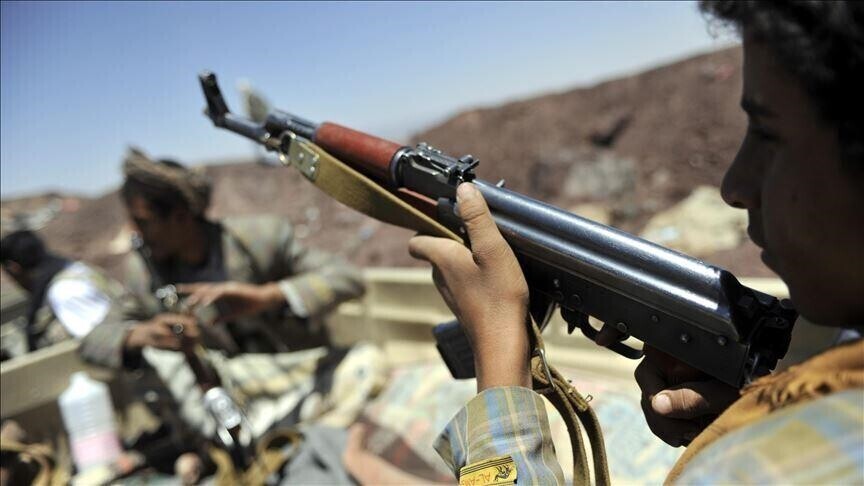
The renewed combat has triggered a fresh population displacement. The United Nations Office for the Coordination of Humanitarian Affairs reported that fighting forced nearly 1,800 families to flee their homes within 48 hours, completely emptying displacement camps in the Maqbanah and Jabal Habashi districts under heavy shelling. Aid organizations warn that emergency stockpiles are severely depleted and communications blackouts across combat zones are severely hampering relief efforts.
Prison Breakout Amid Rapid Territorial Shifts
A Houthi military official stated that insurgent fighters stormed a government-run prison in Mocha after capturing the city, freeing 210 detained members. According to the official, retreating government forces had locked the prisoners inside a large hall before abandoning the facility, our fighters broke into the facility and freed them,
the Houthi military official told Xinhua.
With fighting expanding toward Lahj province and drawing closer to Aden—the current seat of Yemen’s internationally recognized government—military commanders on both sides remain locked in a high-stakes contest for territorial dominance across the country’s southwestern gate.
Keep reading
Macklemore Pledges $1 Million in Tour Earnings to Palestinian Relief Groups
Following his removal from Ed Sheeran’s tour over pro-Palestinian remarks at MetLife Stadium, rapper Macklemore has pledged his...

Trump Defends Russian Oligarch Funding Donald Trump Jr.’s Bahamas Wedding
President Donald Trump defended wedding festivities funded for his son Donald Trump Jr. in the Bahamas, stating that...

Earl Spencer Claims King Charles Said They Would Forget Diana Soon
Princess Diana’s brother, Earl Spencer, has doubled down on allegations that Prince Charles reacted with elation and hostility...
Kohat Suicide Bombing and Compound Attack Leaves 23 Dead
The attack left at least 23 people dead, including 15 police officers and six civilians, according to updated...