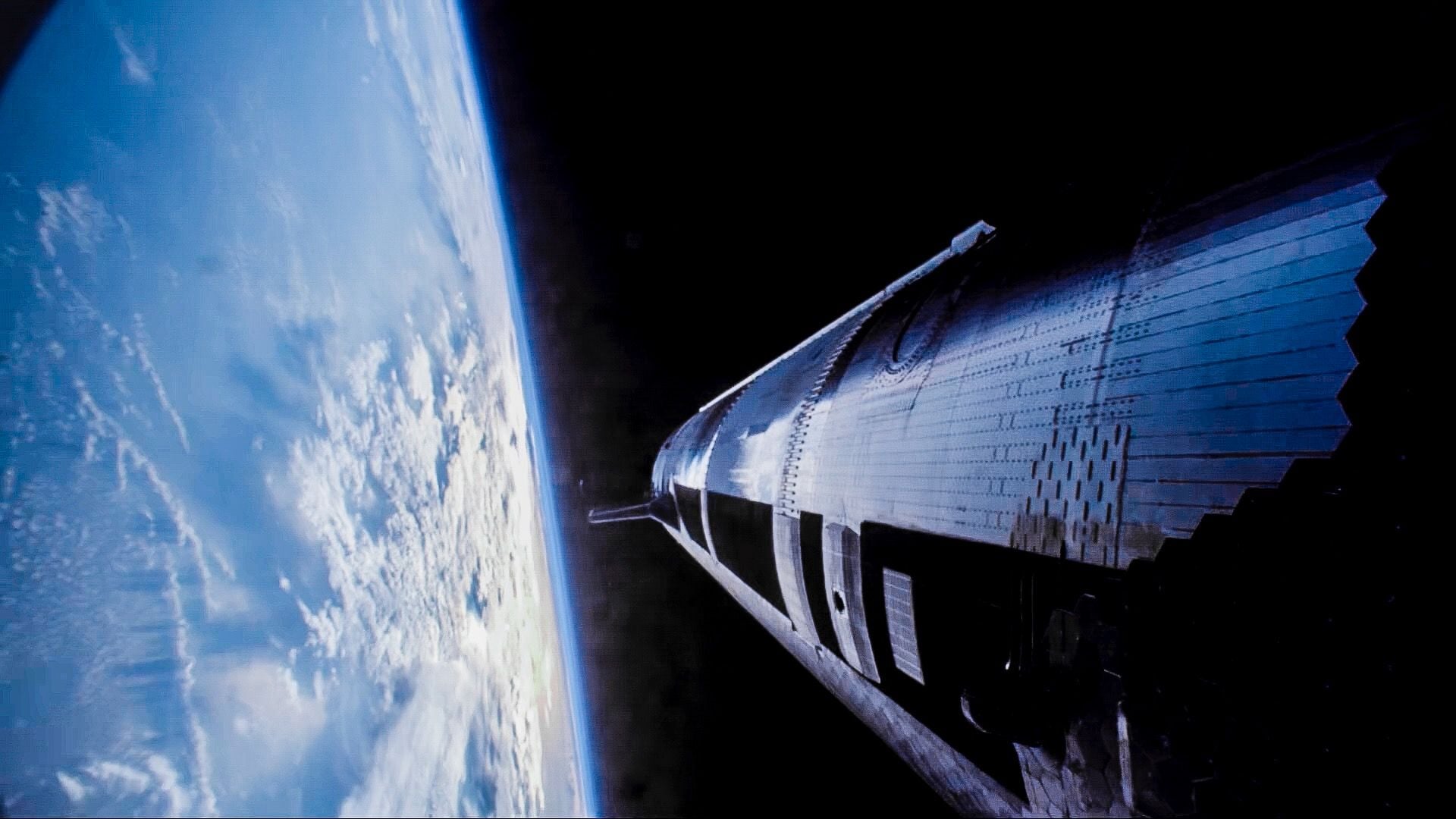
SpaceX is targeting September 28, 2026, for Starship’s 14th test flight from Starbase, Texas, with a 75-minute window opening at 8:15 a.m. EDT. The company will attempt its first-ever orbital mission, sending the mammoth spacecraft on a 10-hour flight to deploy 26 operational Starlink V3 satellites.
Orbital Goals and the Ten-Hour Test Flight
After more than forty months of developmental test flights, SpaceX will attempt to put its mammoth Starship into orbit around Earth for the first time during Flight 14. Prior flights that reached space flew strictly on suborbital trajectories, meaning gravity naturally pulled the vehicle back toward the ground. To stay in space, the spacecraft must instead travel sideways at 17,500 mph. At that staggering speed, the spacecraft is still “falling” toward the ground, but Earth’s surface is curving away at the exact same rate.
Flight tests until this point have intentionally flown passively safe suborbital trajectories to maximize public safety while allowing for maximum learning. By going to orbit, the next phase of developing Starship to be fully and rapidly reusable can begin. SpaceX is targeting Sept. 28 for Starship’s Flight 14, the next liftoff of its industry-shaking launch vehicle, and is planning to fly the towering spacecraft farther and longer than it has ever flown, with a very specific destination in mind: orbit. Of the baker’s-dozen launches so far under its belt, Starship has only ever flown suborbitally. Succeeding in its first orbital endeavor will serve as a huge milestone for the rocket, which is still in development.

Rather than an hour-long arc through the upper atmosphere, the 10-hour flight plan sends Starship to an altitude of approximately 170 miles (275 kilometers), where it will circle the globe around six times before executing a deorbit burn to initiate its return. Starship’s initial orbital mission is expected to fly at an altitude of approximately 275 km above Earth and complete approximately six orbits around the planet over the course of a nearly 10-hour flight, with splashdown targeted in the Pacific Ocean to the west of Chile. Coverage is planned to continue through splashdown, with the potential for hours of live views from Starship as it orbits Earth.
Deploying Starlink V3 Satellites and Regulatory Context
SpaceX is taking the opportunity to load Starship with a stack of 26 operational Starlink Version 3 (V3) satellites for deployment in low Earth orbit (LEO). This will also mark the first time the company plans to deploy Starlink V3 satellites into the constellation, delivering a payload that will dramatically expand connectivity speeds and reliability around the world.

Korean space and aerospace stocks rallied broadly on news that SpaceX will attempt to place its ultra-large Starship vehicle into Earth orbit for the first time. Nara Space Technology was trading significantly higher following the announcement, alongside Kenkoa Aerospace, Contec, Sphere, and RF Materials. Additional companies such as Korea Aerospace Industries, Hanwha Aerospace, Aju IB Investment, and Mirae Asset Venture Investment also drew buying interest early in the session following reports that SpaceX plans to conduct Starship’s 14th test flight, pending regulatory approval.
Hardware Modifications and Mission Execution Criteria
SpaceX has finished a full wet-dress rehearsal, loading liquid methane and oxygen into the stacked Starship and Super Heavy at Starbase, Texas, ahead of the upcoming Flight 14 test. Space Exploration Technologies Corp. announced the successful completion of a full launch rehearsal for its upcoming Starship Flight 14 test mission at the Starbase launch facility in Texas, where the fully stacked vehicle—comprising the Super Heavy booster and the upper-stage Starship spacecraft—was loaded with liquid methane and liquid oxygen.

During the rehearsal, engineers filled both stages with cryogenic propellants, verifying the ground-support infrastructure, propellant-loading systems, and countdown procedures under operational conditions. Vapor clouds were observed venting from the rocket as the cryogenic fuels transferred into the main storage tanks, confirming proper venting and safety protocols. After propellant loading, flight controllers executed a simulated countdown to test vehicle avionics, pad management systems, and telemetry feedback. The sequence concluded with the safe drainage of propellant back to the site’s storage tanks, demonstrating the ability to reverse the fueling process without incident.
Sharing an image from the rehearsal, SpaceX CEO Elon Musk wrote, May Starship have the Mandate of Heaven.
The phrase draws from ancient Chinese philosophy, where the Mandate of Heaven
grants success to an endeavor.
Worth a look
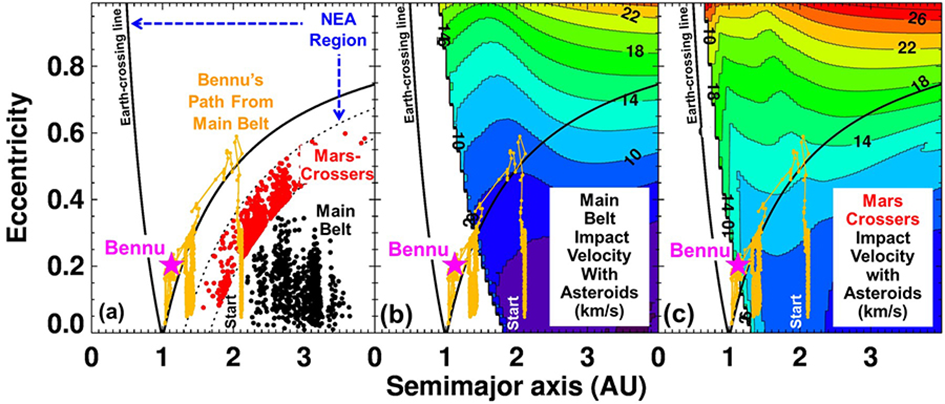
ETH Zurich Researchers Link Asteroid Bennu to Inner Solar System Transition Zone
Researchers analyzing titanium, chromium, and iron isotopes in samples returned by NASA's OSIRIS-REx mission have discovered that asteroid...

Researchers Discover Kayrasaurus changliensis Dinosaur Species in China
Researchers in China have discovered a new therizinosaurian dinosaur species named Kayrasaurus changliensis, which measured approximately 11.8 feet...
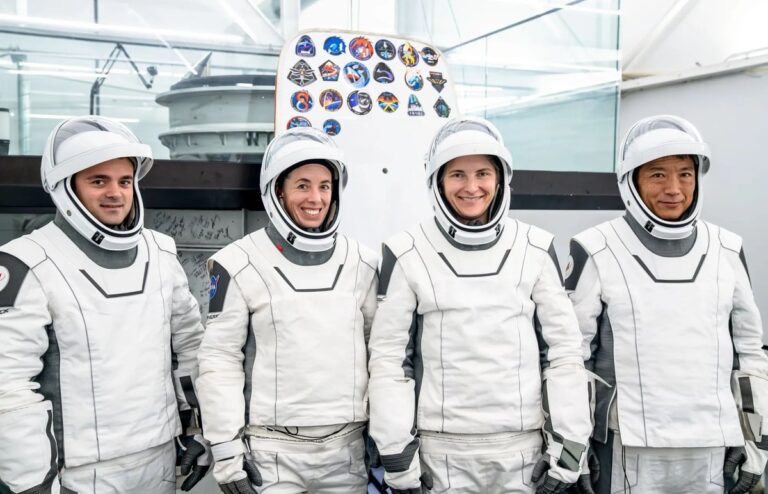
NASA Names Four Astronauts for SpaceX Crew-14 Mission to ISS
NASA has assigned four astronauts from three space agencies to the SpaceX Crew-14 mission, targeting a Falcon 9...
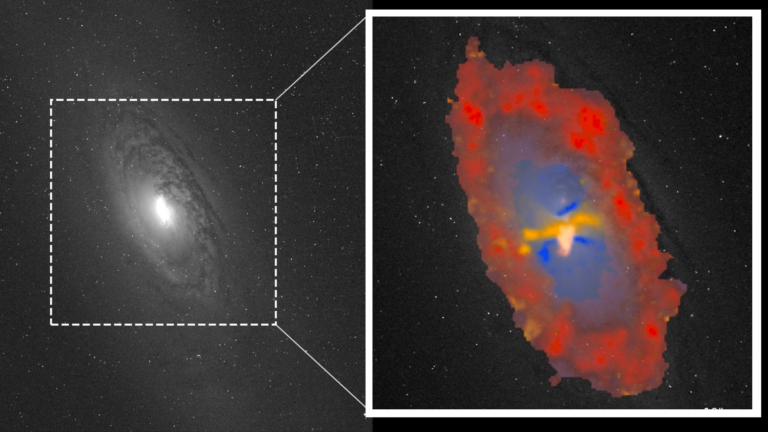
Black Hole Shock Waves Spark Star Formation in Nearby Galaxies
Astronomers studying nine local galaxies have discovered that shock waves from active supermassive black holes consistently travel perpendicular...