
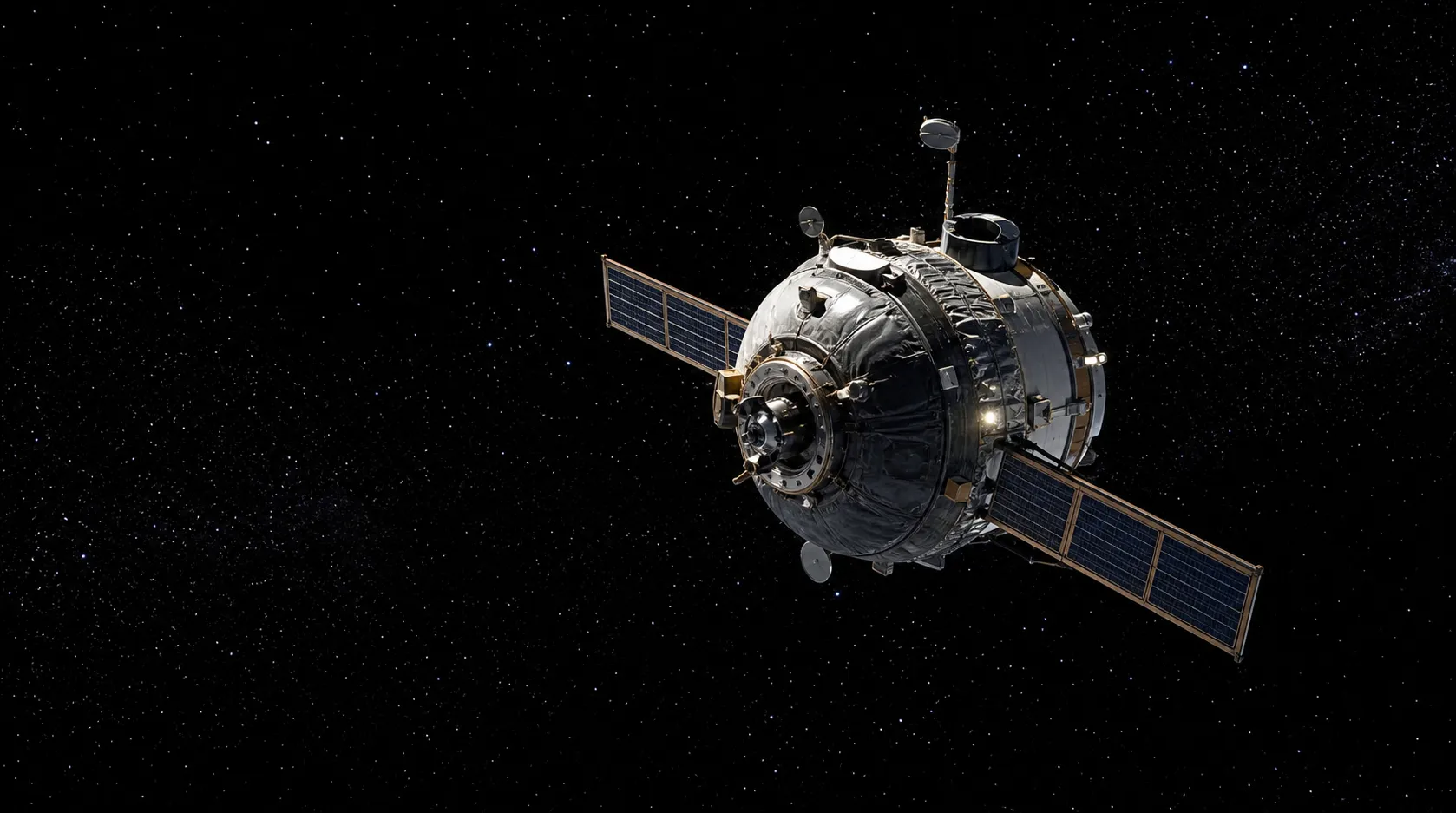
SpaceX is targeting a late 2027 launch for an orbital data center powered by Nvidia’s Vera Rubin architecture. Aimed at circumventing terrestrial power and cooling bottlenecks, the ambitious project faces formidable engineering hurdles in vacuum thermal management, radiation shielding, and high-volume laser communications.
Elon Musk’s Accelerated Orbit Timeline and Nvidia Partnership
SpaceX is pushing its artificial intelligence infrastructure plans ahead of schedule. While corporate filings previously pointed to initial satellite deployments as early as 2028, SpaceX CEO Elon Musk announced that the company is now targeting a fourth-quarter launch next year for an orbital data center designed in partnership with Nvidia.
The initiative anchors on a space-optimized version of Nvidia’s Vera Rubin NVL72 computing system. In a significant shift from earlier exploratory concepts that evaluated multiple chip suppliers, Musk confirmed during the company’s first earnings call as a public company that the initiative relies entirely on Nvidia’s technology stack.
On the regulatory front, the company has asked the Federal Communications Commission for authorization related to a mega-constellation that could eventually scale toward one million satellites, designed to consume about 250 kilowatts of power at peak operation.
Terrestrial Energy Deficits Meet the Vacuum of Space
The push toward orbit is driven by acute power constraints on Earth. Global data center electricity consumption is projected to roughly double to nearly 1,000 terawatt-hours by the end of the decade, according to estimates by the International Energy Agency. In Texas and across the United States, local resistance to power and water consumption has sparked intense municipal battles over land-based server farms.
Lawmakers have taken notice of the terrestrial bottleneck. Ted Cruz and John Hickenlooper, a Democrat from Colorado, explores opportunities for putting data centers in space. Proponents argue that space-based orbital data centers can draw continuous power directly from abundant solar energy while avoiding local political gridlock and heavy water usage.
Parallel efforts are underway across the technology sector.
Engineering Obstacles: Cooling, Radiation, and Hardware Obsolescence
Despite the appealing arithmetic of constant solar power, technical experts warn that orbital infrastructure faces steep physical barriers. Neuberger portfolio manager Evelyn Chow noted that while space is cold, it is also a vacuum, meaning traditional liquid-cooling methods used in terrestrial facilities do not function the same way.
Beyond thermal management, microchips must endure intense orbital radiation. Blaine Curcio, founder of Orbital Gateway Consulting, highlights another economic hurdle: the rapid pace of silicon development. Because GPUs evolve so quickly, launching expensive state-of-the-art hardware into space risks deploying obsolete processors within a couple of years.

Data transmission presents an equally demanding bottleneck. Transcelestial, a company specializing in laser-based communications, is working to bridge the gap between orbital hardware and ground infrastructure. Anyone can build data centers, but if you can’t talk to these AI systems, then those data centers are useless,
said Rohit Jha, CEO and co-founder of Transcelestial. Jha estimates that reaching true hyperscale in orbit will take another five to seven years and will likely require nuclear power sources.
Financial viability also depends on launch economics. While market watchers debate whether late 2027 marks a realistic debut or if true scale belongs to the 2030s, the race to industrialize low Earth orbit has entered an unprecedented phase.
Keep reading
Bolt Teams Up with Taxi Association to Roll Out 500 Electric Vehicles in Johannesburg
Bolt brought its electric ride-hailing category to Johannesburg on October 21, 2026, partnering with the South African Meter...

South African Road Agency Warns of Sophisticated Smishing Scams
Mass smishing campaigns targeting South African motorists use roughly 200 cloned domains mimicking traffic authorities and petrol brands.

Guernsey introduces £10 weekly savings for children in care
A new government savings scheme will set aside £10 a week for children in care in Guernsey, giving...

Stocks Rise as AI Earnings Boost Markets, France’s Bond Yield Hits 5%
Global stock markets climbed on Wednesday as strong corporate earnings countered French 10-year bond yields hitting 5% for...