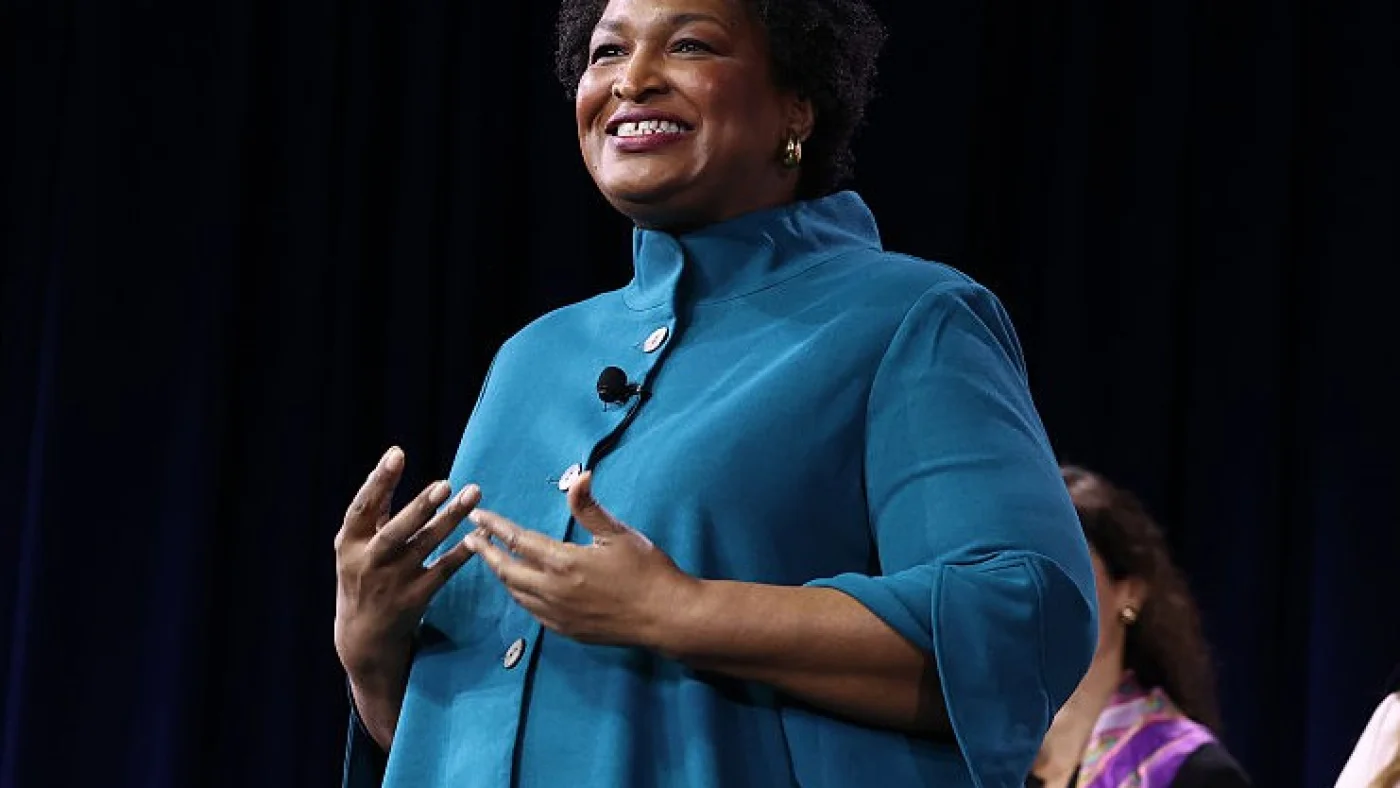
Georgia Democrats scored major victories in key state and local races in the November 4, 2026 midterm elections, with Keisha Lance Bottoms making history as the first Black woman elected governor of the state and the first Democrat in more than 20 years to hold that office, NPR reported.
The sweep extended well beyond the governor’s mansion. Incumbent Sen. Jon Ossoff defended his seat, defeating Republican Rep. Mike Collins, while Democrats also won the races for attorney general, secretary of state, and control of the state house. Stacey Abrams, who ran for governor in 2018 and 2022 and founded Fair Fight Action to combat voter suppression, told NPR’s Michel Martin that the wins give Democrats “an opportunity to start correcting and restoring rights that we’ve seen lost across the South for more than 20 years.”
Bottoms Flips the Governor’s Office Against a Record-Spending Opponent
Bottoms, a former Atlanta mayor, defeated Republican businessman Rick Jackson, a billionaire who tapped more than $200 million of his own fortune for the campaign, according to PBS NewsHour’s election coverage. She becomes the first Democrat to prevail in a Georgia governor’s race since 1998 and will succeed Republican Gov. Brian Kemp, who was barred by law from seeking a third term.
The victory bucks a longtime pattern in which Georgia voters resisted putting Atlantans in the governor’s mansion, and it marks the latest sign that the growth of the state’s largest metro area is reshaping Georgia politics. It was the third Georgia gubernatorial election in a row with a Black woman leading the ticket — Kemp twice defeated Abrams — and Bottoms is the first Black woman elected governor in U.S. history, the three prior Black governors having all been Democratic men.
Bottoms, a descendant of enslaved Georgians, rarely emphasized the historic nature of her candidacy. “I am at least a fifth-generation Georgian,” she said. “I say ‘at least’ because we can only trace our family back five generations — to a plantation in Crawfordville.” She noted that her grandfather moved to Atlanta from rural Georgia and had to “walk through these back doors” of downtown buildings she would later enter through the front as mayor.
Abrams: The Work Was About Trust, Not Just Party Rebuilding
Abrams, who opted against a third run for governor, framed the results as the payoff for years of steady organizing rather than a single election. She said the work she has done has not only been about rebuilding the Democratic Party but also restoring people’s trust, which takes time. With each election cycle and the time in between, she said, the effort has been about continuing that work.
She told NPR’s Michel Martin that the wins provide “us an opportunity to start correcting and restoring rights that we’ve seen lost across the South for more than 20 years.” She added that she is grateful that the work to combat what she describes as voter suppression led to this outcome, because it signals that conversation and consistency pay dividends.
What Bottoms Ran on — and What She Promised
Throughout the campaign, Bottoms emphasized policy over the barrier-breaking nature of her candidacy. She called for expanding Georgia’s Medicaid program to cover hundreds of thousands more people, raising the state minimum wage to $15 per hour, and increasing pay for teachers, firefighters, police officers, and other public employees. She also pledged to repeal Georgia’s ban on abortion after the sixth week of pregnancy — calling it “a life and death issue” and citing cases of women dying from miscarriage and pregnancy complications because physicians fear criminal prosecution — to pause new data center development, and to stop the installation of additional automated Flock cameras used by law enforcement.
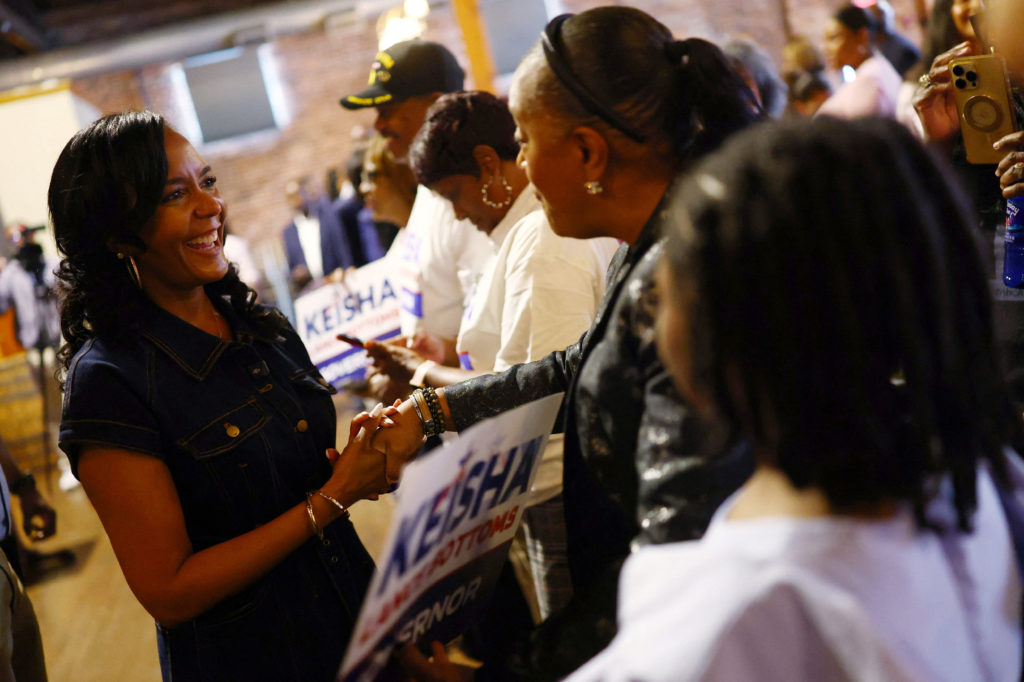
She also made countering the Trump administration a centerpiece, telling voters that Jackson had said he wanted to govern like “Trump with a Southern tone” and become the president’s “favorite governor.” “I’m not running to be his favorite governor,” Bottoms said during the rivals’ lone debate. “I’m running to work on behalf of Georgians.” Ahead of Election Day she said, “What we do in this moment will echo through history,” and urged voters to “choose hope over fear, progress over division, and come together to build a better Georgia for everyone.”
The Senate Picture and the Road Ahead
Ossoff’s reelection means Georgia will be represented by its first Jewish senator alongside its first Black senator, Raphael Warnock. Together with the governor’s race and the down-ballot Democratic wins, the results give the party a governing foothold in a key swing state for the first time in more than two decades.
Whether that foothold turns into durable policy change is the question Abrams says her party now has to answer. The rights she says were lost across the South — from voting access to abortion — are exactly the ones the new Democratic officeholders have promised to restore, and the next election cycles will show whether the trust she describes can hold.
Read the full NPR interview with Stacey Abrams: NPR’s report on Georgia’s midterm results.
Related reading
Barbie exhibition at Virginia Museum of History and Culture explores icon’s evolution
A Cultural Icon Takes Center Stage in Richmond For generations, the image of Barbie has been fixed in...
Bryce Alan Zundel, 66, dies leaving a legacy of family and work
The life of Bryce Alan Zundel, a man whose presence was defined by both a rigorous work ethic...

Austin Election Results: Key Propositions Pass and Fail
Austin voters have reshaped the city’s civic framework, greenlighting a suite of tax-funded infrastructure projects while simultaneously rejecting...

Marco Pierre White Method Uses Heat Transfer to Perfect Mushroom Risotto
The Mechanics of the Perfect Risotto For most home cooks, risotto is less a recipe and more a...