“We were all just sort of sitting there fiddling our fingers in the dark, and now we have at least an open line of communication, and we’ve planted our flag,” Tyler Lobdell, a staff attorney with Food and Water Watch, said on Monday.
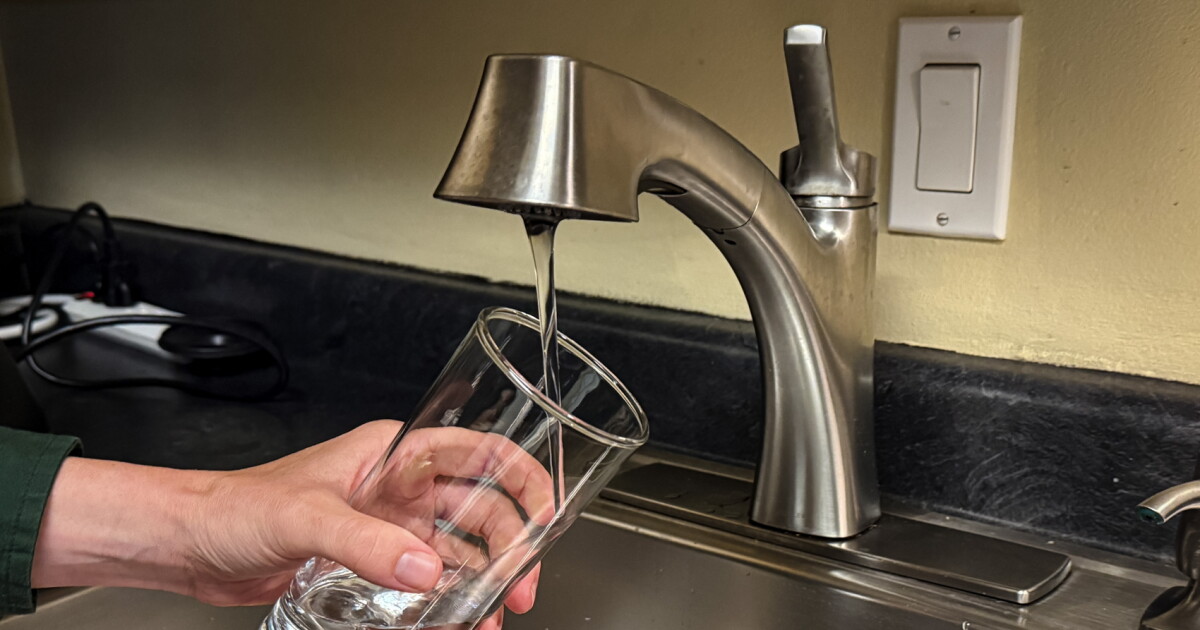
A coalition of national and Midwest-based environmental and public health organizations has filed a petition with the U.S. Environmental Protection Agency to drastically lower the legal limit for nitrate in public drinking water, Iowa Public Radio reported. The group is calling for the current threshold of 10 milligrams per liter to be reduced to 1 mg/L to better protect public health.
The petition seeks to force the EPA to act after the agency has started and stalled the process of reviewing the nitrate standard multiple times over the last decade. The coalition, which includes the Natural Resources Defense Council, the Union of Concerned Scientists, and the Environmental Working Group, argues that the existing level is insufficient to prevent long-term health risks.
The shift in health science
The federal government originally established the 10 mg/L limit decades ago to prevent infant methemoglobinemia, an acute, life-threatening blood disorder known as “blue baby syndrome.” However, the petitioners argue that modern science demands a more stringent standard.
Research suggests that long-term exposure to nitrate at levels below the current legal limit may be linked to increased risks for thyroid disease, neural tube defects, colorectal cancer, and other adverse health effects. To support their case, the coalition conducted a formal assessment involving more than 30 peer-reviewed human health studies and a benefit-cost analysis regarding three different drinking water standards.
Pollution in the Corn Belt
While nitrate is a necessary nutrient for plants, high concentrations in water systems threaten aquatic life and human health. In the Midwest, much of this excess stems from intensive farming. Stretching from southwest Minnesota to southeast Iowa, the Des Moines River drains some of the most productive farmland in the U.S.
Much of the nitrate found in these rivers originates from manure and fertilizer applied to corn and soybean fields, often without year-round groundcover. This issue is further exacerbated by subsurface tile drainage, a system used to move water from farm fields into ditches or streams, which facilitates the movement of nutrients into the broader watershed.
“A stronger drinking water standard for nitrate is critical, but we also have to stop nitrate pollution at the source,” said J.P. Rose, who leads the Natural Resources Defense Council’s campaign to reduce nitrogen pollution.
Rose suggested that government intervention, such as requiring reporting and establishing limits on the overapplication of fertilizer, could incentivize the use of conservation practices like riparian buffers, crop diversification, and cover crops. He noted that nitrogen regulations in the European Union and New Zealand have served as successful models for reducing nitrate loads.
The cost of clean water
According to the coalition’s analysis, the public health benefits in the United States would be 3.9 times greater than the projected infrastructure costs for public drinking water providers over the next 50 years if the 1 mg/L standard is implemented.
To mitigate these costs, advocates are calling for increased federal funding. Nancy Stoner, a senior attorney with the Midwest-based Environmental Law and Policy Center, emphasized that federal grants and loan programs must be “robustly funded” to assist utilities in meeting these new requirements.
“Everyone should be able to drink the tap water anywhere in the U.S. safely, and that’s what the Safe Drinking Water Act requires,” Stoner told Iowa Public Radio.
While federal law mandates that agencies respond to such petitions within a “reasonable time,” it does not establish a specific deadline for the EPA to issue a final decision.
Related reading
Mayor Mamdani Announces 16 Judicial Appointments to NYC Criminal and Family Courts
Mayor Zohran Kwame Mamdani announced 16 judicial appointments and reappointments to New York City’s Criminal and Family Courts...

Vermont Minimum Wage to Increase by 49 Cents in January
Vermont’s minimum wage floor is set to shift upward on January 1, moving from $14.42 to $14.91 per...

Student Writer Shares Experience with Imposter Syndrome
In a recent column for the Her Campus at Northeastern chapter, a student writer recounts her personal transition...

Pastor Phil Explains the Ministry of Reconciliation in 2 Corinthians 5
On November 16, 2026, Pastor Phil of Providence Church in Raleigh, North Carolina, addressed his congregation with a...