
Vermont’s minimum wage floor is set to shift upward on January 1, moving from $14.42 to $14.91 per hour.
This 49-cent increase, confirmed by the Vermont Department of Labor, is a routine adjustment mandated by state statute rather than a fresh legislative vote.
For a full-time worker logging 40 hours a week, the change translates to an extra $1,000 in gross annual pay. While the bump might seem marginal to some, it represents the latest turn in a long-standing debate over how the state balances the rising cost of living with the operational pressures facing local businesses.
The adjustment is triggered automatically under 21 V.S.A. § 384. Each year, the state calculates a raise based on the lesser of 5% or the percentage increase in the Consumer Price Index. The Department of Labor utilized the non-seasonally adjusted CPI-U from August to August, which showed a 3.4% rise, according to the agency’s announcement. Last year, the state saw a similar, though slightly smaller, 41-cent increase.
Despite the annual hike, Vermont remains in the lower half of New England when it comes to wage floors. Connecticut, Maine, Massachusetts, and Rhode Island have already pushed their minimums to $15 an hour or higher. New Hampshire, by contrast, continues to rely on the federal minimum of $7.25 an hour, a rate that has not budged since 2009, as noted in reporting by the Brattleboro Reformer.
The economic impact of these adjustments is often debated in legislative halls. Chris Winters, deputy commissioner of the Vermont Department of Labor, suggested that the focus should remain on broader affordability markers like housing, healthcare, and taxes.
“When it comes to wages and affordability, we really need to focus on the big picture, which is taxes, housing costs, healthcare costs,” Winters told the Valley News. He argued that lowering these fundamental costs often provides more relief to families than incremental wage hikes.
Business groups have historically expressed caution regarding these mandated increases. During a 2018 debate, Ashley Romeo-Boles, then a government affairs specialist with the Vermont Chamber of Commerce, testified that every $1 increase in wages could drive labor costs up by $1.25 or more due to associated expenses, potentially forcing businesses to trim staff or reduce benefits.
This tension between pay growth and business viability is a recurring theme in the state’s labor discourse.
Patricia Anderson, an economics professor at Dartmouth College, pointed out that the actual effect of this specific 49-cent increase may be muted in certain regions. “In the actual Upper Valley, it won’t have an impact,” Anderson told the Valley News.
Many employers in that area are already paying well above the state minimum to compete for talent. For instance, job listings for cafe associates in Norwich and Woodstock show starting pay ranging from $15 plus tips to over $18 an hour.

Anderson suggested that the real trade-off lies in the pace of growth for smaller, rural enterprises. “The question really becomes: Are you growing slower than you would have if you hadn’t been forced to increase your compensation?” she told the Reformer.
While data on short-term business hiring patterns remains difficult to isolate, the reality for many workers is that minimum wage growth has frequently struggled to keep pace with the broader cost of living, according to the 2025 State of Working Vermont report from the Public Assets Institute.
The upcoming change also affects tipped employees, whose minimum wage is set at 50% of the standard rate. That figure will rise from $7.21 to $7.46 per hour starting January 1. Under state labor rules, employers are still required to ensure that total compensation—including tips—reaches at least the standard minimum wage for the hours worked. If tips fall short, the employer must cover the difference.
As of January 2026, Vermont ranked as the 19th-highest minimum wage state in the country. With the scheduled adjustment for 2027 already on the books, the state continues its path of incremental, inflation-indexed increases. For workers who believe they are not being compensated according to these requirements, the Department of Labor maintains a dedicated Wage and Hour Unit to field inquiries and complaints.
Worth a look
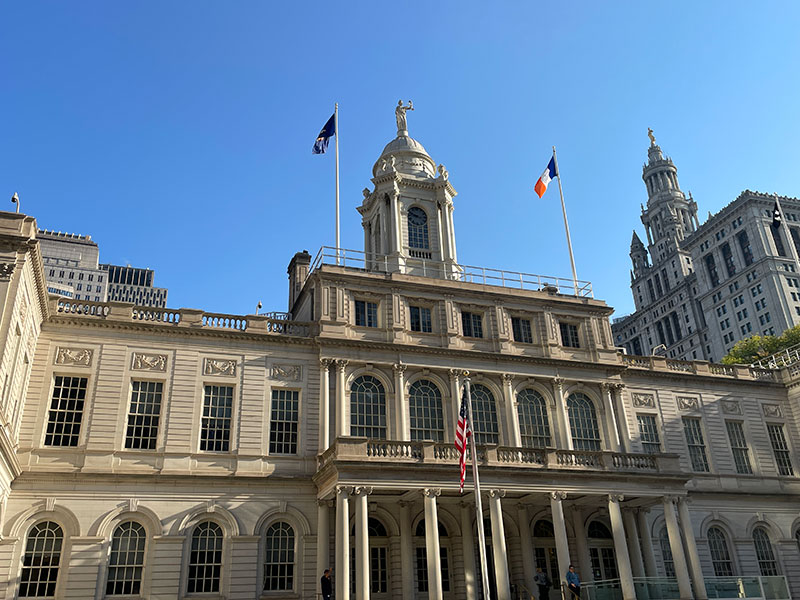
Mayor Mamdani Announces 16 Judicial Appointments to NYC Criminal and Family Courts
Mayor Zohran Kwame Mamdani announced 16 judicial appointments and reappointments to New York City’s Criminal and Family Courts...

Student Writer Shares Experience with Imposter Syndrome
In a recent column for the Her Campus at Northeastern chapter, a student writer recounts her personal transition...

Pastor Phil Explains the Ministry of Reconciliation in 2 Corinthians 5
On November 16, 2026, Pastor Phil of Providence Church in Raleigh, North Carolina, addressed his congregation with a...

5,734 People Identified in 2026 K-Count Homelessness Results
Kentucky’s latest snapshot of homelessness reveals a complex, uneven landscape that defies simple statewide trends. During the most...