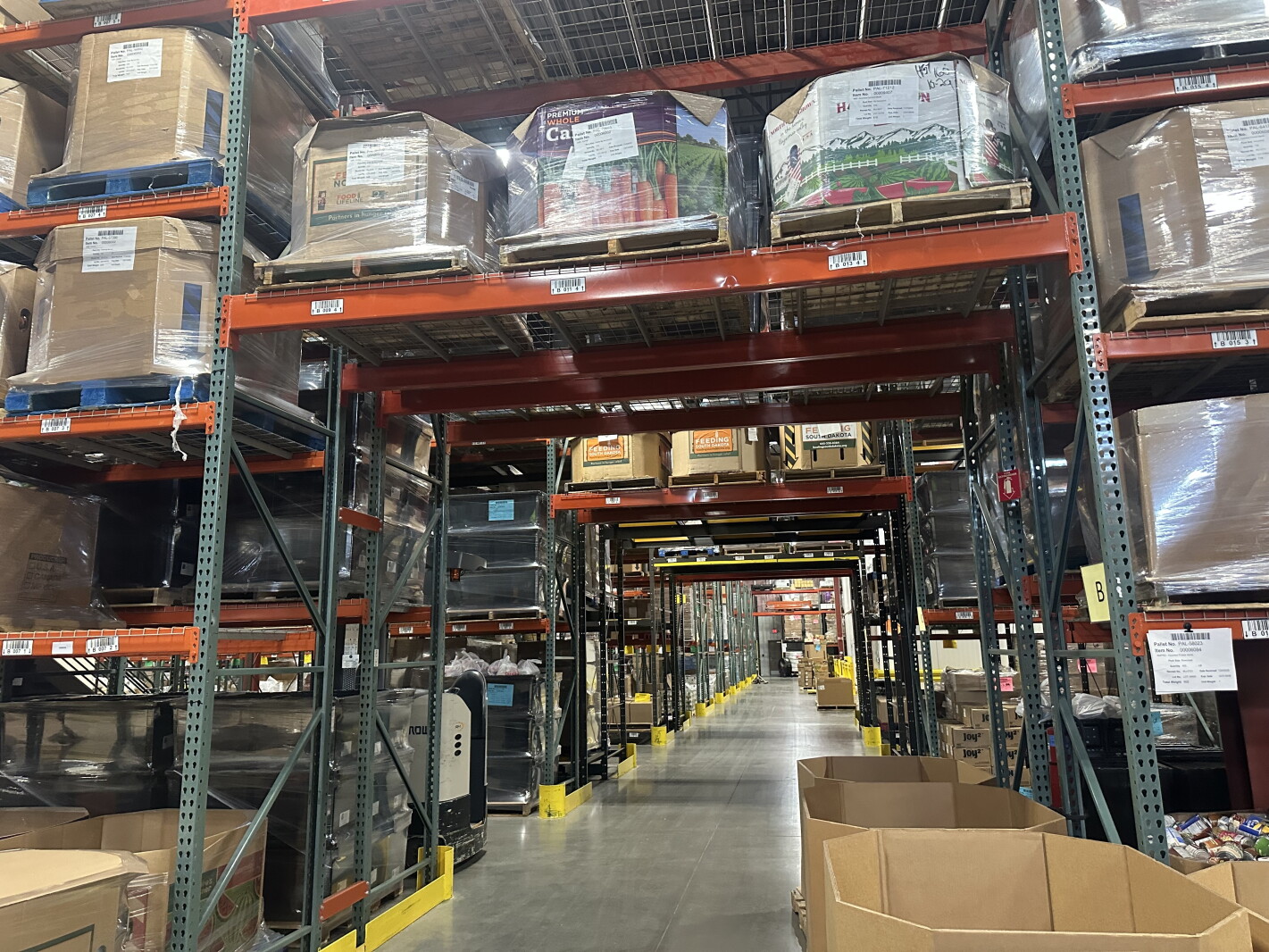
Agricultural partnerships and USDA programs supply the produce, proteins and dairy that stock Feeding South Dakota’s shelves, Agweek reported. More than a third of the food the non-profit distributes arrives through federal commodity programs.
Companies across the beef, pork, poultry and dairy sectors feed the pipeline. “To be able to supplement with really healthy produce and proteins and dairy, that’s just not something that we always get or can afford to buy as a food bank. We would only get these programs because of our partnerships with the agricultural sector or our commodity food programs,” said Lori Dykstra, CEO of Feeding South Dakota.
Dykstra described the arrangement as a complete circle. Overage products are purchased through the USDA and directed to people in need. “I love that it’s like a complete circle. That it’s supporting the industry, if they’ve got an overage in an area, we can purchase those products up through the USDA, and then get them out to the people who need it most,” she said.

Rising fuel prices and vanishing rural grocery stores have pushed some farmers and ranchers into the same lines they help supply. “It’s tough times for families, very humble South Dakotans, who don’t want to have to be in a food line. But, we’re here for them,” Dykstra said.
Seasonal collaborations keep the calendar full. Prairie Farms provides milk for Thanksgiving boxes; Pipestone will donate pork in December to reach between 12,000 and 14,000 families. The South Dakota Cattlemen’s Foundation has backed the food bank for nearly 14 years through its Prime Time Gala, which has funded the purchase and distribution of more than 1.7 million pounds of beef since 2013. The next gala is scheduled for June 12, 2027.
USDA’s Food and Nutrition Service (FNS) operates the commodity programs — The Emergency Food Assistance Program (TEFAP) and the Commodity Supplemental Food Program (CSFP) — that together supply more than a third of Feeding South Dakota’s inventory.
When agricultural markets produce overages, the Agricultural Marketing Service (AMS) purchases the surplus under USDA authority and directs it through FNS distribution channels to food banks, creating the complete circle Dykstra described where industry surplus becomes emergency nutrition.
“All of the cattlemen from across the state come together and we get to celebrate the work that they’re doing. But, the way they choose to celebrate is to give back to the neighbors who need it the most. And so making sure a good protein, like beef, is in the hands of families who are struggling, it’s just something that right now a lot of families can’t afford,” Dykstra said.
Keep reading
- Michael Bloomberg’s Falcon 900LX Makes 16-Minute Repositioning Hop to Newark Home Base
- Chatham County Sues to Block Savannah Annexation of Bethesda Land
- Indonesia Is Preparing to Supply Japan With Forest Carbon Credits (archyde.com)
- Sparta II burns in Finnish waters after drone strike on Russian supply ship (newsarchyuk.com)
Michael Bloomberg’s Falcon 900LX Makes 16-Minute Repositioning Hop to Newark Home Base
Michael Bloomberg's Dassault Falcon 900LX flew 17 nautical miles from Teterboro Airport to Newark Liberty International Airport on...

Chatham County Sues to Block Savannah Annexation of Bethesda Land
County filed suit Nov. 13 in Chatham County Superior Court seeking a declaratory judgment and temporary restraining order....

Baltimore Firefighters Sue City Over Unpaid Overtime After Missed Back-Pay Deadline
Baltimore firefighters filed a federal lawsuit Thursday after the city missed a September deadline to pay back overtime...

William Henry Middle Demolition Starts Dec. 7, Pending State Funding
Demolition of the closed William Henry Middle School on Carver Road begins Dec. 7, the Capital School District...