
Stock markets swung wildly over a recent two-week period, erasing and then recovering hundreds of billions of dollars in value as investor sentiment shifted from fear over artificial intelligence development slowing down to excitement driven by new software tools.
Anthropic Warning and the Mid-September Market Rout
The turbulence began on September 12, 2026, when Anthropic CEO Dario Amodei published a widely discussed essay urging developers to slow the creation of powerful artificial intelligence models. That call drew swift public backing from OpenAI chief Sam Altman and SpaceX CEO Elon Musk. The intervention appeared to validate growing industry warnings regarding existential risks tied to rapid technological expansion.
Financial markets reacted immediately. On the first trading day following the essay’s publication, AI infrastructure stocks tumbled as traders feared that decelerating development would translate directly into reduced spending on computing hardware. Between September 14 and 15, the tech-heavy Nasdaq 100 Index dropped 1.5 per cent, wiping out more than US$600 billion in market value. During that sell-off, firms such as CoreWeave and Lam Research Corporation dropped more than 9 per cent.
Macroeconomic pressure compounded the decline. The Federal Reserve raised its benchmark interest rate by a quarter point that same week to a range of 3.75 per cent to 4 per cent.
Meta Rebound and the Subscription Economy Backlash
The wave of pessimism dissolved just as quickly as it arrived. Sentiment reversed entirely when excitement surged around the popularity of Meta Platforms’ Muse personal assistant. Traders rushed back into technology holdings, driving Meta shares up 11 per cent in a single session on Monday, September 21. That surge placed the parent company of Facebook and Instagram on pace for its best month in more than a decade, recovering from earlier struggles over whether heavy capital expenditures would yield returns.
Other hardware and semiconductor firms joined the rally. Arm Holdings jumped 17 per cent, while Intel and Advanced Micro Devices each gained more than 9 per cent. The Philadelphia Stock Exchange Semiconductor Index, known by its ticker SOX, climbed 6 per cent across Monday and Tuesday, pushing the Nasdaq 100 to its first record close since early June.
This renewed optimism about artificial intelligence agents handling tasks like price comparison, customer service, and trip booking triggered sharp sell-offs among companies reliant on recurring subscription fees. Insurer Allstate fell 8.9 per cent, cable provider Charter Communications sank 12 per cent, and Planet Fitness shed 14 per cent. By the end of the week, approximately US$3 trillion had been added back to the Nasdaq 100 from its September 15 low.
Valuation Shifts and the Financing Debate
Despite the violent swings in market capitalization, underlying corporate results remained largely unchanged across the two-week period. Market observers noted that no major firm reported a materially different financial quarter during the volatility, pointing instead to sentiment-driven repricing.
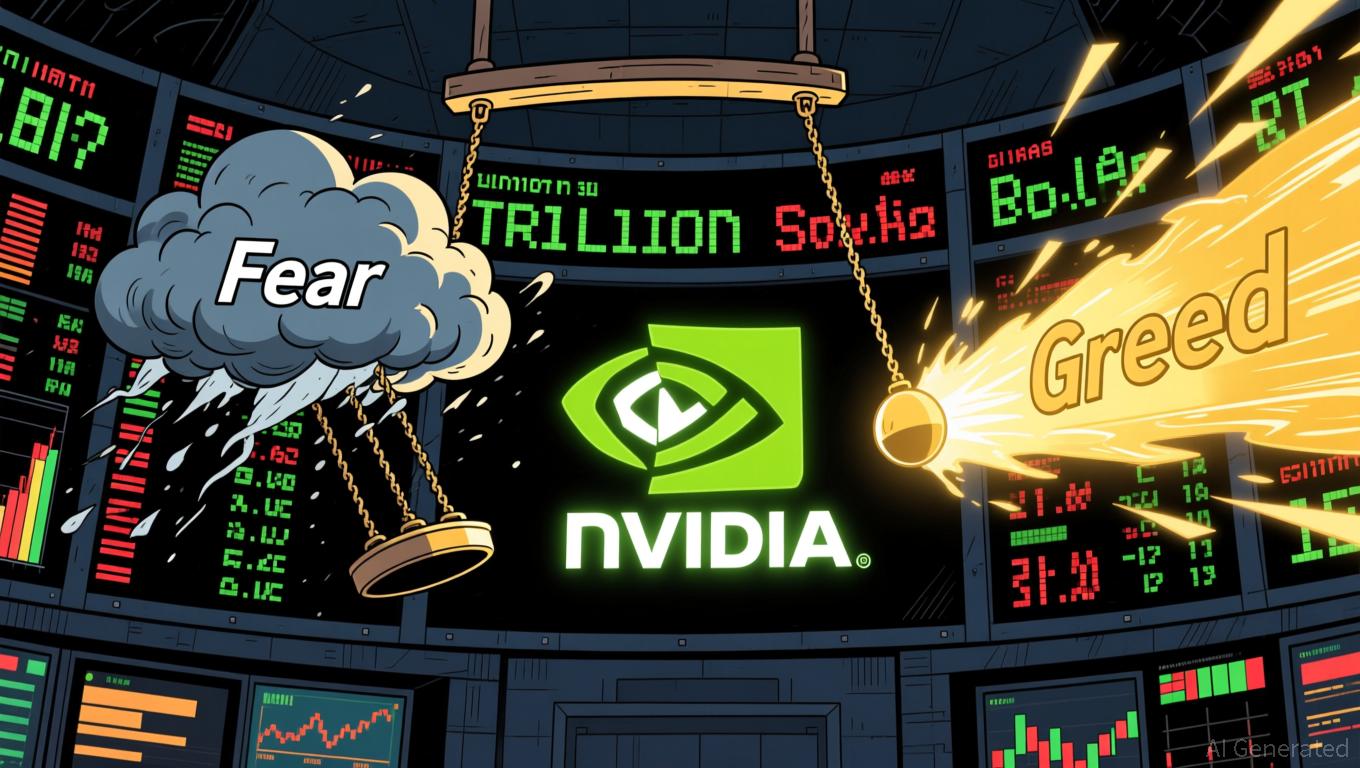
This divergence left several key infrastructure providers trading at historically attractive multiples. Nvidia shares reached their cheapest valuation in more than a decade, trading at less than 17 times projected profit over the next 12 months—roughly half of the multiple commanded in 2025.
You don’t have to believe that this pace of growth is going to continue for five years in order to own companies like Nvidia or Broadcom and some of the others, because their valuations have really come in,
said JoAnne Feeney, a portfolio manager at Advisors Capital Management, whose firm maintains holdings in both enterprises.
Skeptics, however, point to structural vulnerabilities in how the artificial intelligence build-out is financed. Hyperscaler capital spending is forecast near $625 billion for 2026, absorbing approximately 93 per cent of their operating cash flow, up sharply from 33 per cent in 2023. As internal cash piles deplete, marginal spending relies increasingly on debt, while circular financing models—where chip makers fund cloud providers that subsequently purchase infrastructure hardware—continue to draw scrutiny from financial analysts.
Market Sentiment Versus Fundamental Cash Conversion
Financial analysts emphasize that the recurring whiplash reflects a market pricing forward-looking assumptions rather than verified cash returns. With capital expenditures running at historic highs across data centers and chip manufacturing, the primary variable remains whether projected demand will ultimately convert into booked corporate profits.
Market participants are now turning their attention toward upcoming earnings reports from Micron Technology to gauge whether data-center memory demand is materializing as projected, alongside updated guidance from major cloud providers regarding their ongoing borrowing costs and infrastructure commitments.
Keep reading
Xbox Project Helix Projected to Outperform PlayStation 6 in Raw Power
Hardware leaker KeplerL2 has revealed that next-generation graphics chips for the PlayStation 6 and Xbox Project Helix have...

Meta Unveils $1,299 VR Glasses With Lighter Design at Meta Connect
Meta unveiled its $1,299 Meta VR Glasses at the Connect conference on September 23, 2026, featuring a 100-gram...
TASK#STOMP Malware Uses Windows Tools to Steal Sensitive Enterprise Data
Security researchers have uncovered TASK#STOMP, a Windows backdoor using hidden PowerShell commands, VBScript installers, and scheduled tasks to...
South Korean Manufacturing Sentiment Rises on Chip and Cosmetic Exports
South Korea’s manufacturing sentiment rose for the fourth quarter as strong exports of semiconductors and cosmetics lifted the...