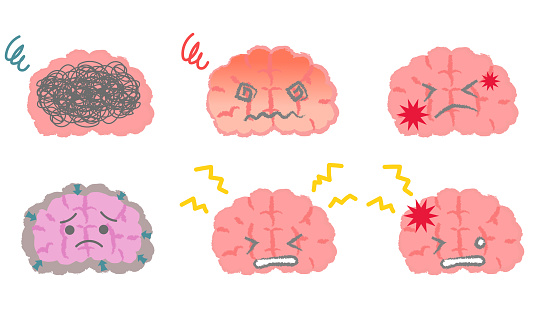
Artificial intelligence models are scoring up to 83 percent on social reasoning tests, yet new research reveals these systems possess almost no functional alignment with the human brain’s social processing centers.
A study co-authored by Dr. Jiaoping Chen of the University of Baltimore’s Merrick School of Business suggests that while AI can mimic the appearance of empathy, its internal logic operates on a fundamentally different plane than human cognition.
The research, titled “Attention Mechanisms for Theory of Mind: Weak Brain-Transformer Alignment Despite Behavioral Success,” was accepted for the 2026 IEEE International Conference on Bioinformatics and Biomedicine. By comparing how four different language models process social stories against fMRI brain scans from 58 human participants, the researchers identified a striking disconnect.
While the AI models excelled at identifying social cues and predicting behavioral outcomes, their internal neural activity showed a correlation with human brain data as low as $r =0.047$ in the medial prefrontal cortex.
By calculating the most probable subsequent word, the AI successfully generates correct outputs while failing to construct any internal framework regarding human intent or thought. The findings indicate that these models function more like pattern-matching engines than sentient entities capable of Theory of Mind—the cognitive ability to attribute mental states to oneself and others.
This distinction is critical for industries increasingly reliant on automated customer service and human resources tools. If a system arrives at a "correct" empathetic response by identifying statistical probabilities rather than understanding human frustration, the risk of misinterpretation in complex, unscripted scenarios is high.
For corporate executives and technology officers, the study provides a set of practical guardrails for assessing AI vendors. The researchers warn that standard benchmark scores can be misleading, as models often excel by memorizing phrase patterns rather than demonstrating genuine social comprehension.
Although these systems frequently succeed in finding correct solutions, their underlying methodology bears little resemblance to neurological processing found in humans. A high benchmark score does not mean a system understands people the way we do.
This discrepancy raises immediate concerns for sectors where interpersonal nuance is paramount. When software is marketed as “empathetic,” the study suggests that organizations should treat such claims with skepticism, prioritizing functional productivity over the illusion of humanlike emotion. The researchers emphasize that because AI lacks a genuine social brain, human oversight remains an essential requirement for sensitive tasks such as screening job applicants or resolving interpersonal disputes.

To quantify the divide, the researchers tested models ranging from 355 million to 7 billion parameters. While the larger 7-billion-parameter models achieved high accuracy in distinguishing social stories from physical ones, the lack of statistical significance in brain-region alignment persisted even after correcting for multiple comparisons.
| Metric | AI Performance |
|---|---|
| Social Reasoning Accuracy | Up to 83% |
| Social vs. Physical Story Separation | Up to 98% |
| Brain Correlation (mPFC) | 0.047 (Not Statistically Significant) |
The study changes how researchers approach AI evaluation, moving beyond simple output metrics to examine the internal mechanisms of these systems. As AI continues to integrate into professional workflows, the distinction between solving a social test and understanding a social interaction becomes a defining challenge for developers and end-users alike.
The research, led by first author Xiaoyan Li alongside Dr. Chen and a team of computational and healthcare researchers show that although artificial intelligence remains a powerful tool for processing text, the capacity for genuine social comprehension continues to be a uniquely human trait.
Worth a look

Jerome Thomas Says He Is Ready for Moorhead Murder Retrial
Facing two counts of murder and three counts of attempted murder, 36-year-old Jerome Thomas prepares for his upcoming...
Commanders Players and Key Stats to Watch Against the Giants
Washington Commanders quarterback Jayden Daniels and New York Giants starter J.J. McCarthy headline Thursday Night Football, with Daniels...
10 Things to Watch in Giants vs. Commanders
Quarterback J.J. McCarthy heads into Thursday Night Football on a six-game winning streak as a starter, while the...
Yordan Alvarez and MLB Stars Shine at 2026 MLB Awards
The World Series may have concluded two weeks ago with the Milwaukee Brewers hoisting their first Commissioner’s Trophy,...