
Sydney Convention Centre Hosts 40th Anniversary of Australian International Education Conference
More than four decades after the conference first brought the industry together, the Australian International Education Conference opened on October 27 at Sydney’s International Convention Centre under the theme “Future Thinking”. Running through October 30, the milestone event arrives as policy settings across major study destinations tighten, student behaviors shift, and institutions look increasingly toward transnational education and new markets for growth.
Co-hosted by IDP Education and the International Education Association of Australia, the conference serves as a focal point for an export industry currently facing political debates surrounding migration, housing, and sustainable growth. While the economic footprint of the sector remains vast, federal officials opened the four-day gathering by directing attention toward broader diplomatic and human impacts.
Minister Clare Defends Integrity Measures and International Connections
Opening the conference remotely, Australian Education Minister Jason Clare emphasized that international education extends far beyond financial metrics. “International education employs a lot of Australians. It makes an important contribution to our economy. But it does more than that,” Clare told delegates, according to The PIE News. “It also connects us to the world.”
Clare acknowledged the significant challenges facing the sector, defending government measures introduced to strengthen integrity, target unscrupulous operators, and improve student protection. At the same time, he pointed to a major structural shift: Australian universities taking their operations offshore. According to Clare, five Australian institutions have recently opened campuses in India, with Western Sydney University preparing to launch another in Greater Noida. Vietnam has also approved an investment license for RMIT’s new Hanoi campus.
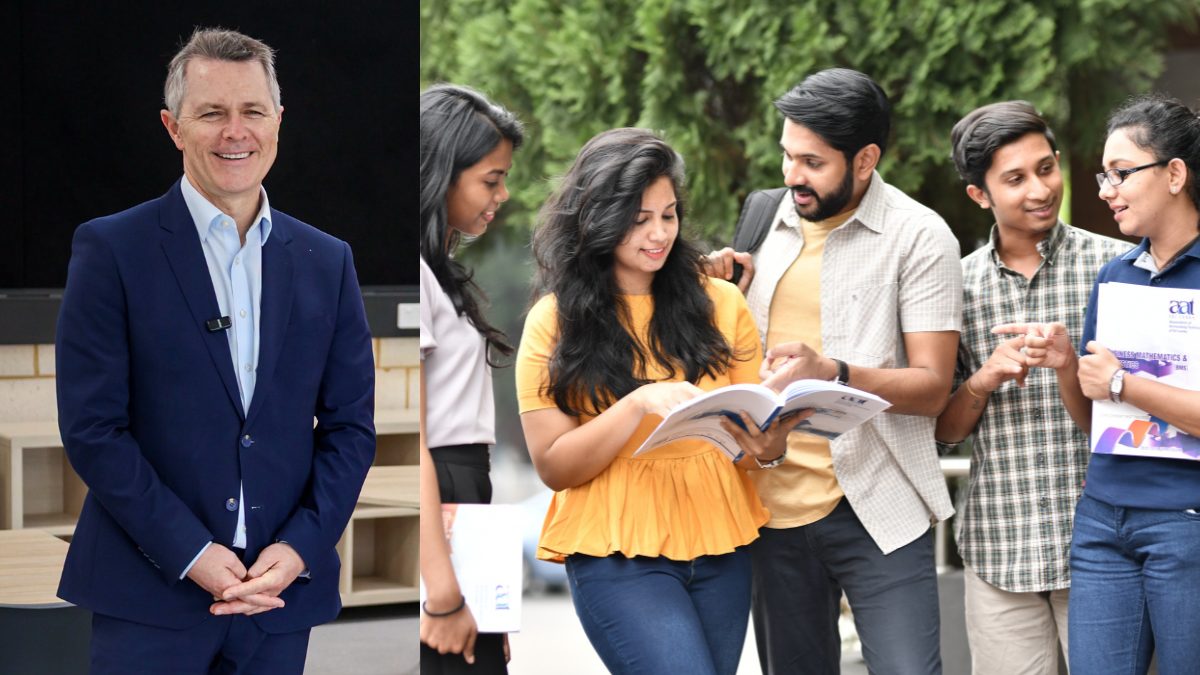
“Not everyone can come here to study. Not everyone can afford it. But we can come to them,” Clare said.
Complementing this domestic policy recalibration, The Australia Today reported that Clare highlighted individual human stories to illustrate the transformative power of education. He shared the account of a young Afghan woman who escaped Kabul on one of the final flights when the Taliban took control and has now begun a doctoral program in Australia, contrasted with her sister who remains restricted from schooling in Afghanistan. Clare also recounted meeting a young woman in a Delhi slum in December 2025 who earned a degree from Delhi University and has now been accepted into a master’s program at the University of Sydney.
Leadership Recognition Amid Sector Uncertainty
The opening plenary also featured the announcement of the 2026 IEAA Excellence Awards, celebrating leading professionals, projects, and innovations across the sector. The awards honor achievements in leadership, best practice, innovation, research, and emerging talent sponsored by organizations including IDP Education, Macquarie University, Pearson, TOEFL, and the University of Sydney.
Among the recipients, former IEAA President Brett Ridings was recognized for steering the organization through the pandemic from 2020 to 2024. Meanwhile, Rongyu Li received the Excellence in Leadership in International Education award for contributions spanning several institutions, including the University of Queensland, the University of Canberra, RMIT, Deakin, and the University of South Australia.
IDP Education CEO and managing director Tennealle O’Shannessy noted that the 40th anniversary offers a vital checkpoint for an evolving industry.
“International education looks very different today than it did 40 years ago. That evolution isn’t slowing down, and we need to come together to plan for the changes ahead, whether they’re driven by technology or policy.”
— Tennealle O’Shannessy, IDP Education
Echoing that sentiment, IEAA CEO Phil Honeywood stressed that shifts in geopolitics and policy will continue forcing adaptation. He argued that collaboration across institutions, industry, and government remains essential for taking control of the sector’s trajectory as artificial intelligence rapidly transforms how prospective students discover, compare, and choose their academic destinations.

Spain Train Crash: At Least 10 Dead After High-Speed Collision in Toledo
Tragedy Strikes Madrid-Seville High-Speed Line as Rear-End Collision Kills Ten Ten people are confirmed dead and 176 injured...

€2 EU Handling Fee on Non-EU Packages to Curb Chinese Imports
European customs authorities are bracing for a volume of low-value imports as the European Union prepares to launch...

Rosanna Overcomer Details Life After Leaving Gloriavale in New Memoir
Thirteen years after leaving Gloriavale, Rosanna Overcomer has published a memoir detailing her upbringing in the isolated Christian...

Israel parliamentary election Leaves parliament without outright majority
Israel's Tight Political Race Leaves Parliament Without Outright Majority A political deadlock has gripped Israel following a high-stakes...