
“Prioritizing ideology over making government work is a mistake,” said Ann Brown, former chair of the Alaska Republican Party, after Republicans lost the U.S. Senate and governor races, ceded legislative seats and failed to repeal the state’s open primaries and ranked-choice voting system this month.
The defeats leave Alaska with a Democratic governor for the first time in more than 20 years and a Democrat representing the state in the U.S. Senate for the first time in more than a decade.
When they convene in Juneau next month, both the Alaska House and Senate will once more be governed by bipartisan coalitions. The results have prompted a debate inside the party over whether to shift course or double down on ideology, according to Alaskaexpres.
At the Alaska Republican Party Convention in May, Chair Carmela Warfield warned that “the next few years will challenge and test us more than usual. We are up for it.” Warfield did not respond to multiple interview requests about the election results, Alaskaexpres reported.
“I’m upset with my party and the fact that they can’t continue to do things like they’ve done the last 50 years. Our structure — how we do things — no longer works,” said Judy Eledge, who leads the Anchorage Republican Women’s Club. “The Republican Party is archaic.” She added: “We, as the Republican Party, better take a damn hard look at what we’re doing.”
Anchorage Republican Chuck Kopp, the Alaska House Majority Leader, attributed the losses partly to the party’s alignment with President Donald Trump’s brand of politics.
“At times, the Alaska Republican Party has been very hesitant to have its own lane, its own identity, as representing Alaskans versus feeling it has to represent MAGA,” Kopp said. “I think we see voters in significant numbers rejecting that cult of personality driving the Republican Party.”
BREAKING: Democrat Mary Peltola wins Alaska’s Senate race, defeating incumbent Republican Dan Sullivan, VoteHub projects. Democrats will now hold 56 seats in the Senate. pic.twitter.com/Pi7GBl0EZU
Trump carried Alaska in the last three presidential elections but has a poor track record endorsing winning candidates in the state.
He endorsed five losing Republicans in recent elections, including Kelly Tshibaka against Sen. Lisa Murkowski in 2022, former Gov. Sarah Palin in a U.S. House race that year, Lt. Gov. Nancy Dahlstrom in a 2024 House primary, Sen. Dan Sullivan this year, and Bernadette Wilson in the governor’s race, according to Alaskaexpres.
According to Alaskaexpres, the Alaska Republican Party Central Committee has repeatedly voted to censure candidates and elected officials seen as compromising on party platform or working across the aisle, effectively excommunicating prominent members including Murkowski, Kopp, incoming Senate President Cathy Giessel and other Republican lawmakers who chose to caucus with Democrats.

Eledge acknowledged the party’s diversity but said Republicans struggle to find common ground. “You can’t get three Republicans in a room to agree on anything,” she said. “We’re very diverse, and it does make it more difficult.”
A key question for the party is whether to attempt again to repeal the ranked-choice voting system or learn to compete under it; the ballot measure to repeal the system failed resoundingly this month, according to Alaskaexpres.
Party Chair Warned of Coming Tests
At the Alaska Republican Party Convention in May, Chair Carmela Warfield warned that “the next few years will challenge and test us more than usual. We are up for it.”
Ranked-Choice Repeal Fails; Future Strategy Debated
Rep. Justin Ruffridge, a Soldotna Republican in the House minority, said earlier this month, “I found myself at odds with the party on certain issues that I feel like are the 80% issues — the things that a majority of people think are important and need to be addressed.”
Following the midterm defeats, the Alaska Republican Party faces internal debate over whether its Central Committee’s repeated censures of Republicans who caucus with Democrats — including Senate President Cathy Giessel and House Majority Leader Chuck Kopp — reflect a viable strategy or a structural liability that alienates voters.
Elected officials such as Rep. Justin Ruffridge and Kopp argue the party’s insistence on ideological purity over the “80% issues” most Alaskans prioritize, and its alignment with national MAGA branding at the expense of a distinct state identity, drove the losses.
Meanwhile, grassroots leaders like Anchorage Republican Women’s Club chair Judy Eledge contend the party’s organizational model is “archaic” and incapable of consensus, urging a fundamental overhaul of how the party operates rather than a doubling down on platform enforcement.
🇺🇸 Democrats have FLIPPED Alaska's governorship for the first time since 1998, extending their sweeping wave of victories across the United States. Jonathan Kreiss-Tomkins, 37, defeated three Republican candidates, including Bernadette Wilson, who was endorsed by Trump The… pic.twitter.com/Ljz8CUlITF
“There is something extraordinary going on in our state where we’re actually outgrowing the need for real partisan parties, not necessarily outgrowing the need for political parties, because the different schools of thought are always important,” Kopp said. “I think we’re outgrowing the sense that a partisan win is the only win, and that good governance only comes from a partisan win.”

Red Sox Interested in Former Yankees Rookie of the Year Luis Gil After Non-Tender
The Boston Red Sox have expressed interest in signing free-agent right-hander Luis Gil, the 2024 American League Rookie...
“Hot track” conditions begin at 2:45 p.m. Saturday
"Hot track" conditions begin at 2:45 p.m. Saturday, sealing the Las Vegas Strip Circuit to all traffic more...
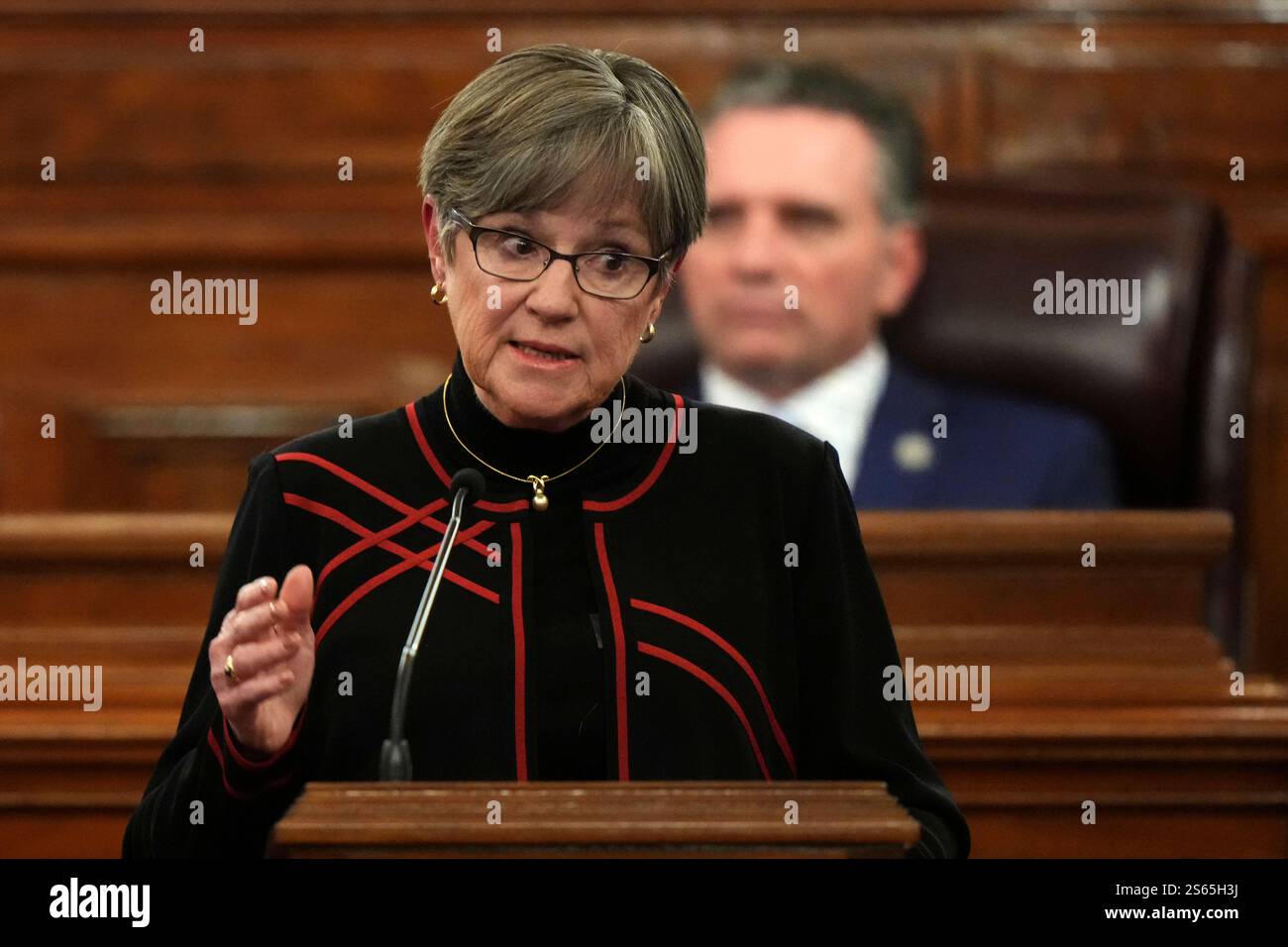
Kansas Special Committee Revives Proposal for Independent Energy Office
Kansas legislators are again debating a standalone energy office after a special committee on energy revived the proposal....

Connecticut Storm Weakens; Thanksgiving System Could Disrupt Travel
A coastal storm weakening over Connecticut tonight will give way to a potentially larger system that could disrupt...