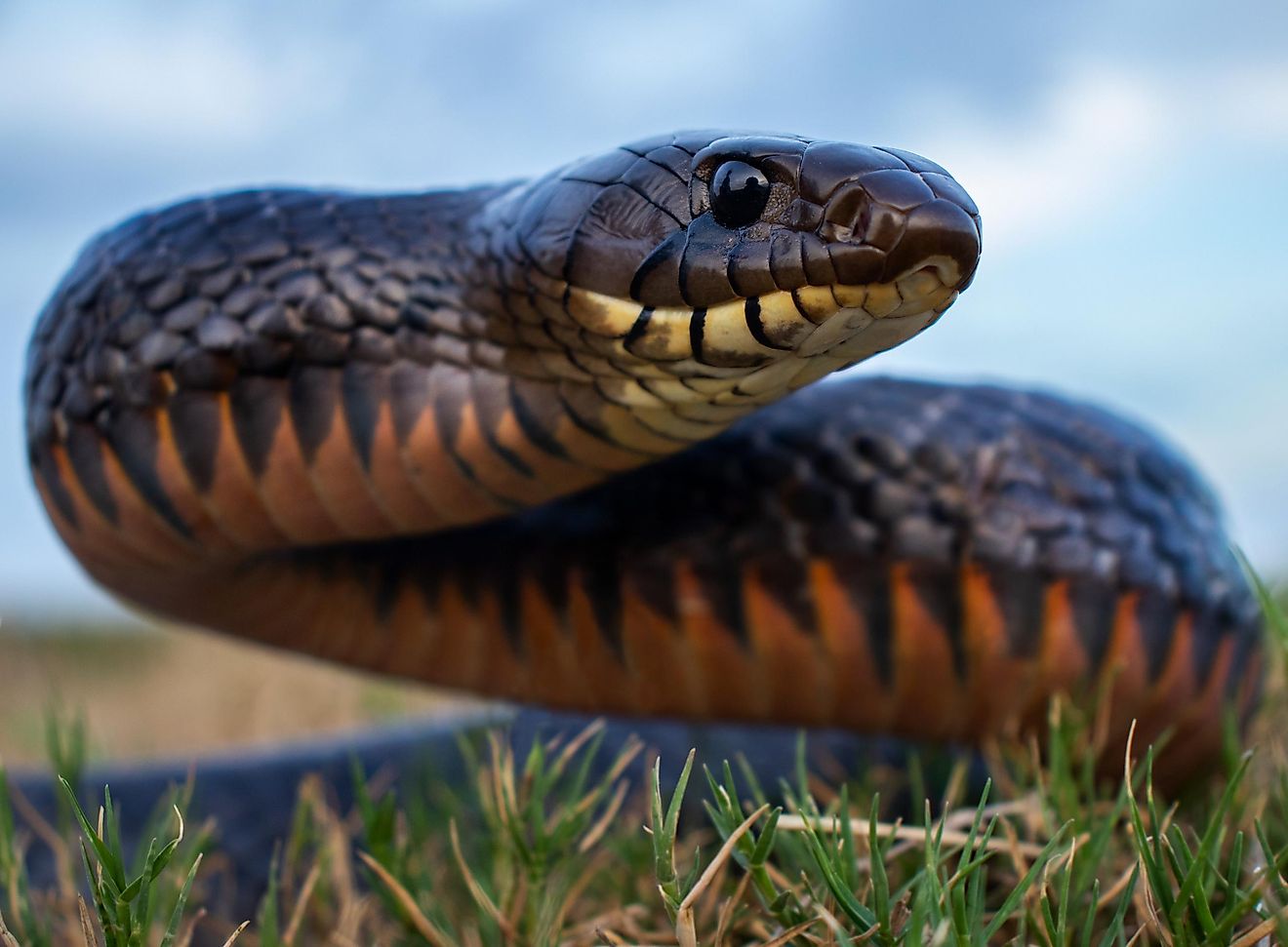
Georgia has 46 snake species, one of the richest populations in the United States, but only the cottonmouth is truly semi-aquatic, World Atlas reported.
Six of the state’s species are venomous. Cottonmouths inhabit swamps, marshes, streams and riverbanks, though they are rare in northern Georgia. Copperheads and timber rattlesnakes may appear in riverine woodlands. Harmless watersnakes — including the eastern green, brown, red-bellied, banded and northern watersnake — are often mistaken for cottonmouths and killed.
The Chattahoochee River supplies 70 percent of metro Atlanta’s drinking water, more than 300 million gallons per day. Cottonmouths prefer its slow-moving, swampy lower stretches south of Columbus, while banded and brown watersnakes also live along the river. Banded watersnakes have jagged-edged bands wider at the top and thin dark bars along their lip scales; brown watersnakes have a more slender body and square blotches rather than triangular bands.
The Satilla River, a blackwater river rising near Fitzgerald, flows about 200 miles to St. Andrews Sound. The threatened eastern indigo snake, one of North America’s largest snakes at a maximum 8 feet 7 inches, occurs along its sandy banks.
These carnivores overpower prey with strong jaws and can eat rattlesnakes and cottonmouths, which are highly resistant to venom. Paddlers are urged by the Satilla Riverkeeper’s website to remain watchful for venomous snakes when pausing along the river.
Georgia’s largest free-flowing river at 137 miles, the Altamaha runs from central Georgia to the Atlantic near Darien. Cottonmouths occur throughout the basin but are more common in surrounding swamps, backwaters and tributary creeks than in the main channel. Vertical pupils and a heat-sensing pit between eye and nostril distinguish cottonmouths from watersnakes, as does the white mouth lining displayed when threatened.
The 294-mile Ogeechee River, another blackwater river, features cypress-tupelo swamps where brown watersnakes bask up to 20 feet above water in bald cypress and tupelo trees. If startled, they may drop into the water or a passing kayak.
A natural resource expert documented a rare sighting in August 2026 of a large eastern diamondback rattlesnake moving down the bank and vanishing into the river, according to the Augusta Chronicle. Fort McAllister State Historic Park on the Ogeechee is home to about 30 snake species.
The Savannah River forms the Georgia–South Carolina border, flowing 301 miles from Lake Hartwell to a marine estuary near Tybee Island. Along the lower river, the Savannah National Wildlife Refuge lets paddlers explore freshwater marshes where alligators, eastern diamondback rattlesnakes and cottonmouths are year-round residents, alongside harmless brown and banded watersnakes.
Cottonmouths are more associated with backwaters and wetlands, whereas diamondback rattlesnakes prefer drier uplands.
Brown watersnakes are protected in Georgia. Venomous cottonmouths and eastern diamondback rattlesnakes are sometimes seen near riverbanks or swimming across the water.
Related reading
Nearly 25 Inches of Rain Floods Central Florida, Drives St. Johns River to 70-Year Highs
Central Florida recorded nearly 25 inches of rain in three days last week, driving the St. Johns River...

Deadtime Stories in Lansing May Close in June as Lease Expires
Deadtime Stories Books & Gifts, a horror and true-crime specialty shop in Lansing's REO Town, may close in...

Charleston Area Alliance Reports Spike in Ascend WV Remote Workers
The Charleston Area Alliance reported a spike in remote workers moving to the Kanawha Valley through the Ascend...

East Helena Wins First State Football Title, Beats Columbia Falls 35-9 in Snowy Class A Championship
East Helena won its first state football championship Friday night, beating Columbia Falls 35-9 on a snowy field...