Albany’s oldest building opens to the public Saturday after a 30-year silence, offering architectural salvage, a tool library, and a window into Dutch-era history.
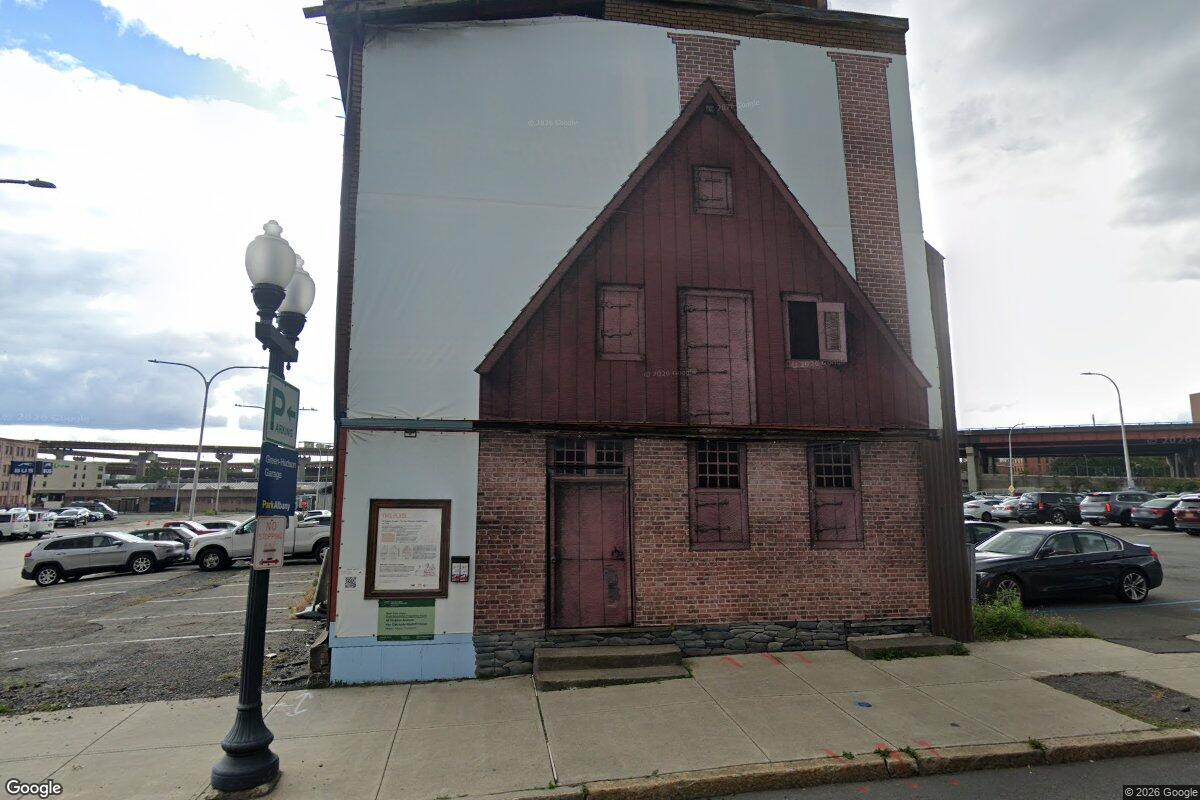
The Van Ostrande-Radliff House at 48 Hudson Avenue will welcome visitors during the Downtown Albany Hot Chocolate Stroll on Dec. 5, marking the first public access since Saul’s Restaurant Supply closed in the late 1990s. Historic Albany Foundation has spent more than $5.5 million restoring the 1728 structure, believed to be one of the few surviving Dutch urban buildings in the United States, Times Union reported.
“This building has seen everything,” said Pamela Howard, executive director of the foundation. “It’s like the witness tree on a battlefield. This is the witness building. It has seen everything good and bad in Albany for centuries.”
The foundation acquired the property in 2013 after its significance was recognized in the 1980s. What followed was a 13-year effort involving stabilization, a new foundation, restored timber framing, and a lowered Dutch roof rebuilt with custom-dimension brick, according to Times Union and NEWS10.
A Dutch house survives centuries of change
Johannes Van Ostrande, an alderman and fourth-generation colonist, built the modest timber-framed house on Albany’s southern edge, just yards from the original Fort Orange. Measuring 23 by 33 feet, it held one large first-floor room and two upper lofts, with H-bent framing and two jambless fireplaces, Times Union reported.
By the late 1700s the building had shifted from home to workshop. Over the next two centuries it housed a leather goods shop, a knit underpant and necktie factory, and finally Saul’s Restaurant Equipment, which the Saul family ran from 1935 until the late 1990s, according to Hoodline.

“Basically anything that looks old in this building — anywhere, anything that looks old — is old. And anything that’s new is new. We didn’t want to fake the old.”
Pamela Howard told Times Union.
That philosophy guided every repair. Original old-growth white pine floors were preserved where possible; salvaged wood from elsewhere in the building filled gaps. New flooring complements the original without mimicking it. The project also added stairwells, an elevator, and bathrooms — amenities the building never had. Previously, the upper floor was reachable only by a rickety ladder covered in pigeon droppings.
Artifacts tell layered stories
Restoration crews unearthed a King George halfpenny from the 1720s in the basement. Howard speculates it may have been hidden by a servant or an enslaved person. A growler likely left by Jared Holt, who purchased the building around 1832 for his leather goods business, was also recovered and is now on display, NEWS10 reported.
The Saul’s Restaurant Equipment sign, uncovered during renovation, hangs on an exposed brick wall in the third-floor office space alongside vintage and salvaged furnishings.
New life as a preservation hub
The restored building now houses Historic Albany Foundation’s headquarters, its Parts Warehouse of salvaged architectural elements — doors, window sashes, ironwork, vintage chandeliers — and a Tool Lending Library stocked with an estimated 500 to 800 items, from power tools to specialized project kits, Times Union reported. Much of the warehouse inventory will be offered free or at reduced prices.
A retail location at Westgate Plaza is slated to open in 2027 to make architectural salvage more accessible. The foundation is partnering with Adirondack Architectural Heritage, which recently opened a warehouse in Keeseville, to expand inventory.
“We want people to see that old vacant buildings can have a new life. They can be restored and occupied and once again become part of the vibrant fabric of their neighborhood.”
Howard said.
The first lecture in the new space, on George Washington’s Capital Region history, took place Nov. 12. A small shop on the main level sells books, locally made crafts, and branded merchandise. Upstairs, a gathering room beneath exposed timber rafters holds shelves of architectural references and a large wooden table for research or meetings.
“When buildings like 48 Hudson Avenue disappear, they don’t come back. The building and its history are lost to the ages,” Howard said.
Founded in 1974, Historic Albany Foundation is a private, not-for-profit membership organization dedicated to preserving the built environment in and around Albany through advocacy, education, technical assistance, and operation of an architectural parts warehouse.
In 2013, the Foundation was gifted the Van Ostrande-Radliff House by Brian Parker, launching one of the largest projects in its near-50-year history. A $500,000 National Endowment for the Humanities Challenge Grant and a $1,226,000 New York State Council on the Arts award in 2023 helped complete the $5.5 million restoration.
The foundation continues to accept donations for ongoing work tied to the renovation.
Worth a look

Brake Rotor Tears From Tractor-Trailer, Kills Driver on I-84 in Tolland
"Brakes, tires, things strapped down in the back, those are the things we are looking for," said Matt...

UNL Student Arrested on Sexual Assault Warrant Seven Months After Campus Dorm Rape Report
University of Nebraska–Lincoln police arrested a student Tuesday on a first-degree sexual assault warrant, seven months after a...

Oregon Students Gather at Capitol as Visa Hurdles Drive International Enrollment Decline
About 65 college students from across Oregon gathered at the Capitol in Salem on Wednesday to tell lawmakers...

Juventus Stepping up Pursuit of Höjbjerg Amid FFP Constraints, Goal/Livescore Report
Juventus are stepping up their pursuit of Olympique Marseille midfielder Pierre-Emile Höjbjerg but face strict financial constraints that...