
Two Alumni, One State, and the Future of Nebraska Agriculture
For Adam and Hannah Guenther, the path to building a shared life in Nebraska was never a straight line. Their journey from unsure college students to community-focused leaders illustrates how individual resilience, when paired with the right institutional support, can ripple outward to improve rural health and local food security. As reported by University of Nebraska–Lincoln (UNL) News, the couple’s transition from navigating early academic uncertainty to managing the complexities of modern agriculture and public health reflects a broader trend of alumni returning to their roots to strengthen the state’s civic fabric.
The stakes for this work are significant. In a state where agriculture remains the primary economic engine, the ability to bridge the gap between food production and public wellness is more than a professional goal; it is a necessity for rural sustainability. Hannah Guenther, now working with the Buffett Cancer Center at the University of Nebraska Medical Center, is translating her background in dietetics into actionable community programs. Her current initiative, “Prevention Plates,” focuses on cancer-preventative nutrition, directly addressing the health disparities often found in rural populations.
From Academic Uncertainty to Professional Purpose
Neither Adam nor Hannah entered their respective fields with a clear road map. Adam, who now operates Ulrich Farms Inc. in West Point, initially struggled to find his place as an undergraduate. He contemplated leaving the university entirely to return to the family farm, believing his parents’ hands-on instruction would be sufficient. It was a pivotal conversation with an academic advisor that shifted his trajectory, guiding him toward a degree in construction management. That pivot, he notes, provided the problem-solving skills necessary to manage the farm after the unexpected passing of his father.
Hannah’s path was similarly defined by early shifts. After realizing her initial major did not align with her passion for food and nutrition, she transitioned into dietetics. The challenge of balancing her studies with the birth of her daughter, Charlotte, tested her resolve. As detailed by UNL News, her ability to complete her degree was made possible by a support system that prioritized her success. This experience informs her current work, where she now helps rural Nebraskans navigate their own health choices.
“I think college is an experience that allows you to figure out a little bit more about what kind of person you want to be. You meet different people and get exposed to different thought processes,” says Adam Guenther.
Bridging the Food Supply Gap
The Guenthers’ work creates a unique feedback loop. Adam, serving on the board of Cuming County Feeders, focuses on the production side, emphasizing the importance of locally sourced beef. Their “Beef in Schools” program, which provides fresh, local protein to county-area schools, serves as a practical model for how producers can engage with their immediate communities. This initiative not only supports the local agricultural economy but also fosters a direct connection between students and the origins of their food.
While Adam works to connect producers with consumers, Hannah’s focus remains on the nutritional impact of those food choices. By shifting her focus from general rural health education to specialized cancer prevention, she is applying university-backed research to address specific wellness outcomes. This dual approach—Adam managing the supply and Hannah addressing the health-conscious demand—highlights a growing emphasis in Nebraska on keeping rural communities both economically viable and physically resilient.
The Economic and Social Stakes
The broader context for the Guenthers’ work is found in the ongoing efforts to modernize Nebraska’s agricultural practices. Adam points to research institutions like the Klosterman Feedlot Innovation Center in Mead as essential to his own decision-making process. By evaluating new technologies and practices before they are scaled, these centers allow producers to mitigate risk in an industry characterized by tight margins and volatile market conditions.
Critics of such programs often argue that the focus on university-led innovation can be slow to reach the average producer or that rural health initiatives may struggle to gain traction in communities wary of outside influence. However, the Guenthers’ approach counters this by embedding their work within existing local networks. Whether it is through the Cuming County Feeders board or statewide extension programs, the strategy relies on peer-to-peer trust rather than top-down directives.
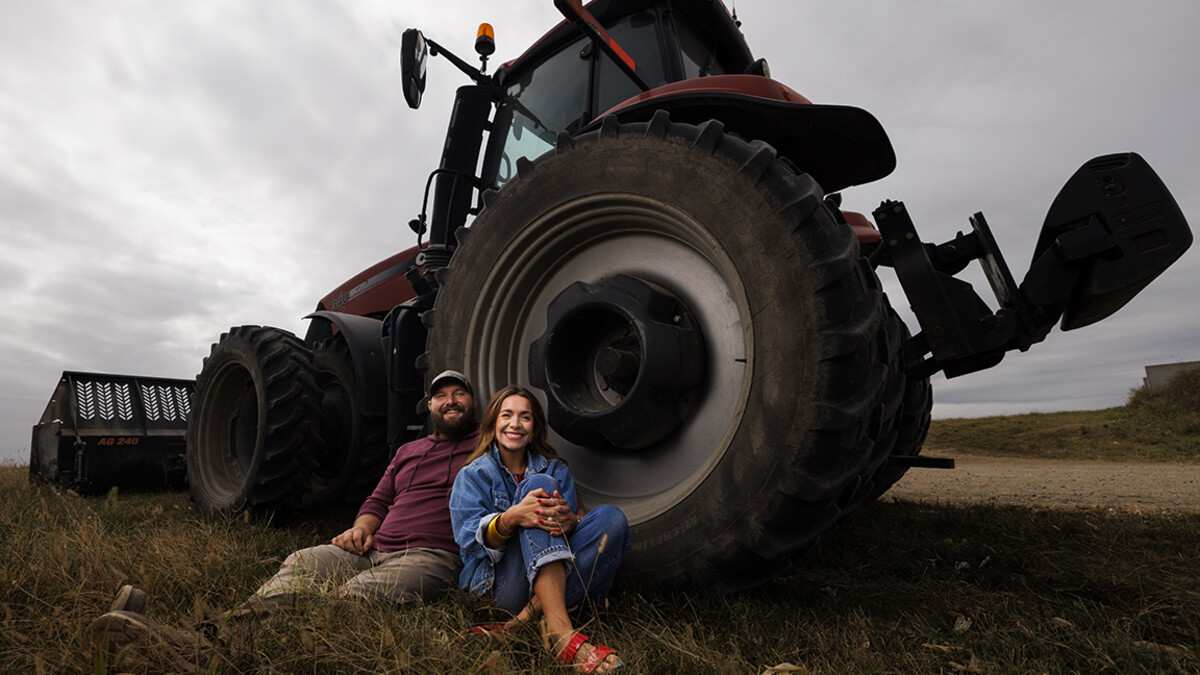
Looking ahead, the success of these programs will likely be measured by their scalability. As the couple continues to balance their roles at the farm and within their respective health organizations, their story serves as a reminder of the role that land-grant universities play in shaping the next generation of rural leadership. The connection between the classroom and the field remains the most effective tool for ensuring that Nebraska’s agricultural heritage adapts to the challenges of the coming decade.
Harris County Sheriff’s Deputy Alexander Kristopher Cowley arrested, accused of child sexual abuse
Alexander Kristopher Cowley, an 11-year veteran of the Harris County Sheriff’s Office assigned to the Critical Incident Response...

ICE: Man arrested outside Nashville airport known or suspected Tren de Aragua gang member
The Nashville Airport Arrest That Upended Local Rideshare Rumors When federal agents moved in on a man outside...

WHY DID THE FRENCH SPEND THE DAY CALIBRATING THE MAST? – America’s Cup
The La Roche-Posay Racing Team spent a day at their Bagnoli base rigorously calibrating their AC75's mast and...

2026 Q3 Record Label Market Share: UMG Rebounds, Columbia Climbs – Billboard
Universal Music Group commands a 35.23% current market share through the first three quarters of 2026, according to...