Every four years, presidential election watchers encounter a striking anomaly: a single electoral vote in Nebraska capturing national attention alongside entire battleground states. That vote belongs to Nebraska’s 2nd Congressional District, a region centered on Omaha that operates under a distinct system from the rest of the state. This district’s national significance extends beyond presidential elections, carrying weight in competitive congressional races.
One District and a Decisive Electoral Vote
Nebraska and Maine stand alone as the only two states that award presidential electoral votes by congressional district rather than utilizing a statewide winner-take-all system. Nebraska commands five electoral votes total. Two are allocated to the statewide victor, while the remaining three are awarded individually to the winners of its congressional districts.
While Nebraska has consistently voted Republican in presidential elections in recent decades, the 2nd District has occasionally supported Democrats. Barack Obama secured its electoral vote in 2008, Joe Biden claimed it in 2020, and Kamala Harris carried it in 2024.
A single electoral vote might not sound like much. Yet when national margins tighten, that lone vote can alter the outcome. That reality forces presidential campaigns to pour substantial resources into a geographic footprint representing only a small fraction of the total national electorate.
Ticket Splitting in a Republican State
The district’s importance is not just a byproduct of unusual local election rules. Its political competitiveness also makes it distinctive. Having initially secured the district’s House seat in 2016, Republican Don Bacon navigated a succession of narrow and hard-fought battles to retain it.
Margin-wise, Bacon edged out Democrat Tony Vargas by roughly two percentage points, despite the constituency favoring Kamala Harris over Donald Trump by a nearly five-point margin.
Huchen Liu, an assistant professor of political science at the University of Nebraska at Omaha, is an expert on American politics, Nebraska politics, political campaigns, and interest groups. The district reflects a broader national phenomenon where metropolitan and suburban communities transform into important electoral battlegrounds, driven by shifting educational attainment, demographics, and political attitudes.
An Open Seat and the 2026 Congressional Test
With Bacon retiring after five terms, the district faces an open congressional election in 2026. Libertarian Eric Michael Foreman is running alongside Democratic community activist and small business owner Denise Powell and Republican business leader and Omaha City Council member Brinker Harding.
With control of the U.S. House at stake, both parties have strong incentives to compete for this seat. This also raises a compelling inquiry for political scientists: To what extent are recent voting patterns driven by shifts in party loyalty versus the appeal of specific candidates?
Bacon repeatedly won in a district that sometimes supported Democratic presidential candidates. With no incumbent running, the 2026 race offers a fresh chance to test whether voter loyalties to a party or choices centered on individual candidates carry more weight.
Spillover Effects in the U.S. Senate Race
Beyond the House race, local campaign activity could generate unexpected ripples across a statewide contest. Independent candidate Dan Osborn is challenging Republican incumbent Pete Ricketts for the U.S. Senate.
During his unsuccessful 2024 senate bid against Deb Fischer, Osborn built a strong base of support, proving an independent contender can pull together a substantial voting bloc within this deeply conservative state. Should the tight contest between Powell and Harding draw a higher turnout of Democratic-leaning voters, political analysts refer to this phenomenon as a spillover effect, wherein campaigning for one race impacts voter turnout or decisions in a concurrent contest.
Osborn’s independent affiliation complicates this potential spillover: voters mobilized by a Democratic House campaign may not automatically support an independent Senate candidate, even as his independence could appeal to voters outside the Democratic coalition.
Nebraska’s 2nd District illustrates how national political forces interact with local electoral dynamics. What happens in Omaha can matter far beyond Omaha.

Super PAC makes late entry into CD2 race; incumbent deletes a social media video
U.S. Rep. Seth Magaziner had a direct question for the treasurer of a newly formed Maryland super PAC...
Pennsylvania and IDMe – IDMe Help Center
Pennsylvania DLI Integrates ID.me for Claimant Verification The Pennsylvania Department of Labor & Industry (Pennsylvania DLI) has integrated...

Portland man unveils giant 9-by-13-foot flannel shirt – KPTV
What are pants without a shirt in ‘Shirtzenpantz’ right? Ethan, a representative for Shirtzenpantz, told KPTV regarding the...
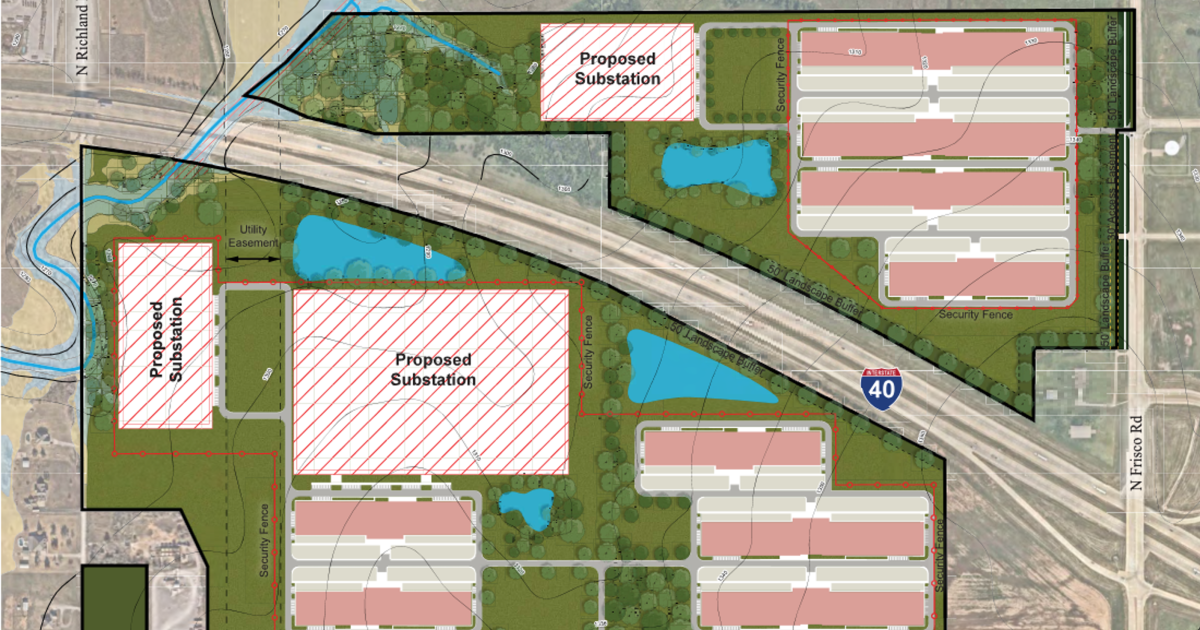
Oklahoma City council approves first hyperscale data center. That doesn’t mean there will be more
The Oklahoma City Council voted to approve a data center development, with city leaders warning that the green...