“Don’t be so welcoming,” Fox & Friends cohost Lawrence Jones III posted on X after the midterms, summing up the GOP’s favorite new coping mechanism: the idea that California refugees “California’d” Texas into a blue wave.
It would be a clean story if it were true. James Talarico won by nearly 1.2 million votes, and 10 percent of Trump voters cast ballots for Gina Hinojosa. Every single one of the state’s 254 counties shifted toward Democrats, including rural strongholds that haven’t seen a U-Haul from Los Angeles in a generation.
Democrats improved their margin in rural counties by nineteen percentage points from 2024. If transplants drove that, they’d have to be voting in Grimes County and Texarkana, too — and they’re not.
The numbers from the University of Maryland and UT Austin back that up. Political scientists James Gimpel and Daron Shaw tracked 519,000 Californians who moved to Texas between 2004 and 2020 and registered to vote. The breakdown: 37 percent Republican, 36 percent Democrat, 27 percent independent.
“Texas is an enormous state,” Gimpel said in an email Friday. “If the flow into the state is even somewhat politically balanced, it can take a very long time for migration to change the state politically, perhaps two, three or more decades.”
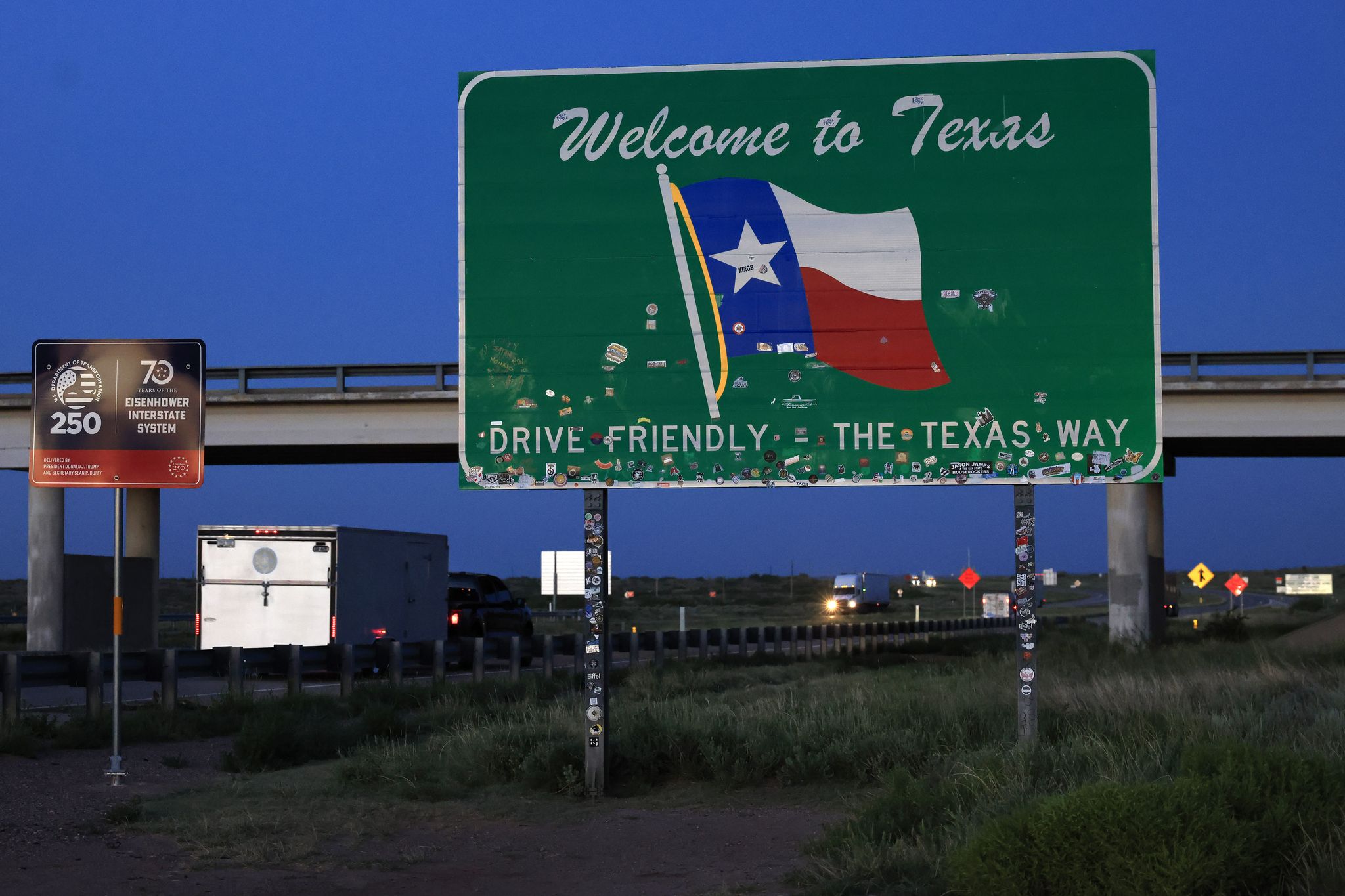
“All migration helps change the makeup of states. It’s why Florida is red. But blaming California is a fallacy,”
Chris McGinn, a political geographer and executive director of the Texas Association of County Election Officials, which provides education and professional development to election officials statewide, told The Dallas Morning News.
People sort themselves geographically. Conservative Californians land in the Panhandle; progressive ones cluster around Austin. That can flip a county — Fort Bend near Houston is the textbook case — but it doesn’t explain a statewide sweep.
McGinn said the shift came from younger Texans changing their minds and Hispanic communities moving toward Democrats. CNN exit polls showed 11 percent of 2024 Trump voters pulled the lever for Talarico; 10 percent did the same for Hinojosa. Native Texans flipped, not just newcomers.
The irony is thick. A generation ago, it was transplants who helped turn Texas red. Wayne Thorburn, the longtime GOP strategist, documented in Red State that 41 percent of corporate-relocation arrivals preferred the Republican Party versus 28 percent of native Texans.
Ann Richards made the same point in 2003: newcomers from California, New York, and the Rust Belt “brought their Republican leanings with them.” Two of the loudest COVID-era Californian refugees, Elon Musk and Joe Rogan, backed Trump in 2024; Musk alone dropped roughly $212 million supporting Ken Paxton.
Governor Greg Abbott knew the math. In a 2020 interview with KTSA News in San Antonio, he dismissed transplant fears, citing his own 2018 exit polling: 58 percent of Californian newcomers voted for Ted Cruz over Beto O’Rourke. “The liberals are leaving Texas, and the conservatives are coming from California to Texas,” Abbott said then. He was right — until his own ticket went down this month.
The “Red Texas as natural law” narrative has always required heavy state maintenance. Lieutenant Governor Dan Patrick, a Maryland native, pressured the Bullock Museum in 2021 to cancel an event for Forget the Alamo, then bragged about it on X. He pushed for the 2025 ouster of Kate Rogers, CEO of the Alamo Trust.
Abbott engineered a conservative takeover of the University of Texas at Austin. If Texas were simply conservative by nature, why does the ruling party work so hard to police the boundaries?
Democrats had their own comforting myth: demographics as destiny. As the Anglo share of the population fell, the state would inevitably blue. That story opened donor wallets but lost elections — especially in 2024, when Trump gained ground with the exact Latino voters Democrats counted on. The “non-voting state” theory crashed the same way.
Talarico and Hinojosa didn’t wait for destiny.
Populists united farmers and workers against the superrich of their time and the politicians eager to do their bidding, as Texas Monthly put it. When the movement was red-baited, leader S. O. Daws answered: “Capital is thoroughly organized, but when the laboring class begins to organize, they call it communism and other hard names.”
At the founding convention, a white delegate reminded the room that Black Texans “are in the ditch just like we are,” and Stump Ashby pushed for Black representation on the executive committee. Two Black Texans were elected. The coalition fractured under racial pressure, but for a moment it held across the color line on economic grounds.
Whether the midterms mark a permanent realignment or a cyclical correction is the open question. But the strategy that won — economic populism with deep Texas roots — wasn’t imported from California. It was dug up from the state’s own past.

UW Lecturer Hosts Third Annual Cats of Madison Art Show Benefiting SAAV
University of Wisconsin–Madison sociology lecturer Jason Nolen will host the third annual Cats of Madison Art Show on...

Former Van Drew Aide Indicted for Staging Attack, Faking Assault in NJ Nature Preserve
A federal grand jury has indicted a former congressional aide and a second woman on charges they fabricated...

Alliance Defending Freedom Sues Vermont Over Act 73 on Behalf of Bishops
Vermont lawmakers passed a new statute this year that bars families in towns without public high schools from...

Gonzaga Women Face Hawaii, Cal as Fortier Nears Program Wins Record
Gonzaga women's basketball travels to Lā'ie, O'ahu for the North Shore Showcase this weekend, facing Hawai'i on Saturday...