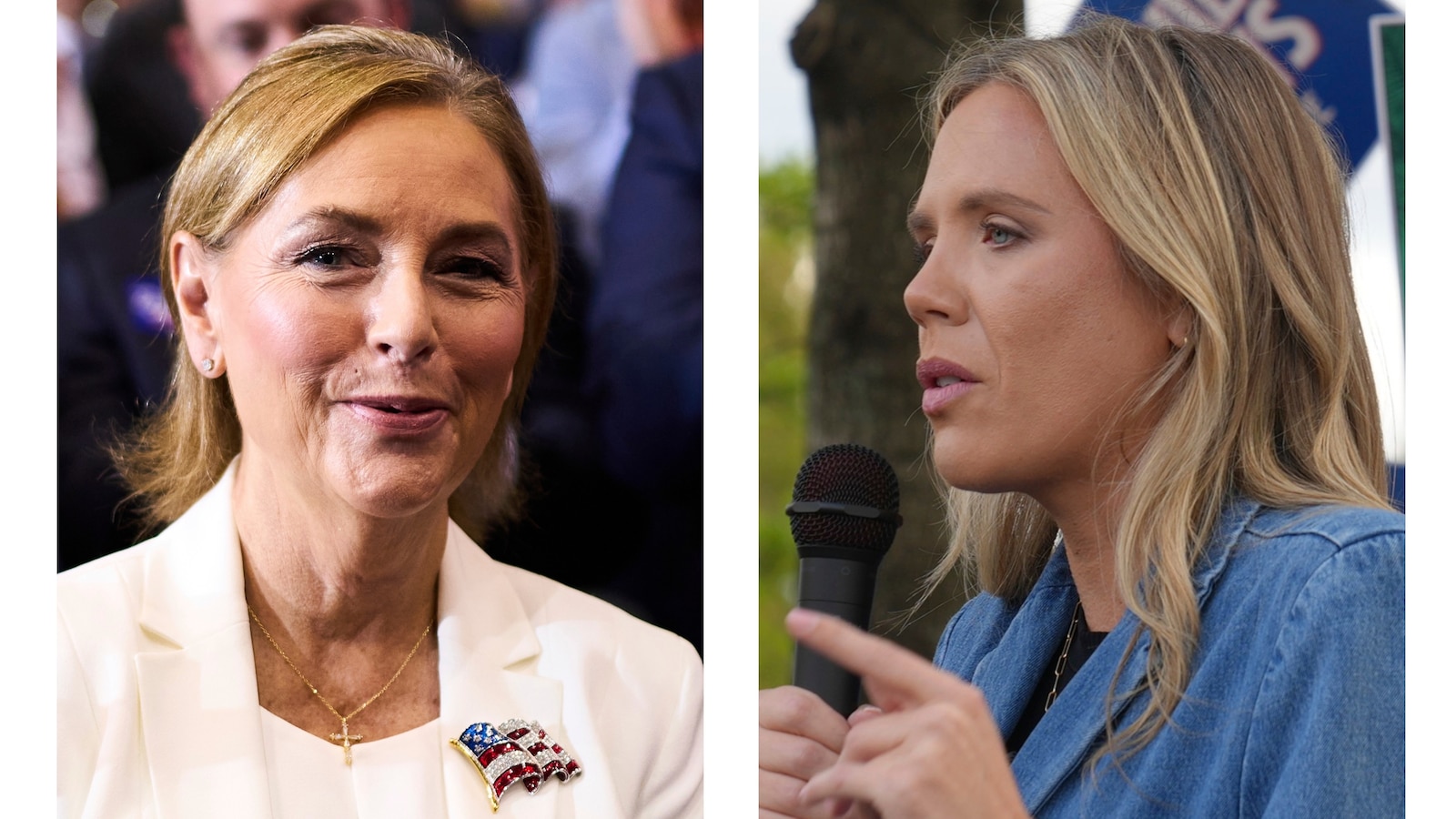
Lindsey Graham’s Senate Seat Becomes a Tight Race in South Carolina
National security is not my thing,
Darline Graham admitted during a primary debate, struggling to answer whether the United States holds a national security interest in Taiwan and the South China Sea. That moment captured the unexpected turbulence transforming what was supposed to be a straightforward defense of a deep-red Republican stronghold.
Six months ago, the South Carolina U.S. Senate race looked entirely settled for incumbent Lindsey Graham and his dominant party. But the senator's sudden death in July upended state politics. His sister, Darline Graham, stepped out of a placeholder role and into a run for her own six-year term, instantly roiling the contest. Now, supporters of Democratic challenger Annie Andrews can realistically envision flipping a Senate seat in a state that has not sent a Democrat to Washington since Fritz Hollings won his final term in 1998.
Whoever wins this cycle will make history as the first woman elected to represent South Carolina in the U.S. Senate. Yet that milestone has taken a backseat to whispers and predictions that Andrews could achieve the first statewide victory for her party since 1998, outpacing even the gubernatorial race.
From Political Sibling to Appointed Stand-In
Darline Graham describes herself as a reluctant candidate, thrust into the spotlight after her brother died while seeking his fifth term. Republican Gov. Henry McMaster appointed her to finish the remainder of that term, a move widely praised given the close bond between the siblings, who relied on one another after losing their parents at a young age. Lindsey Graham had helped raise his younger sister.
Deciding to run for a full six-year term proved far more controversial. A snap primary organized just a month after the incumbent’s death drew top-tier state political figures. President Donald Trump intervened forcefully, backing Darline Graham because he viewed her late brother as a key ally during his second term, particularly regarding the war with Iran. President Trump campaigned for her during the primary runoff against U.S. Rep. Ralph Norman—an occasional critic of the administration—and returned to the state twice in the final weeks before the election.
That heavy presidential intervention has created friction on both sides. Independent voters weary of the second Trump term and conservative supporters of Norman remain uneasy about executive interference in a state-level decision. Critics also point to her inexperience and the controversial prospect of establishing a Graham family political dynasty.
Annie Andrews Retools for a General Election Fight
Across the aisle, Annie Andrews had spent more than a year campaigning and had already secured her primary nomination outright when Lindsey Graham passed away. That sudden shift forced her to scrap a general election playbook built entirely around unseating the incumbent.
Andrews has gained outside momentum from South Carolina’s leadoff status on the Democrats’ 2028 presidential nominating calendar. Figures such as former Transportation Secretary Pete Buttigieg and Arizona Sen. Mark Kelly have visited the state to campaign, boosting her profile. Recently, however, Andrews has pursued an independent strategy, deliberately avoiding joint appearances with prominent national or local party figures. She has concentrated squarely on economic pressures, framing her opponent as an extension of a self-enriching Washington establishment.
When the two candidates met for their sole debate last month, they traded sharp barbs over economic policy, the war with Iran, and artificial intelligence, while largely arguing over who possessed fewer qualifications for the office. Andrews fended off accusations regarding her lack of prior public office, though she previously mounted an unsuccessful 2022 challenge against U.S. Rep. Nancy Mace. Meanwhile, Darline Graham pushed back against claims she was riding family coattails, explaining that she kept her maiden name simply to honor her late parents.
Super PAC Deploys Financial Reinforcements Amid Tightening Polls
National political groups have scrambled to respond to the tightening numbers. An October poll conducted by The New York Times and Siena College revealed a remarkably close race, prompting Senate Republicans’ primary super PAC to deploy last-minute financial reinforcements to the state, even as party leaders insisted they remained confident in retaining the seat.
Both sides remember the historic spending of the 2020 cycle, when Lindsey Graham fended off Democrat Jaime Harrison by a 10-point margin in what became the most expensive election in South Carolina history. While straight-ticket voting has historically insulated Republican candidates in the state, the current dynamic relies heavily on how voters react to a race upended by tragedy, presidential endorsement, and unexpected political stumbles.
Related reading

Five local coffee shops to explore in Oklahoma City
Oklahoma City’s Growing Coffee Scene Oklahoma City’s coffee landscape is expanding, with a wave of local shops moving...

Exercise Physiologist 2 Job Opening at Ohio University
Ohio University Opens Search for Exercise Physiologist to Staff HeartWork’s Program Ohio University has officially opened a search...

Former Bismarck Mayor and Medora Entertainer Bill Sorensen Dies at 76
Bill Sorensen, a figure whose career spanned the worlds of North Dakota politics, professional boxing management, and the...

Ruidoso flash floods kill three after wildfires and monsoon rains
The Rising Waters and Unmet Warnings in Ruidoso For those who frequent the Lincoln National Forest, the landscape...