
Arab-Israeli Party Ra’am Endorses Eisenkot, Deepening Netanyahu’s Political Crisis
The largest Arab-Israeli political party has endorsed Gadi Eisenkot, creating a major shift in Israeli politics following a tied general election. The United Arab List, known by its Hebrew acronym Ra’am, announced it will recommend that Eisenkot form the next government. The move comes as President Isaac Herzog begins consulting with various political forces on the formation of a new government, tasked with selecting the candidate best positioned to build a governing majority in the 120-seat Knesset.
The political deadlock is absolute. Neither Prime Minister Benjamin Netanyahu nor his main rival holds the 61 seats needed for a majority. Netanyahu’s right-wing bloc secured 53 seats, while Eisenkot’s opposition alliance held 48. Eisenkot might be able to secure a majority by forming a coalition with parties from the Arab minority, a group whose representation grew to 19 seats in response to anger over Netanyahu’s hard-right government. However, significant hurdles remain within his own bloc and from deep-seated political opposition to relying on non-Jewish parties.
The Netanyahu Gambit: Fraud Allegations and a “Pogrom Against Democracy”
Netanyahu, who has been in power on and off for nearly two decades, has refused to concede defeat. He has accused Arab groupings of having “stolen” the vote and called for a broad coalition government that excludes them. In a stunning development, Israel’s attorney general, blocked a demand from the Shin Bet security service to interrogate senior politicians from Palestinian-led parties, stating that no evidence of wrongdoing had been submitted. “In a country governed by the rule of law, neither citizens nor elected officials can be interrogated without evidence that justifies doing so,” Baharav-Miara said.
Eisenkot accused Netanyahu of staging a “pogrom against democracy” by discrediting valid votes and weaponizing security services against political opponents. “The employees of the Ministry of Defense, law enforcement and the civil service in Israel are servants of the state, not the king,” Eisenkot stated. “Woe to anyone who abuses their authority and role for political considerations.” The Central Elections Committee has since certified the results, rejecting claims of mass fraud or foreign interference.
The High-Stakes Chess Match of Coalition Building
President Herzog holds the decisive power in this impasse. He began consultations with various political forces. “It is important to exhaust every option, broaden the dialogue and explore every path that may advance the process,” his office said in a statement. Once Mr Herzog tasks someone, they will have 28 days to form a government, with a potential 14-day extension. If no one succeeds, Mr Herzog will give the mandate to someone else. If that too fails, a majority of politicians could come together to nominate someone within 21 days – or else Israel heads to new elections. Israel held five elections between 2019 and 2022 after deadlocks, and it took Mr Netanyahu 58 days to form a government after the last election in November 2022. For his part, Netanyahu argued that Likud’s first-place finish, with 27 seats, gave him a mandate to lead the next government.
The American Factor and the Shadow of Iran
Israeli politics is inextricably linked to its alliance with the United States, and the entire government-formation process risks being disrupted by the results of Tuesday’s midterm elections in the US, which could weaken Israel’s foremost ally, President Donald Trump, or be overtaken entirely by renewed war with Iran. Netanyahu, particularly, went to pains during the election campaign to stress his relationship with Trump. Equally, both Trump’s rhetoric as well as the renewed build-up of US forces in the region may all signal the beginning of renewed conflict with Israel’s regional nemesis, Iran.
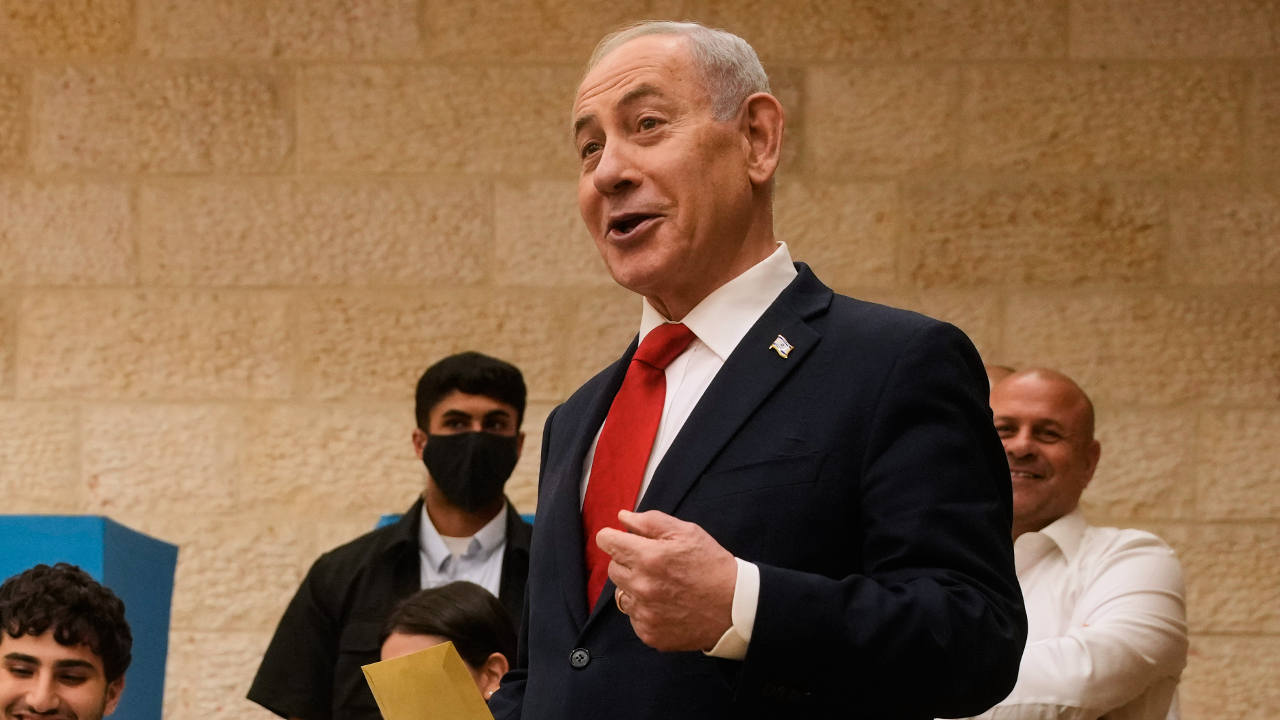
The domestic political calculus is equally tense. Palestinian-led parties have said their priority is removing Netanyahu, so they are expected to back Eisenkot as the strongest contender to achieve that. “The opposition needed to accept ‘political reality’ and team up to remove Mr. Netanyahu,” said Yousef Jabareen, the head of the largest Arab-majority party in the next parliament. However, competing interests within the opposition bloc could complicate Eisenkot’s path. “Eisenkot may, in fact, struggle to assemble a 61-seat governing coalition, given competing interests within the opposition bloc,” Oren said.
What happens next hinges entirely on President Herzog’s decision.
Keep reading

CAF Announces USD 2.5B Ocean Financing at CBD COP 2026 Night; Women’s Caucus Report Highlights Five Engagement Pathways
Yerevan's Biodiversity Diplomacy: $2.5 Billion Ocean Pledge and First Women's Outlook Reshape Global Conservation During an ocean-themed night...

Timothée Chalamet and Zendaya Begin Final Dune: Part Three Promo Run
Timothée Chalamet and Zendaya are making what looks like their final promotional run together for Dune: Part Three,...
Jimmy Kimmel Mocks Trump as Democrats Win Control of Congress
Jimmy Kimmel taped his ABC monologue late on Tuesday, November 3, so he could react in real time...

The Rise of Sovereign AI: Strategic Implications for Global Enterprise Leadership
By 2030, sovereign AI could command a $600 billion market, McKinsey & Company estimates—a sum that rivals major...