
By 2030, sovereign AI could command a $600 billion market, McKinsey & Company estimates—a sum that rivals major national defense budgets and signals a hardening of borders around data, compute, and code. For context, McKinsey Global Institute research puts the total annual economic value of generative AI at $2.6 trillion to $4.4 trillion, which means governments are racing to capture a massive, strategic slice of that value before digital walls go up. CIO.com reported that nations including India, Japan, France, Canada, and the United Arab Emirates are already pouring billions into domestic computing infrastructure and localized AI models trained on regional data and native languages, backed by researchers at Bain & Company who track these subsidized efforts worldwide.
A survey of executives, investors, and government offices found that 71% view sovereign AI as an “existential concern” or “strategic imperative” for their organizational goals. That level of alarm reflects a zero-sum reality: if foundational AI models become the primary engine of a national economy, depending on foreign cloud providers or cross-border infrastructure introduces a vulnerability an adversary could exploit by simply knocking those external capabilities offline.
Economic Warfare at Internet Speed
The competitive dynamics mirror the early days of the commercial internet, but at accelerated velocity. Research from Bain & Company shows multilateral collaboration surrendering to unilateral competition as AI becomes the premier battlefield for nations competing for economic leadership. When 71% of global leaders describe a threat as existential, they mean supply chains, compliance rules, and data systems will be reshaped by choices made now by major powers—changes that will directly affect how companies plan their strategies in the future.
With generative AI potentially generating $2.6 trillion to $4.4 trillion annually, ceding control of foundational models to foreign powers is viewed as economic surrender.
States Prioritize Local Control over Cloud Assets
National security concerns drive much of the momentum behind digital sovereignty policies. State leaders are highly hesitant to trust foreign entities—even close geopolitical allies—with critical infrastructure assets that could be knocked offline during a conflict. This creates a paradox for multinational corporations: standardizing on a single global public cloud provider maximizes engineering speed, but exposes the business to regulatory penalties or abrupt service disruptions if international data laws shift suddenly.
Developing enterprise-grade models demands vast quantities of data, a requirement that many governments regard as an inherent threat to data privacy and regulatory compliance. Through domestic sovereign infrastructure, countries can establish exacting governance frameworks to safeguard rights and enforce regional legislation. Beyond compliance, leaders are prioritizing AI systems that accurately reflect and shape the specific societies they serve, embedding local languages, historical nuances, and distinct ethical values deeply into the underlying models.
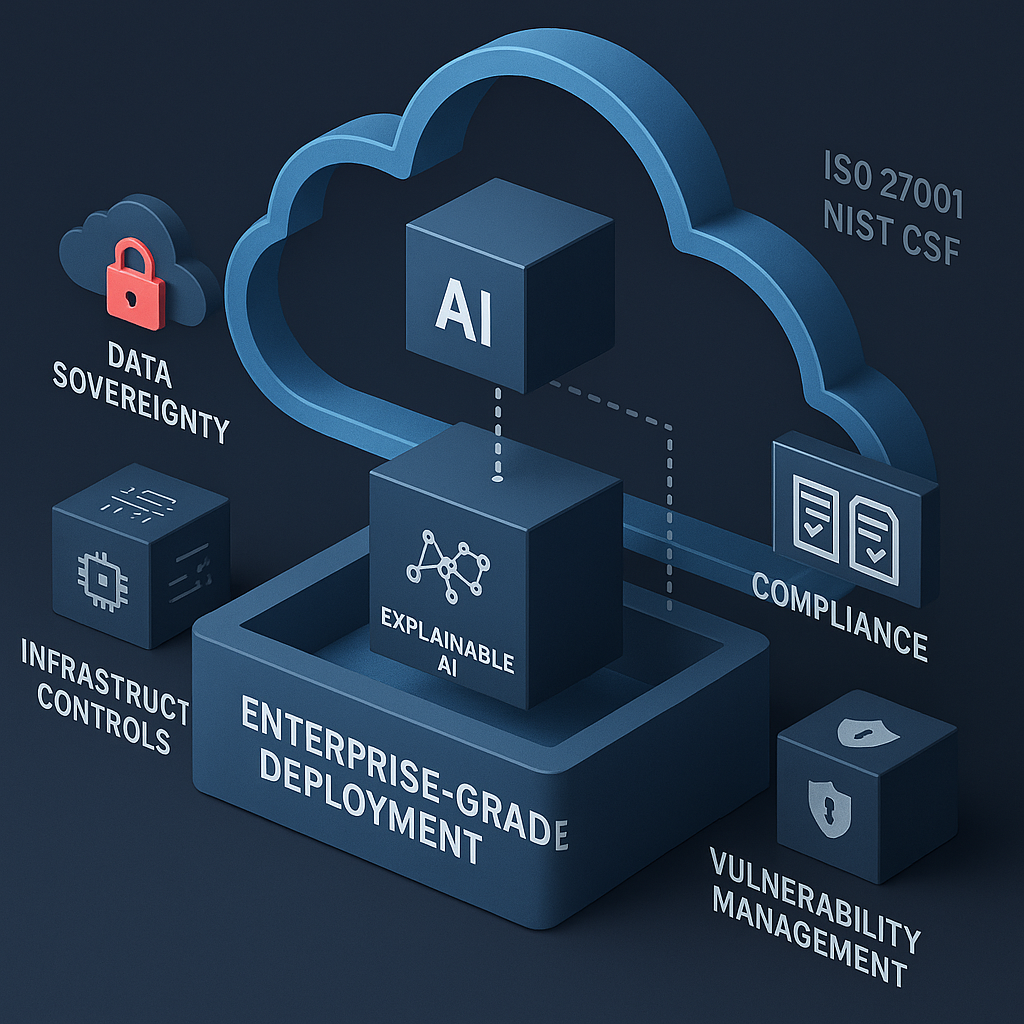
The C-Suite Compliance Tightrope
Deploying sovereign infrastructure provides compliance with regional governance laws, but managing isolated data silos across multiple countries increases operational complexity and drives up total cost of ownership. Gartner forecasts that countries building a sovereign AI stack will be required to spend at least 1% of their GDP on AI infrastructure by 2029—a massive undertaking that will determine where data centers are constructed and which technology vendors endure the transition.
CIOs must audit infrastructure interdependencies now. The strategic guidance recommends evaluating current vendor portfolios to identify dependencies on centralized cloud ecosystems, then mapping how a sudden shift toward nationalized data borders would impact analytics and operational models. When planning long-term AI architecture, leaders should align with technology suppliers possessing verified track records in building large-scale supercomputers and enterprise-grade data factories, as AI data center solutions require intentional hardware and public-sector expertise to maintain resilience against geopolitical shocks.
What This Means for American Boardrooms
For U.S. executives, the sovereign AI race is not a foreign policy abstraction—it is a supply chain and compliance forecast arriving faster than expected. When France or Japan builds localized models trained on native languages, American companies operating there will face new data residency rules and model certification requirements that did not exist five years ago. The $600 billion market estimate by 2030 suggests that early movers will lock in infrastructure advantages that latecomers cannot easily replicate without massive capital expenditure.
The enterprise tech stack is no longer decoupled from global politics. As companies like HPE and AMD partner to deliver next-generation AI and supercomputing infrastructure—combining large-scale system design expertise with advanced processors and accelerators—the hardware layer itself is becoming a geopolitical chess piece.
Worth a look

Arab-Israeli Party Recommends Gadi Eisenkot to Form Israel’s Next Government
Arab-Israeli Party Ra'am Endorses Eisenkot, Deepening Netanyahu's Political Crisis The largest Arab-Israeli political party has endorsed Gadi Eisenkot,...

Timothée Chalamet and Zendaya Begin Final Dune: Part Three Promo Run
Timothée Chalamet and Zendaya are making what looks like their final promotional run together for Dune: Part Three,...

Jimmy Kimmel Mocks Trump as Democrats Win Control of Congress
Jimmy Kimmel taped his ABC monologue late on Tuesday, November 3, so he could react in real time...

Suspect Granted Extra Time to Question in Suspected Murder of Missing Limerick Woman
"We hold serious concern that Carrie may have been the victim of a violent crime and may in...