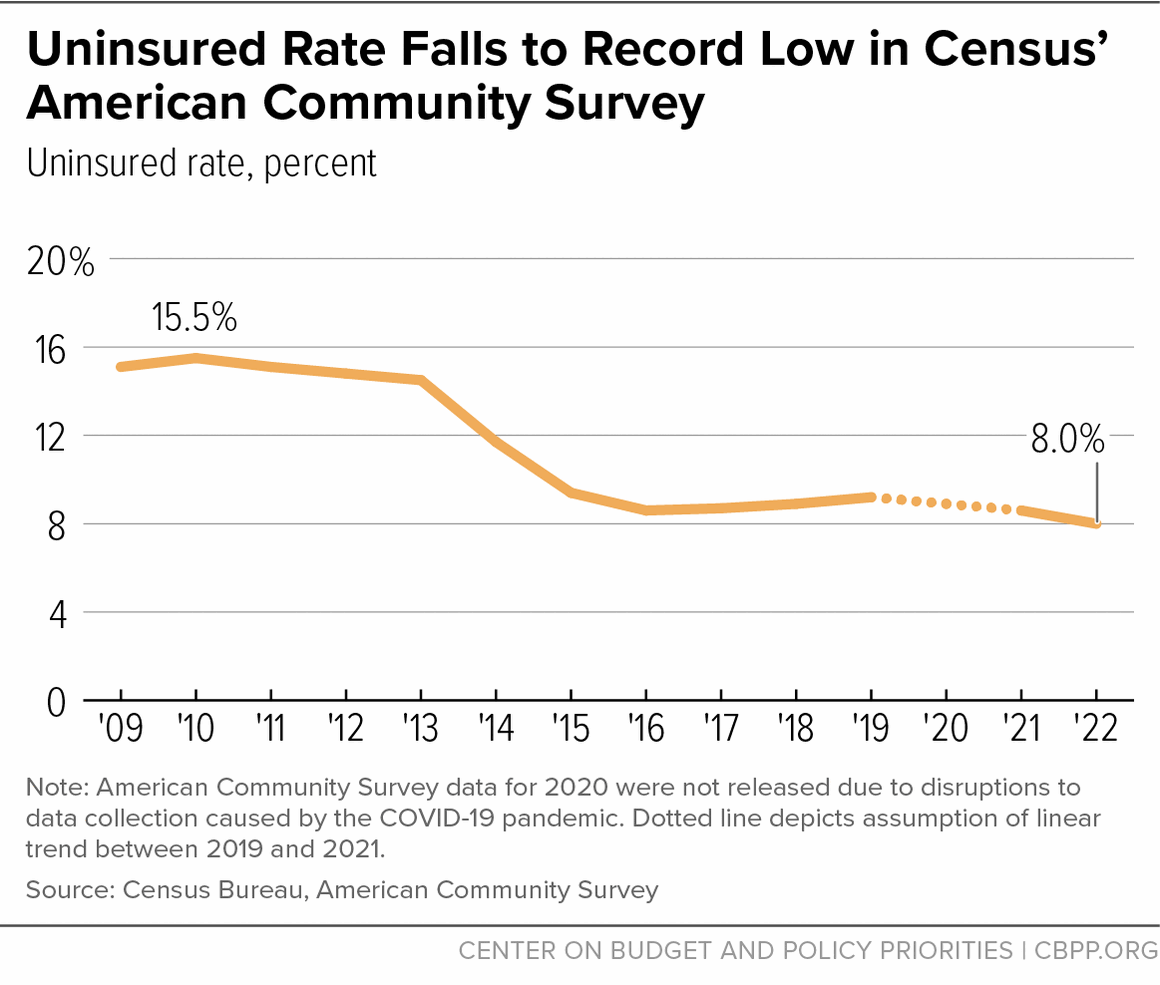
New federal Census data show Arizona families already straining under housing costs and rising uninsured rates before the full weight of 2025 budget reconciliation cuts hits health care and food assistance, The Arizona Center for Economic Progress reported.
The 2025 American Community Survey, released this fall, captures a baseline where median household income dipped slightly to $82,940 — down from $83,695 a year earlier — while more than half of renters devoted over 30 percent of earnings to housing and one in four spent more than half. Nearly 25 percent of American Indian and Alaska Native residents lacked coverage, more than double the statewide 11.8 percent uninsured rate, and 19.1 percent of Latino Arizonans went without insurance.
“The numbers tell us where Arizona families stand today,” the center wrote in its analysis of the Census release. “The question now is what happens as federal policies make it harder for some families to afford the necessities.”
Georgetown University’s Center for Children and Families flagged Arizona as one of nine states with a statistically significant jump in uninsured children. In 2025, 10.7 percent of Arizona kids — roughly 180,500 — lacked coverage. Separate Medicaid and CHIP enrollment data show a 7.5 percent decline in children’s enrollment during the year.
Not every child leaving Medicaid becomes uninsured; some shift to employer plans or marketplace coverage. But the drop raises concerns that eligible children are losing connection to care because of administrative churn, the Georgetown analysis cautioned.
“When children have health insurance, parents are less likely to face the full cost of unexpected medical expenses,” the Center on Budget and Policy Priorities noted in its review of the 2025 Census data. “These supports can help families avoid difficult tradeoffs between basic necessities.”
The Census figures show 54.4 percent of renting households spent more than 30 percent of income on housing, and 26.3 percent topped 50 percent. For families already directing most of a paycheck to rent, the loss of SNAP benefits or Medicaid coverage can force choices between food, medicine and keeping the lights on.
Those tradeoffs ripple outward. When households have less for basic purchases, grocery stores, clinics and local employers feel the contraction, the center’s analysis said.
Most of the 2025 ACS data reflect conditions before the major provisions of H.R. 1 take hold. New Medicaid work-reporting requirements for certain expansion adults are scheduled for 2027. Though the rules target adults, parents who lose coverage or struggle with paperwork often see children disenroll as well, policy analysts have long observed.
SNAP adjustments also threaten to tighten food budgets. The center warned that for families living paycheck to paycheck, the loss of either program could turn a difficult situation into a crisis.
Arizona policymakers still have tools to cushion the impact. The center recommended expanding the dependent tax credit and making it refundable so the lowest-income families benefit. It also urged lawmakers to ensure the Department of Economic Security has the staffing and technology to process SNAP cases without delays.
On health coverage, the analysis called for state-funded outreach and enrollment navigators — partners such as Cover Arizona and 2-1-1 — to help families understand and retain eligibility across Medicaid, KidsCare and the ACA marketplace. Children’s Action Alliance and the Arizona Center for Economic Progress said they are coordinating with AHCCCS and DES to share information and mitigate harm as 2027 changes approach.
Families seeking help with coverage can visit CoverAZ.org for free enrollment assistance.
Worth a look

C.A.R.E. Board Meets Thursday With 160 Animals in Shelter
The C.A.R.E. Board meets Thursday as the shelter housing over 160 animals launches its Giving Tuesday campaign for...
Mid-Atlantic Sliding Back Into Drought; Coastal Storm May Bring Weekend Rain, Cold Thanksgiving Ahead, NBC4 Says
The Mid-Atlantic is sliding back into drought while a coastal storm forming off Florida this weekend could either...

Talbott Springs Elementary Lifts Proficiency Above State Averages, the Banner Reports
Talbott Springs Elementary in Columbia nearly doubled the statewide improvement rate on Maryland's annual assessment, lifting math proficiency...

No. 15 Iowa at Illinois: CFP Stakes, Injuries, Odds and Picks
No. 15 Iowa carries an 8-2 record and College Football Playoff aspirations into Champaign on Saturday, where a...