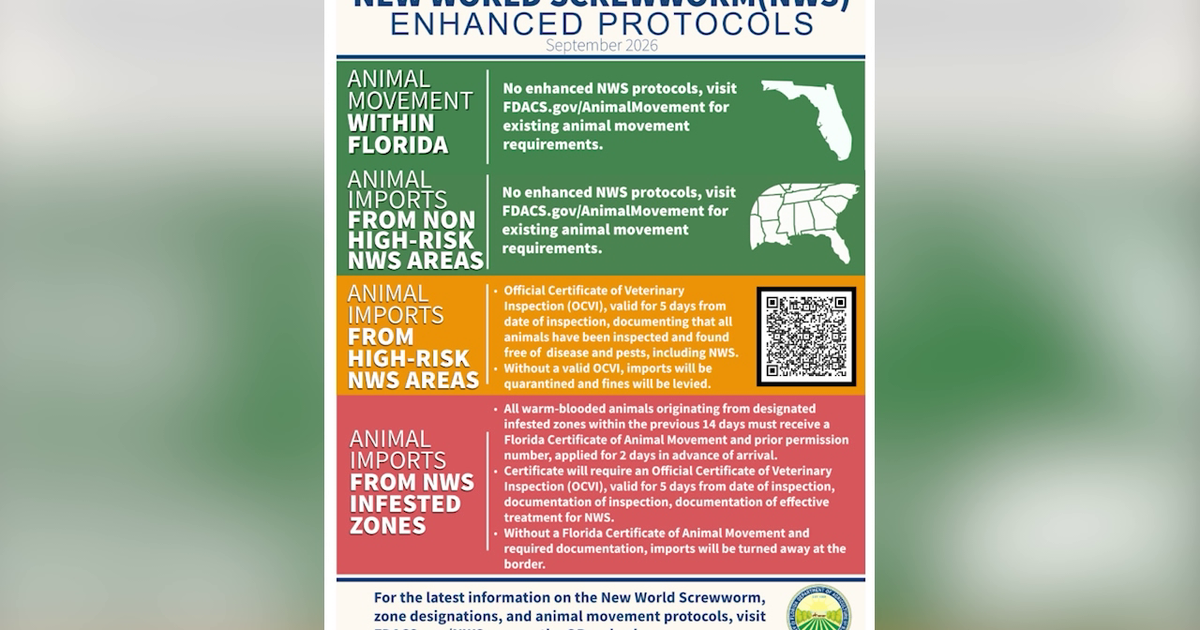
Six confirmed cases of the New World screwworm in Arizona have triggered strict new travel requirements for pets and service animals across at least nine states, according to a FOX 10 Phoenix report.
The outbreak remains entirely concentrated in the southeastern corner of the state, but the ripple effects are already hitting animal owners preparing for holiday travel.
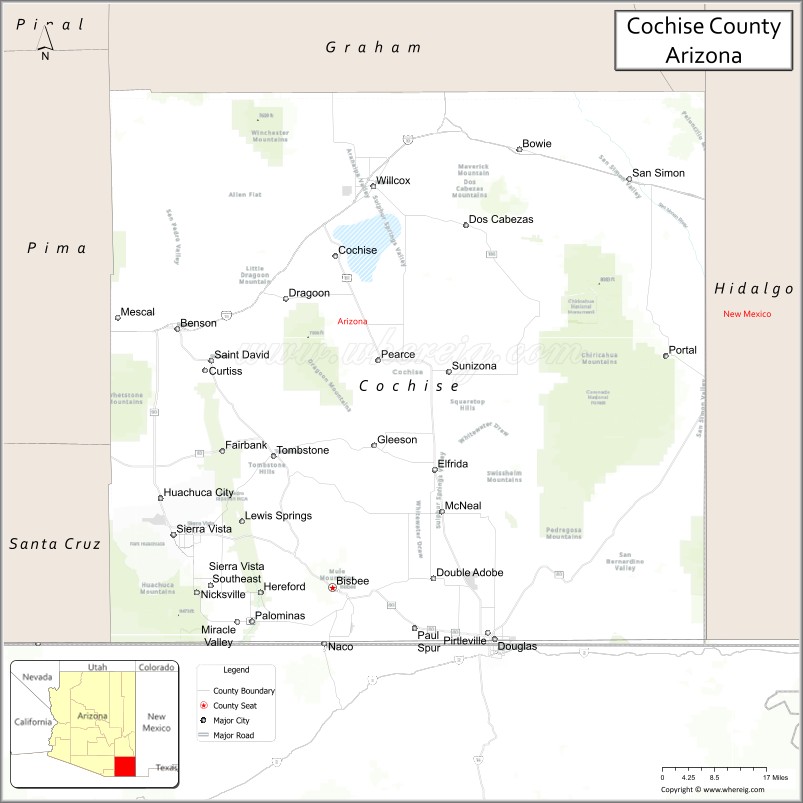
The latest case was confirmed in a horse near Pearce in Cochise County, roughly five miles from the state’s first confirmed case. Arizona’s other confirmed cases include a dog in Graham County, a sheep and a horse in Greenlee County, and another dog and horse in Cochise County.
With holiday trips fast approaching, travelers are finding that bringing pets or service animals across state lines now demands advance veterinary clearance. Depending on the destination, states are requiring animals to be inspected and cleared anywhere from three to seven days before leaving Arizona, adding unexpected costs and scheduling hurdles for owners.
“Under these new requirements, we’re faced with additional veterinary appointments, paperwork, permits, scheduling restrictions and potentially $300 or more in veterinary expenses,” Bob Taschetta told FOX 10 Phoenix. Taschetta, a resident of Wickenburg, relies daily on his service dog Sophie, who is trained to alert her owners to sounds by barking or pawing.
“Both my wife and I are seriously hearing impaired. In fact, I’m hearing through my hearing aids right now,” Taschetta said. “We don’t feel comfortable leaving home without her … so it’s paramount that when we travel, she comes with us.”

At least nine states, including California, Hawaii, and Florida, now mandate vet inspections for any pets or service animals traveling from Arizona, whether by car or plane. Taschetta and his wife had planned to visit family in San Marcos, California, for Christmas, but the new regulations have cast doubt on those plans.
“If families cannot afford those additional expenses, are they simply expected to forgo visiting their kids and grandkids and other family members?” Taschetta asked.
While some owners face difficult financial choices, others point out that shared travel spaces make caution necessary. “Our dogs go to relief stations, they go to dog parks … It’s just being responsible pet owners, that’s kind of what comes with it, the territory,” Cesar Astorga, a resident of Prescott, told FOX 10 Phoenix.
Taschetta agrees the underlying issue deserves serious attention. “I’m not suggesting that the screwworm threat should be ignored. It’s a serious concern that deserves appropriate attention,” he said. Even so, he believes the financial strain should not fall squarely on responsible animal owners.
“Protecting agricultural and animal health should not automatically translate into imposing costly and potentially unnecessary requirements on every responsible animal owner,” Taschetta said. “I wish California would consider some less burdensome alternatives, particularly for the professionally trained service animals.”
Travelers following these rules will find that different destinations enforce distinct standards. Hawaii, for instance, maintains entry requirements that go far beyond a standard veterinary check-up. Animal owners can review state-specific entry guidelines directly on the USDA website, while broader background on the parasite is available via the New World screwworm overview.

Unsealed Documents Reveal Three More Guilty Pleas in Jacksonville Slime Gang RICO Case
Federal court documents unsealed in Jacksonville reveal that three men connected to the local "Slime" gang entered guilty...

Along Popular Beltline Stretch, Where Two-Pronged Project Stands Now | Urbanize Atlanta
Developers told Urbanize Atlanta this week that two decades of redevelopment talks for a Reynoldstown property are scheduled...

Diabolic Hill seeks Matron Stakes win at Bally’s Dover
Diabolic Hill seeks his fourth victory on Thursday night as the sophomore trotter closes out his campaign in...

Brennan Othmann Claims He Did Not Receive a Fair Opportunity With Rangers
Eight months after his departure from New York, former first-round draft pick Brennan Othmann claimed he did not...