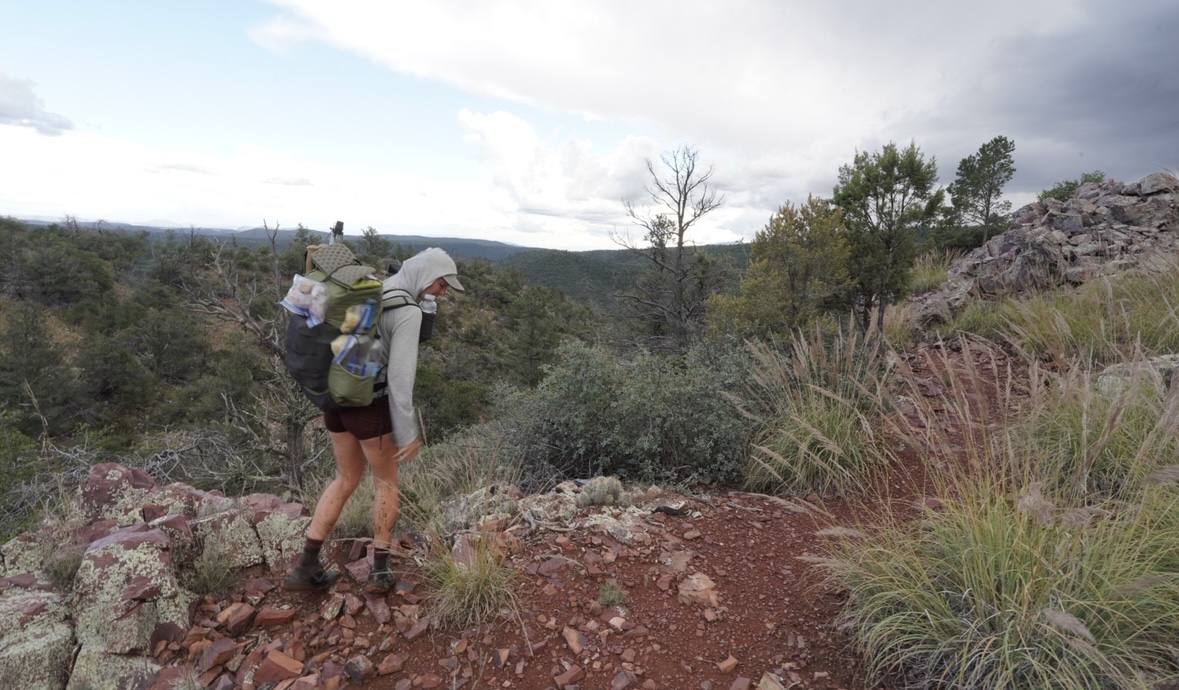
A bear had been walking the Arizona Trail days before the hikers arrived, pressing deep tracks into red clay that still held water when they passed on Saturday.
The footprints appeared in the mud along a 19-mile stretch leading to a highway crossing, The Trek reported. Back feet left larger impressions than the front, a detail the hiker noted while moving through the Mazatzal Wilderness section of the Tonto National Forest.
“If I was a bear, I would also love to follow the trail,” the hiker wrote. “It is a perfect path through the wilderness.”

The observation underscores a reality long understood by backcountry travelers: established trails function as wildlife corridors after dark. The Arizona Trail Association notes that the path crosses multiple ecosystems from the Mexican border to Utah, linking habitats for black bears, mountain lions, and elk.
“Animals use trails for the same reason we do — they’re the path of least resistance,” said a wildlife biologist with the Arizona Game and Fish Department. “In wet conditions, those prints can persist for days, giving hikers a false sense of how recent the activity actually was.”
Rain had saturated the clay for days prior, preserving tracks that might otherwise vanish in hours. The same moisture turned the trail a deep, vibrant red the hiker described as “incredible,” though the color signaled saturated ground that could slick rock slabs and rebuild mud within minutes of a passing shower.
Saturday’s river fords were simpler. The first, reached near the 20-mile mark, required wading in; the second, a smaller stream in the evening, was crossed without hesitation. Boots and socks dried on the trail as temperatures cooled.

Day hikers, a trail-maintenance scout, and a rider leading a pack horse with a pink saddle appeared near the highway crossing — evidence of the heavy front-country use this section sees. The Arizona Trail Association coordinates volunteer crews to manage erosion from flash flooding, which can remove entire tread segments in a single monsoon event.
Bear tracks reappeared on the ridge at sunset, some holding standing water in impressions deep enough to suggest a large animal. Whether the same bear or a different one remains unknown; black bears in the region can cover 20 miles in a day when foraging, according to Arizona Game and Fish Department data.

Mays Pitches Jets Trade for Colts Coach Shane Steichen
It is idea season for the New York Jets, that desperate stretch where a 2-8 record invites every...

Council Fails to Override Frey Veto on AI Data Center Rules Wonsley Says
"They have not proven to be of benefit to the well-beings of regular residents," Council Member Robin Wonsley...

Colorado School of Mines beat Seattle Pacific 34-30 on Saturday
Colorado School of Mines women's basketball erased a three-point deficit in the final five minutes to beat Seattle...

New London Man Nasir Cherry Dies in Fatal Shooting Investigation
A fatal shooting occurred in New London on Wednesday afternoon. New London police are still investigating the incident...