Vermont man wants fly to work from backyard in November 2026.
The dispute over Kyle Clark’s 130-acre property in Lincoln, Vermont, has stretched nearly five years, turning a friendly community welcome into a complex legal battle over land use and scenic character. This isn’t just about private aviation; it’s about how established rural life negotiates modern industrial ambition.
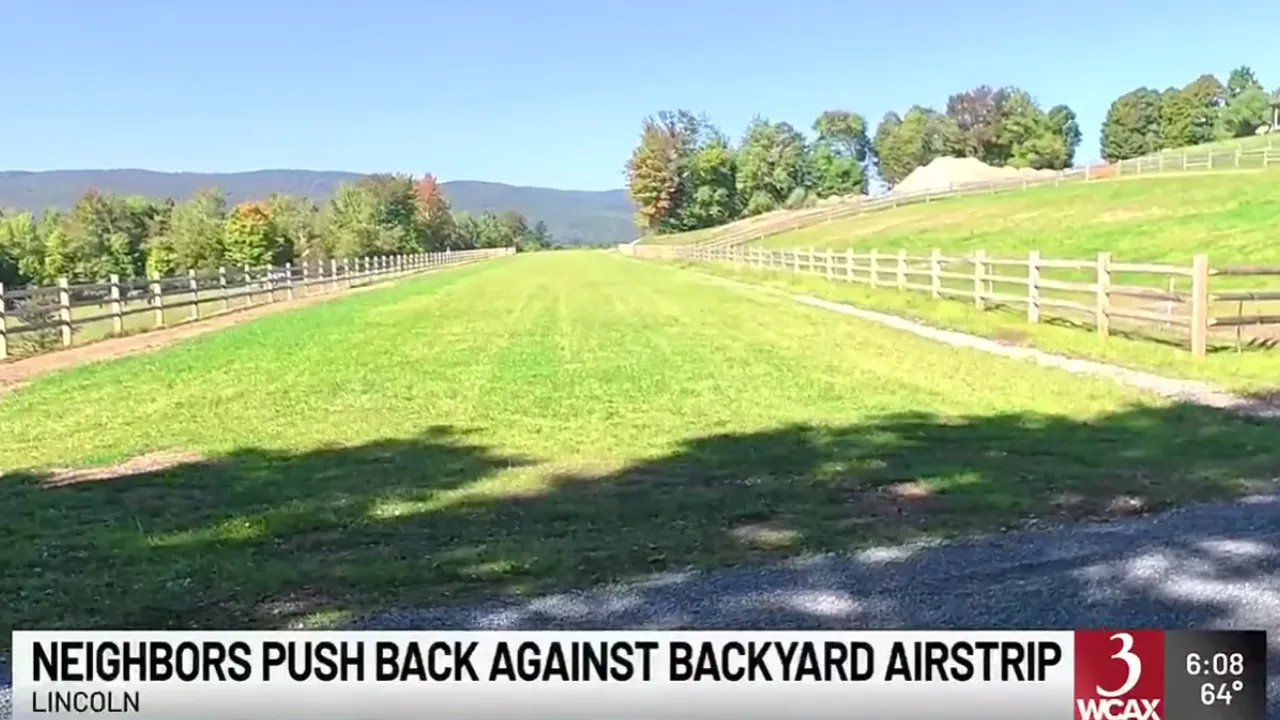
Clark, CEO of electric aircraft manufacturer Beta Technologies, plans to use a 900-foot landing strip for private aircraft, including commuting. Neighbors worry about safety and the fundamental quality of their mountain views, even after regulatory approvals were secured.
The disagreement first moved through Vermont Superior Court after local zoning officials rejected the plan. In a 22-page decision issued May 28, 2025, Judge Thomas G. Walsh looked closely at two options for the runway: one grading a 900-foot-long, 60-foot-wide section, and the other using the existing meadow without grading, according to the decision issued May 28, 2025.
The court found the grass runway itself wouldn’t significantly impact neighbors visually because existing vegetation and the topography offered concealment. However, the judge determined that takeoffs and landings introduced an adverse visual change where none previously existed.
A core issue is the separation between municipal zoning authority and federal aviation law; local governments regulate land use, not flight operations or noise. This distinction shaped the May 28, 2025 ruling.
The court limited the graded runway to no more than two takeoffs and two landings daily to prevent undue visual impact, while the ungraded alternative faced no such restriction, according to the ruling.
“The judge determined that the activity would introduce an adverse visual change to the surrounding neighborhood, where such operations were not already occurring on the property.”
said Marilyn Ganahl, who owns a neighboring 105-acre horse farm and nature preserve, telling the Boston Globe’s investigation.
Despite the court’s findings, opposition persisted, leading two neighbors to appeal the state’s approval with the Vermont Supreme Court on October 19, 2026, according to VTDigger.
Both sides have accused the other of intimidation, a sharp turn from the initial welcome when one neighbor brought a casserole and another offered horses for the family’s children to ride, according to the Boston Globe’s investigation.
The practical consequence for the community is that while zoning allowed development, federal aviation rules—not local zoning—govern noise and safety, leaving some neighbor concerns outside the court’s purview.
Kyle Clark already secured another landing option, having purchased a $14 million property in Charlotte, Vermont, in January 2026, where an airstrip was already permitted, according to the Boston Globe’s investigation.
Yet, the Lincoln project advanced through the Federal Aviation Administration’s conditional determination in 2025, and the Vermont Transportation Board approved the landing area on October 8, 2026, subject to operating conditions, according to the Boston Globe’s investigation.
The runway was reported built by November, though it still needed a certificate of operation from the Vermont Transportation Board before use, according to the Boston Globe’s investigation.
The essential friction here is this: property rights meet shared landscape, and state approval doesn’t settle every local concern.
Related reading

Mays Pitches Jets Trade for Colts Coach Shane Steichen
It is idea season for the New York Jets, that desperate stretch where a 2-8 record invites every...

Council Fails to Override Frey Veto on AI Data Center Rules Wonsley Says
"They have not proven to be of benefit to the well-beings of regular residents," Council Member Robin Wonsley...

Colorado School of Mines beat Seattle Pacific 34-30 on Saturday
Colorado School of Mines women's basketball erased a three-point deficit in the final five minutes to beat Seattle...

New London Man Nasir Cherry Dies in Fatal Shooting Investigation
A fatal shooting occurred in New London on Wednesday afternoon. New London police are still investigating the incident...