
“Arizonans want freedom; this speaks to the freedom to being able to transit a stoplight without having one’s picture taken,” state Sen. Wendy Rogers told KTAR News 92.3 FM. On Tuesday, Arizona voters handed Rogers and her allies a decisive win, with Proposition 319 projected to pass at roughly 59% when The Associated Press called the race at 1:34 a.m. Wednesday, ABC15 Arizona reported.
The measure doesn’t flip a switch on every camera in the state overnight. Instead, it draws a hard line in the sand: starting Jan. 1, 2027, no city or town can install new photo enforcement systems for speeding or red-light violations. Cities already running them—Tempe and Paradise Valley among them—get to keep the cameras they have as of Dec. 31, 2026, but only if local voters approve their continued use in the November 2027 general election, and then again every 10 years thereafter. If a city fails to win that approval, its systems must shut down within 90 days after the election.
What Drivers Actually Face in the Short Term
For anyone cruising through the Valley this winter, the practical reality is unchanged. If you get flashed by a camera in Tempe or Paradise Valley before the end of 2026, you still owe the ticket—a first-time, low-level violation can run about $250, Yahoo News reports. The real fight shifts to next year’s city ballots, where residents will decide whether the cameras stay or go.
Paradise Valley makes an especially interesting test case. Its police department claims a national first with photo enforcement dating back to 1987, and the city credits the technology with an immediate 42% cut in collisions. Whether voters in 2027 approve the continued use of existing photo enforcement systems will say a lot about how Arizonans balance safety and surveillance.

Safety Data vs. Privacy Concerns
Will Humble, executive director of the Arizona Public Health Association, argued the measure cast too wide a net by lumping red-light cameras in with speed cameras.
Some studies show that red-light cameras reduce those violent T-bone crashes that kill and maim people by about 50%, while other studies indicate a 20% decrease in those T-bone crashes, Humble said. He was referencing a 2005 Federal Highway Administration study and Insurance Institute for Highway Safety data. Both indicate red-light cameras reduce injury and fatal crashes at well-chosen intersections, though the FHWA study also found they can increase rear-end collisions by about 15%.
Humble acknowledged the rear-end tradeoff but noted those crashes tend to be less violent.
He said the problem with Prop 319 is that for cities that don’t have photo enforcement now, they can never have it in the future — no matter how dangerous their intersections get.
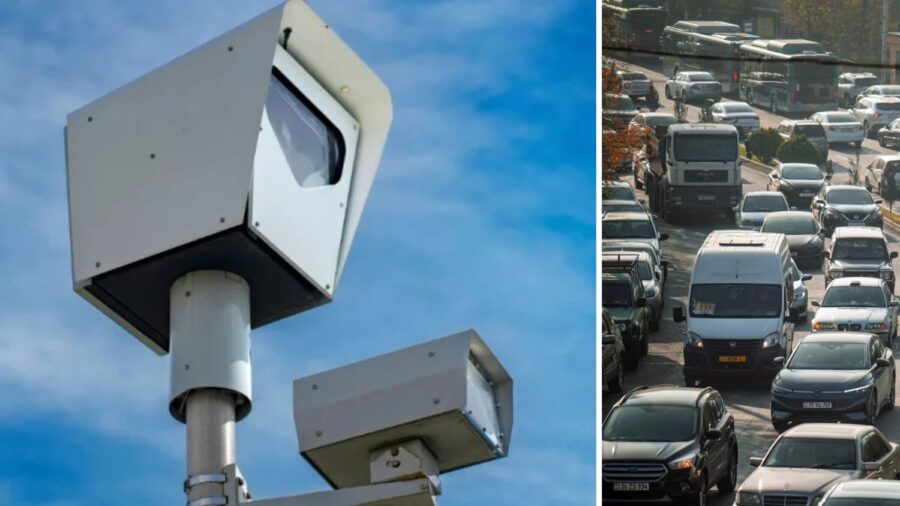
Rogers, who introduced the Senate Concurrent Resolution that placed Prop 319 on the ballot, pushed back hard on the safety argument. She told KTAR that photo enforcement presents the same privacy concerns as Flock Safety cameras and license plate readers, and she dismissed the idea that the cameras change driver behavior. She also made no secret of the fiscal motivation.
“Absolutely, it is a cash cow. They can serve these tickets without a human being,” Rogers said.
The Hidden Budget Consequence
Prop 319 indirectly reduces the civil penalties and criminal fines that flow into the Citizens Clean Elections Fund, the voter-created program that helps qualifying candidates finance their campaigns. For Rogers, that reduction is a feature, not a bug—she has long argued candidates should earn office rather than rely on public subsidies. Democratic critics, including the Legislative District 3 Democrats of northeastern Maricopa County, called the measure a backdoor attempt to defund the Clean Elections Commission, which they said Republicans and their dark-money backers have long opposed.
The path to the ballot ran through the Arizona Legislature. The measure was referred to voters via Senate Concurrent Resolution 1004, which received overwhelming Republican support and a handful of Democratic votes. It marked a reversal from 2023, when Gov. Katie Hobbs vetoed a similar bill introduced by Rogers that would have placed comparable restrictions on photo enforcement.
What Prop 319 Doesn’t Touch
Drivers worried about broader surveillance should note that license plate readers like Flock cameras are explicitly outside the measure’s reach, Yahoo News reports, because they serve purposes beyond writing tickets. If your objection is to being tracked rather than ticketed, this vote changes nothing. Meanwhile, the measure puts Arizona at odds with its western neighbor: Los Angeles just activated speed cameras that can mail drivers a $500 ticket after a 60-day warning period.
The next concrete date on the calendar is November 2027, when voters in cities with existing cameras—Tempe, Paradise Valley, and others—will decide whether those systems stay lit or go dark.
Worth a look

Kansas voters approve 2026 amendment to explicitly ban noncitizens from voting, KWCH reports
Kansas voters approved a constitutional amendment Tuesday that rewrites the state's voting qualification language to state explicitly that...
Starr’s Cave Nature Center hosts stewardship day and cooking program
Volunteers will fan out across Starr's Cave Nature Center on November 14 with trash bags, work gloves, and...
Indiana Democrats Break Republican Supermajority in Statehouse Election Results
Indiana Democrats won 15 House seats Tuesday, ending the Republican supermajority that had dominated the statehouse for over...

U.S. Marshals Arrest Fugitive Wanted in 2025 Springfield Shooting
After 16 Months on the Run, U.S. Marshals Arrest Stanley Smith in Ravenna for 2025 Springfield Township Shooting...