- ArmorCode integration announced November 19, 2026
- Platform processes 400 billion findings annually across 425+ integrations
- Two-way flow uses SARIF format for vulnerability exchange
- ArmorCode remains system of record for enterprise risk tracking
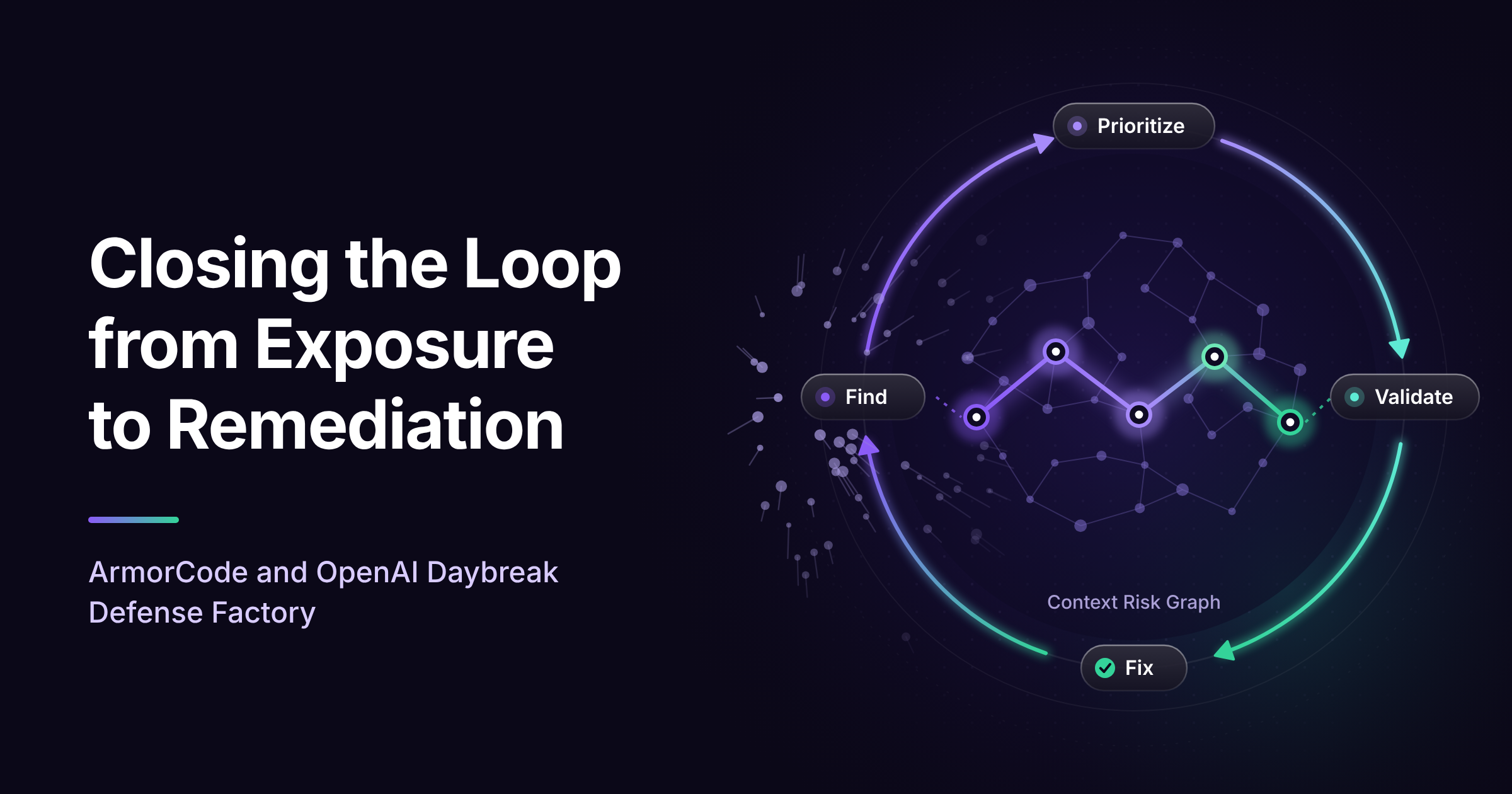
Under the integration, prioritized application security findings from ArmorCode flow into Daybreak Defence Factory for validation and proposed fixes, while vulnerabilities Daybreak discovers during code analysis return to ArmorCode via SARIF, or Static Analysis Results Interchange Format, SecurityBrief Asia reported.
The arrangement is designed to link continuous threat exposure management, or CTEM, with AI-led remediation inside development teams.
ArmorCode ingests findings from more than 425 integrations across application, infrastructure, cloud and AI security, processing more than 400 billion findings a year, according to the company’s blog and SecurityBrief Asia. Its Context Risk Graph correlates and deduplicates raw findings, then connects each to exploitability, threat intelligence, asset and business criticality, and ownership. That prioritization determines which issues reach Daybreak for deeper code-level analysis.
Daybreak Defence Factory builds on Codex Security to investigate vulnerabilities and prepare proposed fixes. It analyzes a codebase, builds a threat model, validates that a reported issue is genuine, and proposes a root-cause patch for review, ArmorCode said. Developers can start with a repository scan or findings from supported security tools, with agents investigating affected code and preparing proposed patches with evidence for engineers to review and test.
SecurityBrief Asia reported that ArmorCode aims to stay the system of record for enterprise-wide remediation tracking, covering ownership, service-level agreements and audit trails. In practice, that makes Daybreak a tool for validating and preparing fixes, while ArmorCode maintains the overall view of risk exposure across teams and systems.
Additionally, the platform monitors vulnerability chains in which a code weakness, an exposed service, and an over-permissioned cloud role combine into a real path to impact.
For narrowly scoped issues such as SAST and SCA findings confined to a single file, ArmorCode’s agentic AI, Anya, opens pull requests directly in the developer’s workflow under enterprise-set policies and approvals, the company said. Daybreak focuses on broader codebase analysis, threat modeling, and root-cause patch proposals for issues that require deeper investigation.
SecurityBrief Asia reported that the link embeds ArmorCode’s exposure management platform within OpenAI’s Codex Security environment, broadening the reach of OpenAI’s vulnerability analysis tooling into enterprise exposure management. The arrangement frames AI-led remediation as a layer that rests on top of existing scanners and tracking systems instead of supplanting them. Neither company disclosed performance benchmarks for the combined system.

Tennessee Shapes Own REIDA Model, Avoids Texas, Florida Structures
One year after Tennessee enacted the Real Estate Infrastructure Development Act, developers and municipalities are building a financing...

EPA Proposes Approval of Maryland Interstate SO2 Transport Plan
The Environmental Protection Agency proposed on Thursday to approve Maryland’s state implementation plan revision addressing interstate transport requirements...

Nephi Man Trevor Poulsen Has Brain Tumors Removed Weeks Before Child’s Birth
Trevor Poulsen of Nephi underwent surgery Tuesday night at Utah Valley Hospital in Provo to remove a large...

Thanksgiving Travelers Crowded Airports, Confronted Storms, Tech Fears
Millions of Americans crowded airports and highways Wednesday for one of the busiest Thanksgiving travel periods on record,...