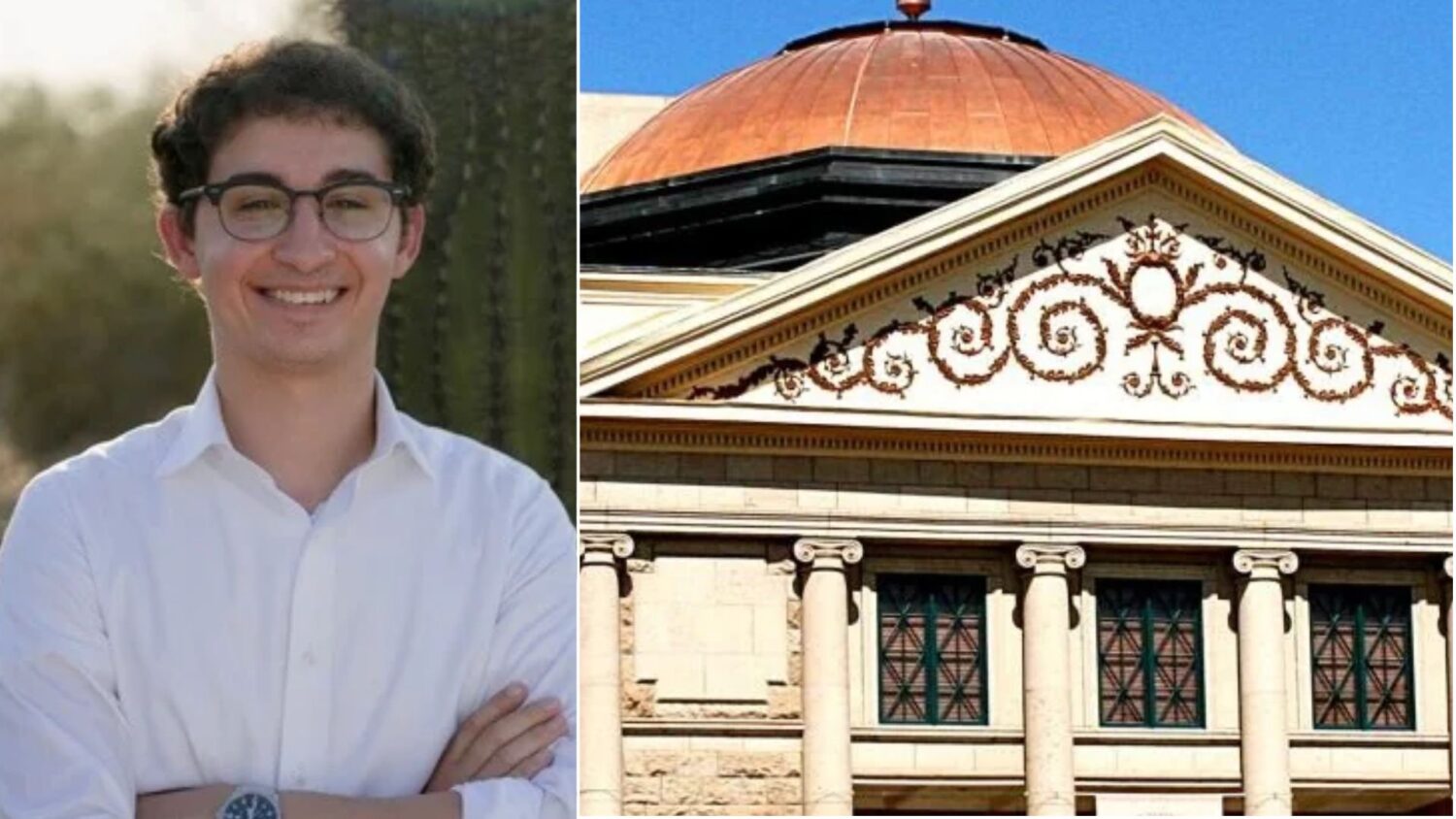
Arizona State University law student Armando Montero, 25, won a seat in the Arizona House of Representatives earlier this month, making him one of the first Generation Z members elected to the state legislature.
Montero will represent Legislative District 12 — covering south Tempe, Ahwatukee, west Chandler and the Gila River Indian Community — as a Democrat, serving more than 250,000 constituents alongside one other House representative. His victory on Nov. 3 came alongside a separate win by ASU sophomore Sebastian Matta, 19, who became the youngest Superior Court Clerk in Arizona history after defeating Republican Jeff Dial in the Maricopa County race.
“It’s important to have all voices at the table, especially in the pivotal moment that we are in Arizona with some of the issues, whether it’s education, health care, housing or water. These are all things that I think are uniquely impacting my generation.”
From school board budgets to the state Capitol
Montero’s path to the legislature runs through the Tempe Union High School District Governing Board, where voters elected him at 19 in 2020 and reelected him in 2024. He served as board president for four years, a tenure defined by repeated budget cuts that he said revealed the limits of local governance.
“Every single year on that board, I’ve had to vote to cut our budget. Last year, we had to vote to cut almost 60 full-time positions from our budget. Our feeder district, Kyrene Elementary, voted to close six schools,” Montero told KTAR News.
“So, I think it was probably that moment and having to take that vote that made me realize there’s almost only so much we can do at the local level.”

That experience shapes his legislative agenda. He plans to join the House Education Committee to target fraud in the Empowerment Scholarship Account voucher program and increase public school funding. Expanding mental health services in schools — a priority he advanced on the governing board — also remains a focus.
Montero balances law school graduation with legislative duties
Montero expects to graduate from the Sandra Day O’Connor College of Law in May with a juris doctor. He holds bachelor’s degrees in political science, economics and mathematics with an emphasis in statistics from Barrett, The Honors College, and works as a senior planning analyst in ASU’s Office of Educational Outreach and Student Services.
He arranged his final spring semester around the legislative session, placing classes on Fridays — when the Legislature typically does not hold committee or floor hearings — and using online options. He intends to practice law part-time while serving at the Capitol.
“I think a lot of the skills that you get taught in law school related to statutory interpretation or how courts might interpret certain pieces of legislation is going to be super important and I think will help me become a better legislator,” he told KTAR News.
A generational shift in Arizona politics
Two wins by Montero and Matta mark a generational change in a state where water policy, housing costs and education funding drive the political debate. Matta, a Phoenix native, entered the clerk’s race after noticing no Democrat had filed for the seat that manages more than 600 employees and a $65 million budget.
“I really just answered the call to serve,” Matta told ASU Law. “I was always very passionate about courts and politics and the law, and I answered the call to serve my county and my state and my country — especially with everything going on nowadays. I felt this obligation to come out and be part of this.”
Montero’s interest in public service began as a teenager after losing a close friend to suicide, prompting advocacy for improved mental health resources. That personal loss launched a career that has now moved from a high school dais to the state House before he has finished his law degree.
The Arizona House of Representatives, where Montero will take his seat, forms the lower chamber of the state Legislature alongside the 30-member Senate. Each of Arizona’s 30 legislative districts elects two representatives to serve two-year terms, with members limited to four consecutive terms. The body convenes at the Arizona State Capitol in Phoenix.
The Legislature convenes in January.

Sam Lewis Scores 28 as Virginia Beats Maryland; Madden Collins Leads American Over Harvard
Virginia walked into the Xfinity Center and silenced a red-out crowd, 87–83, behind a career night from Sam...

Wichita Falls Museum of Art Traces Animals From Scientific Specimens to Cultural Symbols in Collection Show
The Wichita Falls Museum of Art at Midwestern State University has opened a survey drawn entirely from its...

Laika to Offer Free ‘Wildwood’ Screenings at 15 Portland Theaters on Nov. 29
Laika will unlock 15 Portland theaters for free “Wildwood” screenings on Sunday, Nov. 29, offering 7,900 seats across...

New Orleans Leaders, Tulane Urge Students to Find Public Service Passion
"The problems we face are our opportunity to find purpose," Steve Gleason said in a video message played...