
Oklahoma County Presiding Judge Sheila Stinson told state lawmakers on October 29 that she will issue orders to overhaul bail hearings that keep poor people jailed for days without seeing a judge, The Frontier and KOSU reported.
The announcement came during an interim study at the Oklahoma Capitol where attorneys, court staff and advocates warned that the county’s current practices violate constitutional standards and invite the same federal lawsuits that have already hit Tulsa and Canadian counties.
Stinson said the court needs to create a way for attorneys to meet with defendants before hearings, hold proceedings on weekends and holidays, and eliminate the multi-day waits that now depend on when someone is arrested.
“If an inmate gets arrested the Wednesday before Thanksgiving, they won’t see a judge until Monday,” Stinson said. “We’re looking at alternatives for that.”
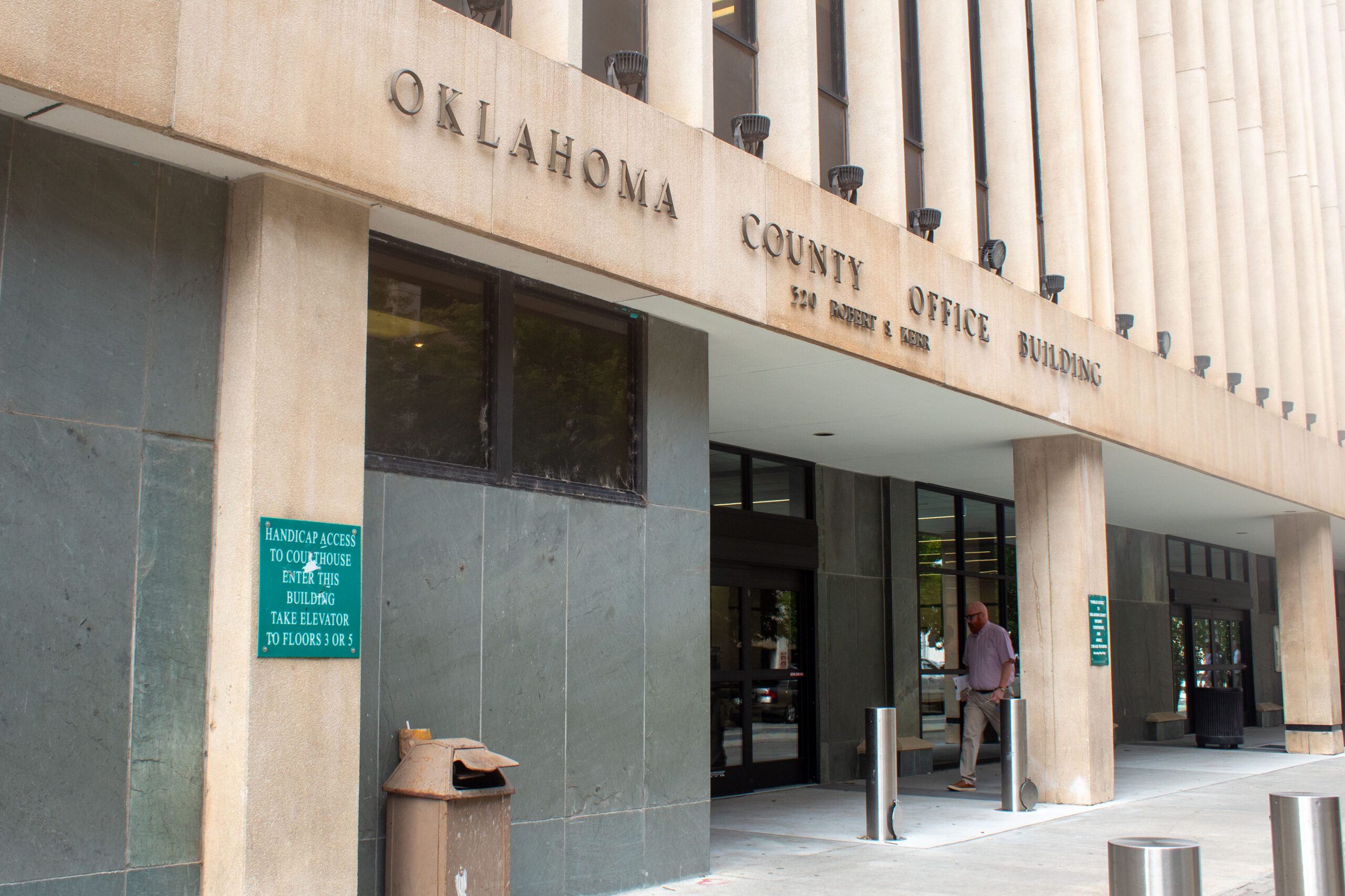
The constitutional gap
Courts have ruled that people charged with crimes have a right to individualized hearings where a judge weighs flight risk, financial circumstances and community ties. Oklahoma County’s hearings don’t meet that standard, The Frontier and KOSU previously reported. Instead, judges rely on a predetermined bond schedule that sets fixed amounts for most charges.
The result, Chief Public Defender Brigitte Biffle told the study, is a two-tiered system: “If you have violent crimes and a lot of priors, and you have money, that means you can get out of jail. If you are poor or indigent and you don’t have money, you can have a non-violent crime and you stay in jail. This does not make the public safer.”
Biffle said public defenders have their “hands tied” because they cannot meet clients before initial hearings, which occur via video from the jail. They argue bail without knowing a defendant’s financial situation, employment or family obligations.
“What does this mean in reality? Well, if you have violent crimes and a lot of priors, and you have money, that means you can get out of jail. If you are poor or indigent and you don’t have money, you can have a non-violent crime and you stay in jail. This does not make the public safer.”
By the numbers
| Metric | Figure | Source / Period |
|---|---|---|
| People held on nonviolent misdemeanors unable to pay $50–$100 bond | At least 57 | Biffle / two-week sample in October |
| Jail population held pre-conviction | Nearly 85% | Stinson / Oct. 29 testimony |
| Estimated cost to add prosecutor, public defender and judge | ~$1 million | Madison King, Assistant District Attorney |
| Fiscal impact of stalled SB 1381 pilot program | $2.4 million | Legislative fiscal analysis |
The Tulsa precedent
Tulsa County offers a model — and a warning. After a federal judge ordered reforms, Tulsa created daily bond dockets so defendants see a judge within 24 to 48 hours of arrest, even on holidays and weekends. A court-appointed lawyer is present at the jail during hearings. Oklahoma County officials have previously asked lawmakers for similar resources.
Sen. Dave Rader, R-Tulsa, authored Senate Bill 1381 last year to fund a pilot program for individualized hearings, but the measure stalled in the House. Rader told The Frontier and KOSU he plans to reintroduce it next session. Sen. Mark Mann, D-Oklahoma City, who co-hosted the study, said he is talking with Rader about legislation that would also test a rural pilot so the state can “see what works.”
Reforms need money county lacks as lawsuit looms
Stinson acknowledged the reforms need money the county doesn’t yet have. King estimated hiring one additional prosecutor, public defender and judge would cost about $1 million; the legislative fiscal note for Rader’s bill put the total closer to $2.4 million.
“The state needs to help — and must,” Rader said.
Stinson said she hopes that if and when a federal lawsuit arrives, the court can point to improvements made in the coming months. One bail hearing judge retired last month; the other retires in December. Biffle said she hopes their replacements will be “trained based on the law and what the arraignment process should look like.”
“I don’t believe that locking someone up just because they can’t afford to pay a bail bond is a good thing to do. It violates the law.”
Stinson, a native of Boise City, earned a bachelor’s degree in criminal justice from the University of Central Oklahoma in 1999 and a Juris Doctor from the University of Oklahoma College of Law in 2002. Before taking the bench, she clerked for Judge Gary Lumpkin at the Oklahoma Court of Criminal Appeals and built a civil litigation practice that included ownership of Stinson Law Group from 2014 to 2017.
She served as an Oklahoma County Special Judge on the Family and Domestic docket starting in June 2017 and was elected President of the Oklahoma County Bar Association for 2018-2019. Governor Kevin Stitt appointed her as a District Judge in July 2020.
Stinson plans orders while county waits for funding
Stinson plans to issue administrative orders implementing the changes, but the timeline depends on funding the Legislature has not yet approved. Rader intends to file a new version of SB 1381 when the session convenes. Mann wants parallel rural pilots. And the county waits — 85% of its jail population still unconvicted — for either the money or the lawsuit, whichever comes first.

Sam Lewis Scores 28 as Virginia Beats Maryland; Madden Collins Leads American Over Harvard
Virginia walked into the Xfinity Center and silenced a red-out crowd, 87–83, behind a career night from Sam...

Wichita Falls Museum of Art Traces Animals From Scientific Specimens to Cultural Symbols in Collection Show
The Wichita Falls Museum of Art at Midwestern State University has opened a survey drawn entirely from its...

Laika to Offer Free ‘Wildwood’ Screenings at 15 Portland Theaters on Nov. 29
Laika will unlock 15 Portland theaters for free “Wildwood” screenings on Sunday, Nov. 29, offering 7,900 seats across...

New Orleans Leaders, Tulane Urge Students to Find Public Service Passion
"The problems we face are our opportunity to find purpose," Steve Gleason said in a video message played...