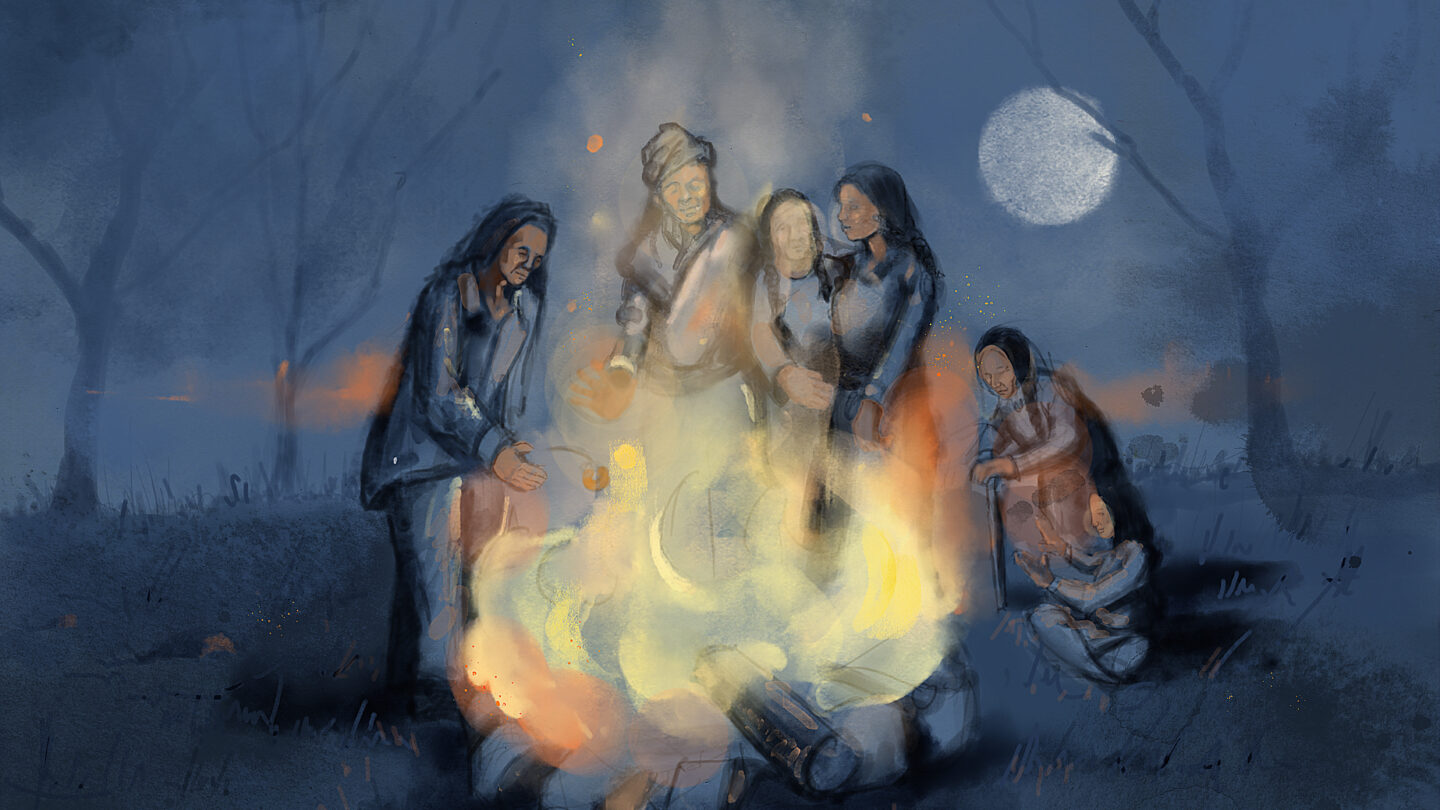
The Atlanta History Center opened a new exhibition Thursday, November 19, that tells the Cherokee and Muscogee removal stories together for the first time in Georgia — without a single traditional artifact.
- Exhibition “Exile from Georgia” opens November 19, 2026, at the Buckhead campus.
- First major Georgia exhibition to combine Cherokee and Muscogee Trail of Tears histories.
- Developed in collaboration with tribal leaders, scholars, and artists from both nations.
- Uses immersive film, animation, and oral histories instead of physical artifacts.
Center shifts from artifacts to immersive storytelling
The centerpiece is a round theater where projected screens, minimalist tree-trunk cutouts, colored lights, and recorded birdsong surround visitors with an animated film that follows Cherokee and Muscogee individuals on the forced journey west. “We can’t get that piece of authenticity, but can we get authenticity in the emotion?” Changnon asked, in an interview with saportareport.com.
Changnon, who previously worked at Turner Classic Movies and Cartoon Network, said the narrowing hallway leading to the theater was designed “to suggest that you really, as a people, had no choice.” The exhibit begins with a timeline of events leading to removal, continues through the immersive film, and concludes in a gallery that displays contemporary Muscogee and Cherokee pieces.

Tribal collaboration shapes every element
The Atlanta History Center worked with a group of Indigenous historians and advisors from the Cherokee Nation and Muscogee (Creek) Nation, both based in Oklahoma, to develop the exhibition, according to the center’s official site. “We were trying to make it as faithful to how they interpreted what their experience was, and not from our point of view,” President and CEO F. Sheffield Hale told atlantamagazine.com.
Cherokee Nation Principal Chief Chuck Hoskin Jr. said institutions have too often told the Cherokee story without involving Cherokee people. “I think it’s indispensable to make sure that if we’re telling anyone’s story that we involve them,” Hoskin said, praising the History Center for approaching both nations “with an open mind and open arms to come join with them to tell our story,” atlantamagazine.com reported.
Muscogee (Creek) Nation citizen Tracie Revis, director of advocacy for the Ocmulgee National Park and Preserve Initiative, emphasized the scale of what was lost.
“So many people don’t understand how big we’ve been, and how organized and sophisticated we really were,” Revis said, noting the trade routes and pathways that once connected communities across the region. “I would hope people realize that this is land they actually stand on. This was Muscogee Creek,” she told atlantamagazine.com.
Why artifacts are absent
The exhibition contains no historical artifacts from the removal era. “We don’t have the artifacts, and in large part that’s because there has been a move to return these artifacts to the tribes, and we respect that,” Changnon told saportareport.com.
The center’s July opening of “More Perfect Union: The American Civil War Era” featured hundreds of artifacts across thousands of square feet; by contrast, “Exile from Georgia” is smaller.

Hale said the exhibit addresses a longstanding gap. “For much of the state’s history the Cherokee and Muscogee people have not had their stories told with the depth or perspective they deserve,” he told saportareport.com.
“It’s really been a hole in Atlanta, in this area, to have an exhibition of this caliber addressing both the Muscogee and the Cherokee Trails of Tears,” he added to atlantamagazine.com. “They cover all of Georgia.”
The exhibition opened to the public November 19, after a members-only preview on November 18. It is the final exhibition of the Atlanta History Center’s centennial year.
Worth a look

Jared Spurgeon Passes Mikko Koivu for Wild Games-Played Record in Win Over Sharks
Minnesota Wild defenseman Jared Spurgeon became the franchise’s all-time games-played leader when he took his first shift in...

Tennessee Leapfrogs Alabama to No. 5 in Latest CFP Rankings, Hosting Boise State Projected
The College Football Playoff selection committee moved Tennessee ahead of Alabama for the first time this season, placing...
New York Officials Prepare Emergency Operations Center for El Niño Winter Storms
New York officials are preparing the state's Emergency Operations Center for an El Niño winter after last season's...

McKean County, PA 2027 Living Wage Set at $24.04 an Hour for Family of Four
The 2027 living wage for McKean County, Pennsylvania, is set at $24.04 an hour per worker for a...