The City of Atlanta has unveiled a final master plan to convert more than 130 acres of the former Atlanta Prison Farm into a public memorial and nature preserve, a move that would stitch together a fractured history of Indigenous people, convict labor, and modern police training.
The design, presented by the Department of Parks and Recreation and landscape architects HGOR, envisions a gradient of experience: structured reflection spaces and a museum near the entrance giving way to rugged trails and preserved ruins deeper in the woods.
“You know, everybody knows about the Civil War, we all know about the Civil Rights Era, but there’s this whole period in here that’s sort of forgotten, right?,” said Matthew Cartledge, a landscape architect with HGOR, describing the project’s aim to illuminate the era of forced convict labor that defined the site for much of the 20th century.
A site layered with pain and nature
The property, tucked against Intrenchment Creek in southeast Atlanta but technically sitting in unincorporated DeKalb County, has sat largely off-limits for years. Its abandoned buildings, overgrown forest, and a cemetery for former Zoo Atlanta animals have drawn urban explorers and historians alike.
Before the city purchased the land in 1911, it belonged to the Muscogee Creek Nation. It later served as a crematory, a dairy farm, and, from the mid-1920s until the 1990s, the Atlanta Prison Farm, where incarcerated people worked agricultural fields and tended hundreds of hogs and cattle.
The master plan, labeled the Restoration Memorial & Preserve, proposes preserving crumbling masonry structures as open-air artifacts, building a nature center, and creating walking trails that connect to two existing ponds already developed as greenspace on the adjacent Atlanta Public Safety Training Center (APSTC) property. The remaining vacant portion spans roughly 138 acres — larger than Piedmont Park — featuring two large lakes, historic ruins, and South River frontage.

City and county jurisdiction complicate land transfer
Turning the vision into reality requires untangling a thicket of operational conflicts. Because the city owns the land but it sits in DeKalb County, parks staff acknowledged jurisdictional hurdles that have yet to be resolved. More immediately, the site remains an active weapons range.
The City of Atlanta uses a portion for long-range sniper training, while the Federal Bureau of Investigation and other agencies operate a bomb detonation range on the same grounds. Both entities would need to relocate, and the land would require environmental remediation before any public access could be safe.
“These sites address that portion of our history and kind of tie together the knot of that Atlanta story through green space, right, and through connectivity that serves us in a much better purpose and makes us think ahead to what we want the city to be,” Cartledge told WABE, framing the project alongside parallel efforts at the Chattahoochee Brick Site and Bellwood Quarry.
From listening sessions to guided tours
The plan caps a year of engagement that included four public meetings, archaeological surveys, and ecological assessments. On Monday, November 16, the city hosted a final public presentation at the Overlook at the Oakland Visitor Center to reveal the completed master plan. The event ran from 6 to 8 p.m. at 374 Martin Luther King Jr. Drive SE, inviting citywide feedback on the research and proposed design.

While the city has not published a construction timeline or budget, planners indicated they hope to begin guided tours of the site in the near future. The presentation materials, including the full master plan, are available on the City of Atlanta’s official project page.
A shadow over the greenspace
The prison farm site cannot be discussed without addressing its immediate neighbor. Eighty-five acres of the original property were recently redeveloped into the Atlanta Public Safety Training Center, a facility critics have dubbed “Cop City.”
The training center’s construction sparked intense protest, arrests, and a national debate over policing and environmental justice in the South River watershed. The master plan explicitly designs trail connections between the new preserve and the pond trails on the APSTC property, a physical link that highlights the contested politics of the site.
Preservationists have argued for decades that the entire tract — originally over 200 acres — should become parkland, a vision dating back to at least 2002 per the Atlanta History Center. The current plan secures a future for the southern remnant, but the northern section remains a fortified police campus.
What remains unresolved
The obstacles are concrete. No funding source has been identified for the remediation, the relocation of federal and local firing ranges, or the capital construction of the museum and nature center. The jurisdictional agreement with DeKalb County is unsigned.
The FBI has not publicly committed to moving its detonation range. Until those pieces move, the “Restoration Memorial & Preserve” exists as a rendered promise — a detailed map for a territory still defined by barbed wire and blast zones.
“The broader goal is to elevate the Atlanta Prison Farm site to regional—if not national—significance, while spotlighting its history for coming generations,” the Department of Parks and Recreation told Atlanta Urbanize, describing the process as one of “listening, stewardship, and acknowledgment of the site’s layered history.”
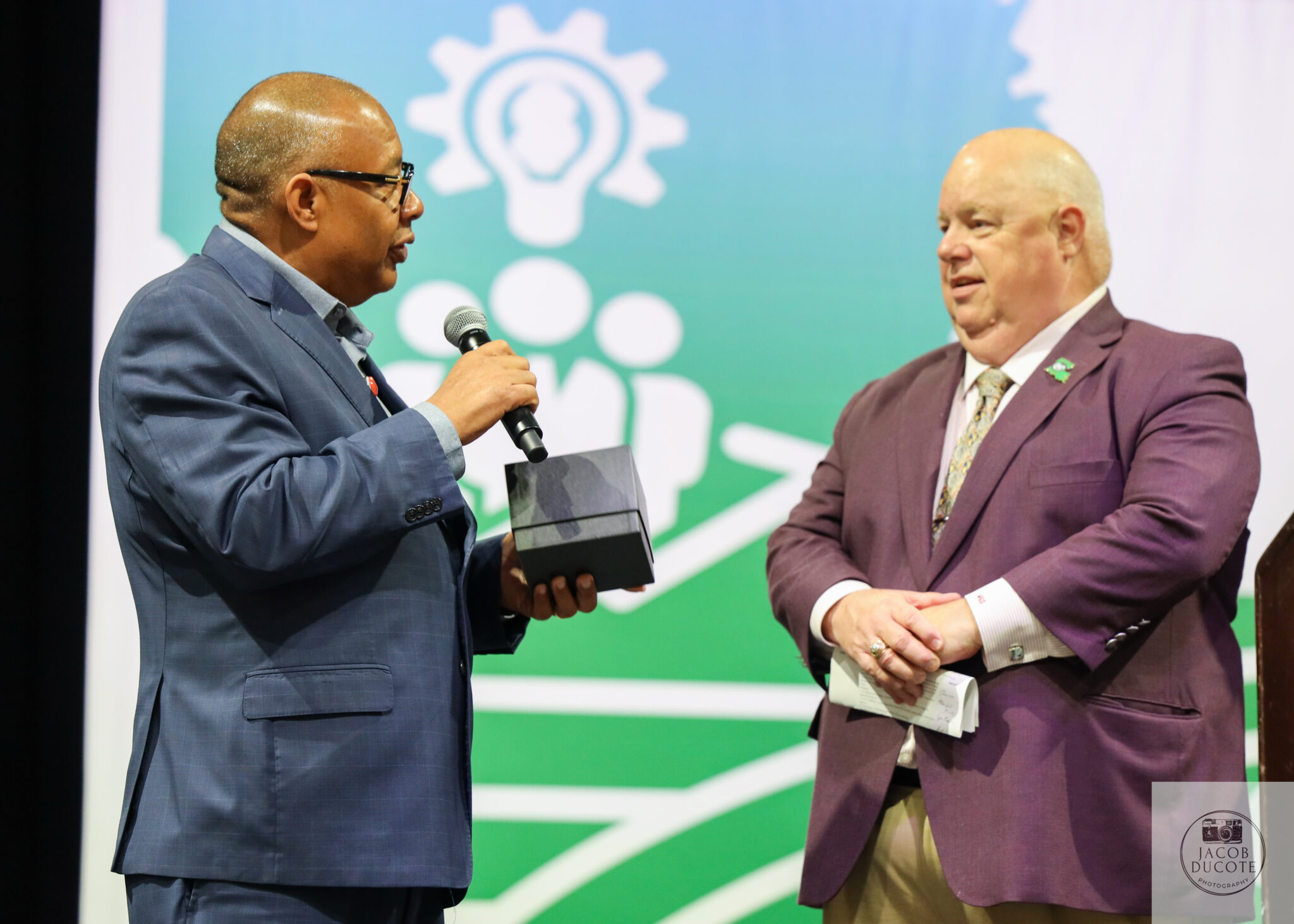
Louisiana Rural Education Association Convenes Summit Demanding Intentional Rural Investment
The Louisiana Rural Education Association convened its annual summit on Nov. 13 at LSU’s Huey P. Long Field...

No. 8 Doddridge County Travels to No. 1 Frankfort for Quarterfinal Rematch of Semifinal
Doddridge County's Bulldogs are back where they expect to be in November, but the road ahead runs through...

San Antonio Zoo Welcomes African Lion Tatu to Big Cat Valley Under Species Survival Plan
San Antonio Zoo welcomed a new male African lion named Tatu to Big Cat Valley on Wednesday, Nov....

Iowa Vape Directory Limits Legal Products to 361, Retailers Project Major Losses
Iowa's new vapor products directory took effect Monday, Nov. 16, cutting the number of e-cigarettes retailers can legally...