
A Three-Way Race for Indiana State Comptroller Tests Transparency and Fiscal Oversight
Porter County Clerk Jessica Bailey and Chesterton management consultant John Schick are challenging Indiana State Comptroller Elise Nieshalla in a contest that places the state’s financial transparency and administrative accountability on the ballot. The race brings together a Democratic nominee with nearly eight years of local administrative experience, a Libertarian candidate running for the office for the fourth time, and an incumbent defending her record after being appointed to the seat in November 2023.
Bailey, Schick challenge Nieshalla in Indiana State Comptroller race https://t.co/HaHIeGIexg
The office itself underwent a significant operational identity shift under the gold dome. Originally designated as the State Auditor, the Indiana General Assembly changed the name of the post in 2023 to more closely align with its day-to-day duties. Those responsibilities include managing state finances, ensuring state employees receive payroll disbursements on time, and distributing tax dollars across local jurisdictions. Nieshalla, a Zionsville resident who previously served as president of the Boone County Council, stepped into the role following an appointment by then-Eric Holcomb after spending two decades in economic development and real estate acquisition.
The Incumbent’s Record and National Focus
Nieshalla’s campaign centers on fiscal conservatism rooted in faith, family, and freedom. She has leveraged her platform to advocate on a national stage, serving as Chair of the National Debt Crisis Task Force for the State Financial Officers Foundation. In Indiana, her tenure has included efforts to divest state funds from entities aligned with the Chinese Communist Party and companies prioritizing Environmental, Social, and Governance (ESG) factors while serving on the Indiana Public Retirement System Board and chairing the Indiana Deferred Compensation Committee.
While Nieshalla points to the state’s online transparency portal as a cornerstone of her administration—and aims to add comprehensive tracking for federal grant money entering Indiana—her challengers argue that the portal falls short for everyday taxpayers trying to understand government spending.
“It’s not transparent,” Schick said in a Friday interview with the Chicago Tribune, pointing out that when he attempted to examine Porter County’s financial data through the portal, approximately 60% of the entries were categorized simply as “settlements” without functional specificity. “And the account structures between counties aren’t comparable. Just look up LaPorte County and it’s all different.”
Challengers Push for Plain Language and Independent Oversight
Bailey, winding down her second term as Porter County Clerk, has made accessibility the focal point of her challenge. According to her campaign platform, she intends to overhaul the state transparency portal to feature improved search capabilities, plain-language explanations of complex expenditures, and consistent updates so taxpayers can readily track how public funds move.

Bailey has also trained her critique on the State Board of Finance—a body on which the Comptroller sits alongside other state officials—arguing that meetings involving the transfer of millions of dollars between state funds routinely wrap up in roughly three minutes with minimal deliberation. Her campaign website emphasizes the need for an independent voice to request documentation and demand rigorous review before money changes hands.
That administrative track record forms the backbone of Bailey’s resume. During her nearly eight years managing Porter County elections and public records, her office earned a National Clearinghouse Award from the Election Assistance Commission. Furthermore, she received recognition from the Association of Indiana Counties as Clerk of the Year in 2023 and Election Board Member of the Year in 2021.
The Libertarian Perspective on Party Polarization
On the Libertarian ticket, Schick is mounting his fourth campaign for the office. Holding a master’s degree in business administration from Indiana University and working professionally as a management consultant, he argues that rigid party polarization is alienating voters from both major political parties.
“They both have agendas to try to influence public in their direction,” Schick noted. “We want people do things voluntarily and not direct them to do it.”
Because the state comptroller position in Indiana is not inherently a policymaking role, Schick contends that an independent officeholder could apply substantial pressure for transparency. However, he acknowledges the structural hurdle: an official aligned with the same political party that dominates the Indiana General Assembly faces little institutional incentive to spotlight administrative shortcomings.
Related reading

Four Lock Haven wrestlers go 3-0 at Navy Classic
Four Lock Haven Wrestlers Go Unbeaten at Navy Classic Opening Day Four Lock Haven wrestlers finished their matches...

Collins, Jackson make their closing appeals in Maine’s pivotal US Senate race
Maine US Senate Race Reaches Final Hours With Record Spending and Divergent Closing Strategies With more than $260...
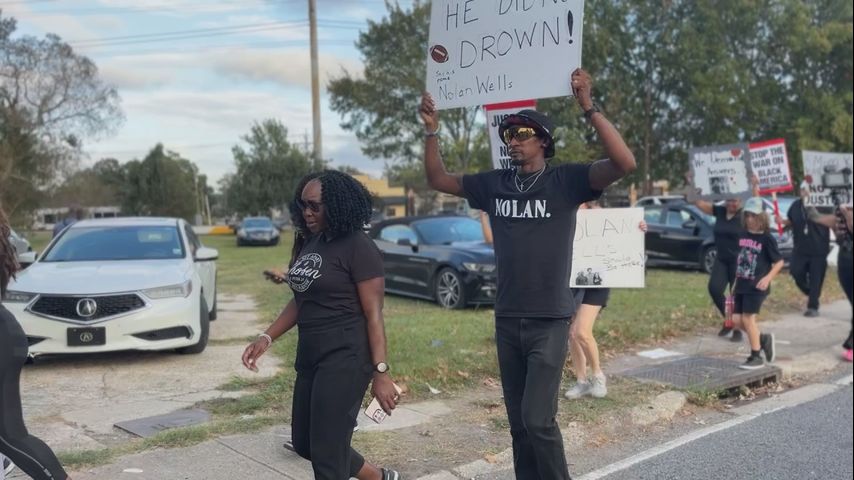
Baton Rouge community joins nationwide movement in march for Nolan Wells – WBRZ
Baton Rouge Joins Nationwide Movement Over Nolan Wells Death Community leaders across more than a dozen states hosted...

Defiance Yellow Jackets at Northern Kentucky Norse Womens Basketball tickets – 11/02/2026
Tip-Off at Truist Arena Opens a New Chapter for Norse Basketball Northern Kentucky Norse women’s basketball takes to...