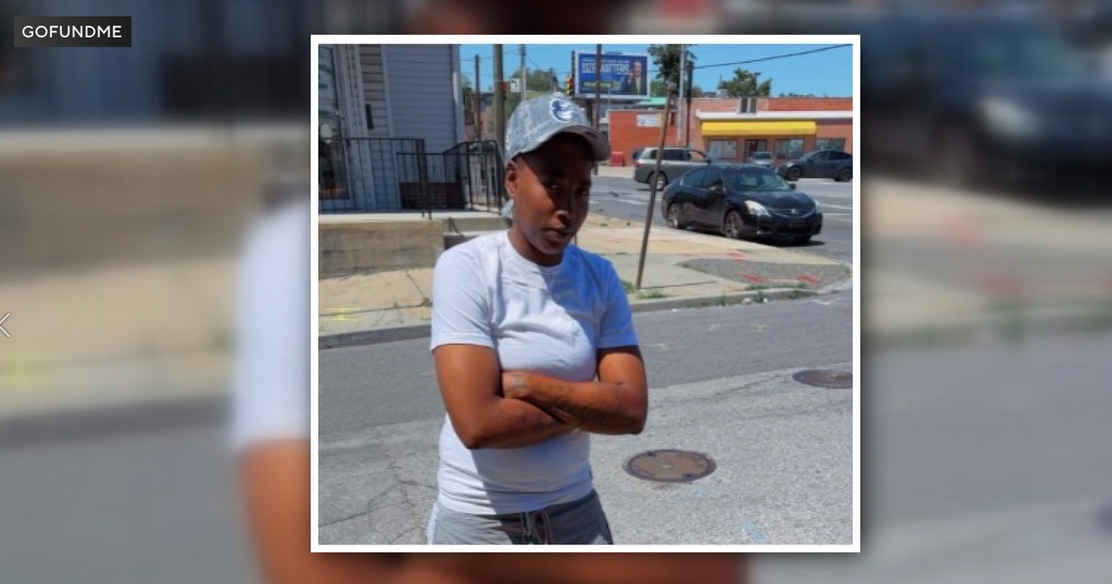
Forty-six rounds of ammunition were fired into a crowd at a West Baltimore gas station on the night of October 18, 2026, leaving two people dead and five others injured. Among the fatalities was Layla Bailey, a 34-year-old Department of Public Works (DPW) employee who was not a target of the violence but was caught in the crossfire while running a simple errand, CBS News reported.
The shooting occurred just before 10:30 p.m. at a BP station in the 2800 block of Edmondson Avenue, near North Franklintown Road in Edmondson Village. While the violence claimed the life of 20-year-old DaShawn McCoy and Bailey, the scale of the attack—characterized by the use of high-powered weapons by as many as three gunmen—highlights a situation where rounds are fired indiscriminately, resulting in innocent victims.
A city worker caught in the crossfire
Layla Bailey had spent more than four years working in the water division of the city’s Department of Public Works. On the night she was killed, she wasn’t on the clock. According to Clarence Thomas, the vice president of her union, AFSCME Local 44, Bailey had finished her workday and was using her time off to pick up a few items from the store before heading home to prepare for the next morning’s shift.
“She was minding her business,” Thomas said. “She decided to run to the store to get a few things to go back in the house to get ready for work the next day, and unfortunately, that was the last time for her.”
The human cost of the event extends beyond the immediate loss of life. Bailey’s wife described her in an online fundraiser as an “innocent soul” and a hardworking woman who had overcome significant life challenges. In response to the tragedy, Bailey’s colleagues are organizing to support her surviving son, with union members pledging to “adopt him for Christmas” to ensure he is cared for during the holiday season.
The anatomy of indiscriminate violence
Baltimore Police Commissioner Richard Worley explained that when high-powered weapons are fired indiscriminately at groups, shooters often lose track of who is actually in the line of fire.
For the residents of Edmondson Village, the gas station is a routine stop; for Bailey, it was a momentary detour that ended in a fatal encounter with a conflict that had nothing to do with her.
Baltimore’s 2026 violence metrics
As of late October, the city is grappling with a complex statistical trend. While total homicides have seen a slight decrease compared to the previous year, the number of people shot—including those who survive—has ticked upward. This suggests that while lethal outcomes may be dipping slightly, the frequency of shooting incidents remains stubbornly high.
| Metric (as of Oct 2026) | 2026 Figures | 2025 Figures | Change |
|---|---|---|---|
| Homicide Victims | 102 | 108 | -6% |
| Non-fatal Shootings | 259 | 254 | +2% |
The disparity between these numbers reveals a grim reality: more people are being shot in Baltimore, even if a slightly smaller percentage of those shootings are resulting in death. For the community, a 6% drop in homicides offers little comfort when the risk of being “caught in the crossfire” remains a daily calculation.
The silence of the investigation
Ten days after the shooting, the investigation has hit a wall. As of Wednesday afternoon, October 28, the Baltimore Police Department reported that no arrests have been made and no updates are available. No motive has been released, and the three suspected gunmen remain at large.
City leadership, including Mayor Brandon Scott, City Council President Zeke Cohen, and the Mayor’s Office of Neighborhood Safety and Engagement (MONSE), have expressed support for Bailey’s family. However, support and policy are different things.
The tragedy of Layla Bailey is not a story of a targeted hit or a criminal dispute. It is a story of a woman who did everything right—worked a city job, cared for her family, and ran a quick errand—only to be erased by a conflict she didn’t know existed. As Clarence Thomas asked of the violence plaguing the city: “When is it going to end?”

Volt Typhoon Targets US Critical Infrastructure via Silent Train
Chinese government hackers have spent years quietly burrowing into U.S. critical networks using a sophisticated, winding method of...

Sober Living in Hawaii: Guide to Costs, Registration, and Finding a Home
Sober living in Hawaii costs roughly $235 per week—about $1,020 a month—for a shared room, the second-highest modeled...

Wrightsville Beach police say missing 19-year-old has been found – WWAYTV3
Robert Augusta Shirah, the 19-year-old whose disappearance from Wrightsville Beach triggered a widespread search, has been located safe....

Women’s Soccer vs Westminster University on 10/28/2026 – Box Score – Colorado Mesa …
Colorado Mesa and Westminster Clash in Second-Half Battle Both sides immediately shuffled their lineups to inject fresh energy...