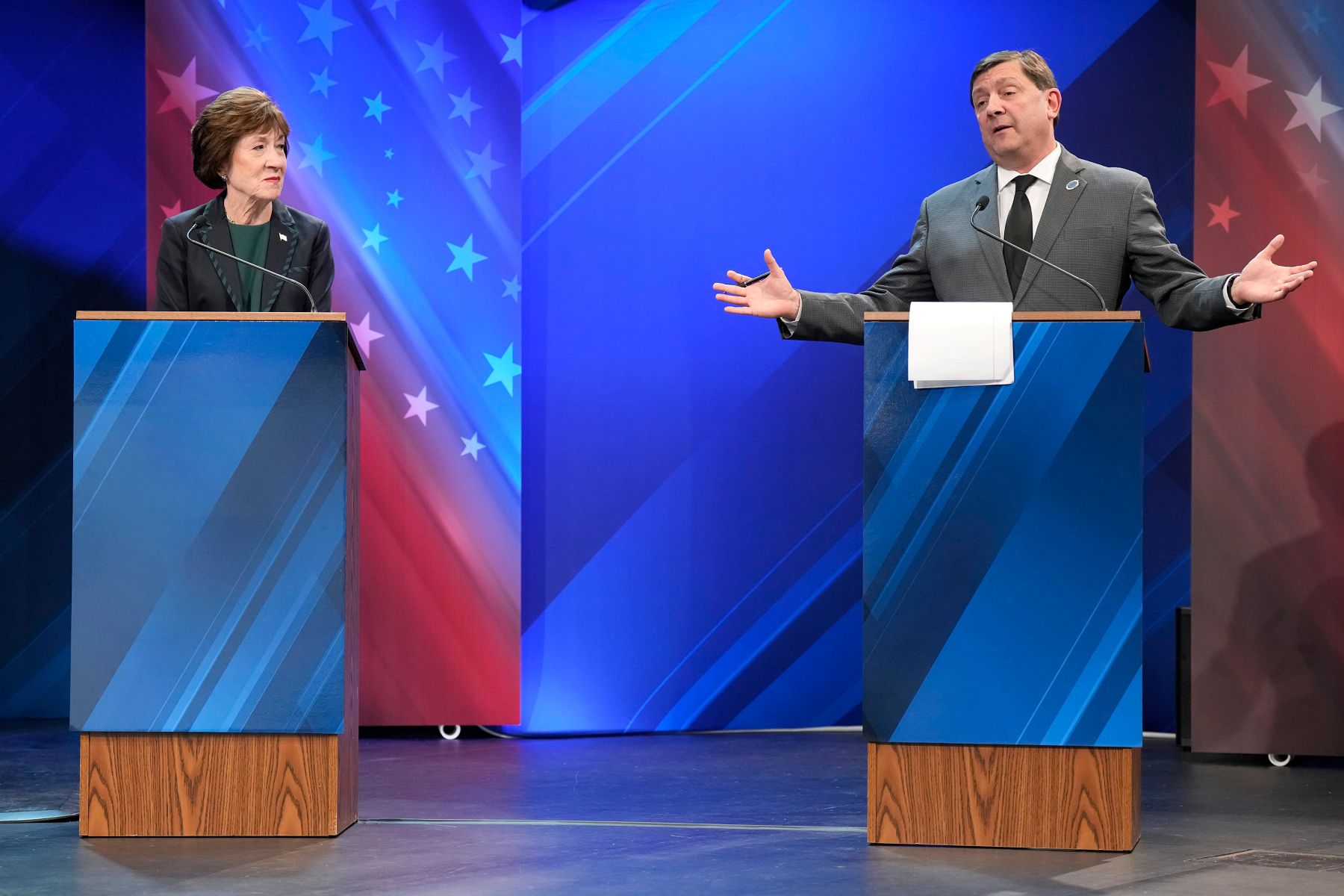
Maine’s Senate race between incumbent Republican Susan Collins and Democrat Troy Jackson has centered on a clash over energy affordability, with candidates trading blame for skyrocketing heating oil costs linked to the Iran War and rising electricity rates tied to state-level solar policies.
For the roughly half of Maine households that rely on heating oil, the stakes are immediate and visceral. The cost of heating fuel has surged over 80 percent compared to last year, pushing the average winter heating bill past $4,000. In a series of four October debates, this financial pressure became the primary battlefield for a race that the New York Times currently rates as a “toss-up,” with Jackson leading by two points in most polls.
Why has the cost of heating oil spiked?
The current crisis is directly tied to the closure of the Strait of Hormuz following the initiation of war between the U.S. and Israel against Iran in February. This geopolitical choke point has sent fuel and gasoline prices soaring across the region. During the debates, Troy Jackson repeatedly linked Susan Collins to this volatility, citing five of her votes against resolutions to bring troops home during the early months of the conflict.
Senator Collins, I think you are a little out of touch. This is about a cord of wood — and about Mainers struggling to afford to heat their homes this winter.I know what it’s like to run out of fuel. I’ve lived that struggle.That’s the experience I’ll take to the U.S. Senate.… pic.twitter.com/RqSV22w7q2
— https://x.com/TroyJackson207/status/2115172621751132517
Collins defended her record by referencing the 1973 War Powers Resolution, which grants the president wide discretion during the first 60 days of an overseas conflict. While she has since voted nine times in favor of ending the war, she shifted some blame toward the executive branch in the third debate, stating that President Trump failed to anticipate the closure of the Strait of Hormuz.
To mitigate the blow to consumers, Collins has pushed for the release of national reserves and the early distribution of financial aid for low-income residents. This is particularly urgent given that Trump’s 2025 budget law eliminated consumer tax credits for heat pumps and electric vehicles—tools that typically provide a cheaper alternative to oil, propane, or kerosene. While Collins took a procedural vote to advance the “One Big Beautiful Bill” that included these credits, she ultimately voted against it.
Are state policies driving up electricity bills?
While Jackson focused on the Iran War, Collins pivoted to “Augusta,” blaming state-level policies for the rise in electric rates. She specifically targeted net energy billing—a program requiring utilities to buy power from community and rooftop solar arrays at guaranteed prices. This program was expanded in 2019 under Jackson’s leadership in the state Senate.
The financial impact of this program is significant but nuanced. An analysis for the state Public Utilities Commission found that net energy billing cost Maine ratepayers $193 million in 2025. However, the actual driver of higher bills is more complex than a single program. Heather Sanborn, Maine’s Public Advocate, noted that net energy billing accounts for only about 14 percent of the increase in electric bills since 2020.
| Cost Driver | Percentage of Bill Increase |
|---|---|
| Electricity Supply Costs | 45% |
| Infrastructure & Storm Repair | 27% |
| Net Energy Billing | 14% |
The lion’s share of the increase stems from supply costs and the physical cost of maintaining poles and wires. Sanborn attributed the supply costs to constrained gas pipelines into New England and geopolitical instability, such as the 2022 Russian invasion of Ukraine. Because natural gas powers roughly half of New England’s electricity, the region is hyper-sensitive to pipeline bottlenecks in neighboring New York and Massachusetts.
How do the candidates plan to lower energy costs?
The two candidates offer fundamentally different blueprints for energy independence. Collins advocates for an “all of the above” approach, which includes increasing U.S. drilling in the Gulf of Mexico, importing more fossil fuels, and implementing federal permitting reforms to expand gas pipelines into New England.
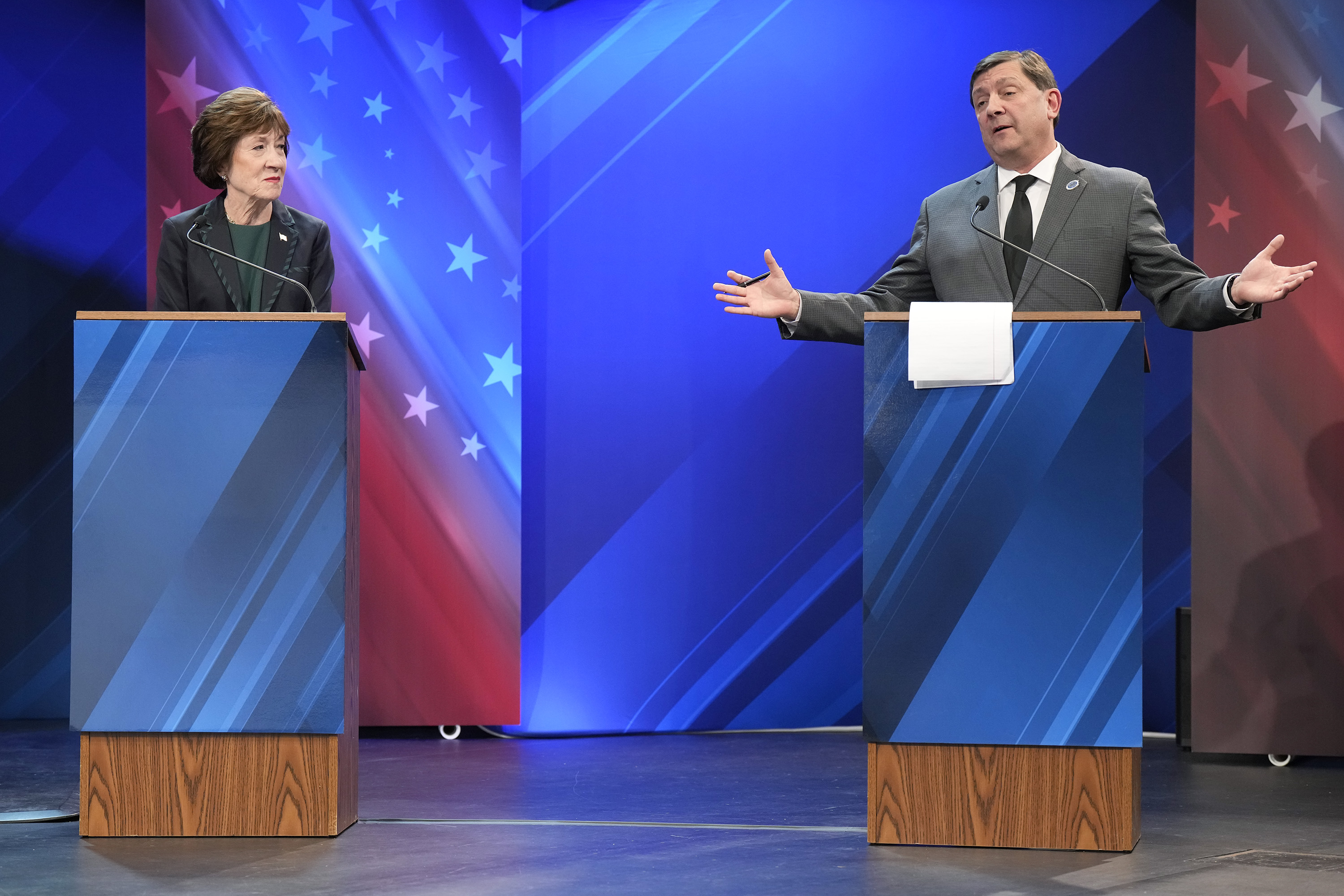
Jackson, conversely, argues that the only way to break the “boom and bust cycle” of fossil fuel prices is through aggressive electrification and large-scale renewable projects. He has specifically championed a major onshore wind project and transmission line in Northern Maine as a path toward lower, more stable costs.
“If we still want to aim for a 2 degrees [Celsius] change in global mean temperature…then we certainly need to start changing our energy sources as soon as possible and moving towards net zero as soon as possible,” says Karen McKinnon, a climate scientist at UCLA.
The tension here is between immediate affordability and long-term climate goals. While Collins argues that expanding drilling is necessary for current price stability, experts like McKinnon suggest that such a strategy is incompatible with the goal of limiting global warming to 2 degrees Celsius.
Will these debates change the election outcome?
Despite the intensity of the exchanges, it is unclear if either candidate has gained a meaningful advantage. Mark Brewer, chair of the Political Science Department at the University of Maine, told The Maine Monitor that there is little indication the debates have moved the needle for voters.
The race remains a statistical tie, with the winner likely determined by which candidate’s narrative resonates more with the average Mainer: the fear of a $4,000 heating bill tied to foreign wars, or the frustration of rising utility rates tied to state bureaucracy. As the election nears, key questions remain unanswered; for instance, Jackson has not clarified if he would support the federal permitting reforms Collins claims are necessary to fix the region’s energy bottlenecks.
More on Senate
Worth a look

Volt Typhoon Targets US Critical Infrastructure via Silent Train
Chinese government hackers have spent years quietly burrowing into U.S. critical networks using a sophisticated, winding method of...

Sober Living in Hawaii: Guide to Costs, Registration, and Finding a Home
Sober living in Hawaii costs roughly $235 per week—about $1,020 a month—for a shared room, the second-highest modeled...

Wrightsville Beach police say missing 19-year-old has been found – WWAYTV3
Robert Augusta Shirah, the 19-year-old whose disappearance from Wrightsville Beach triggered a widespread search, has been located safe....

Women’s Soccer vs Westminster University on 10/28/2026 – Box Score – Colorado Mesa …
Colorado Mesa and Westminster Clash in Second-Half Battle Both sides immediately shuffled their lineups to inject fresh energy...