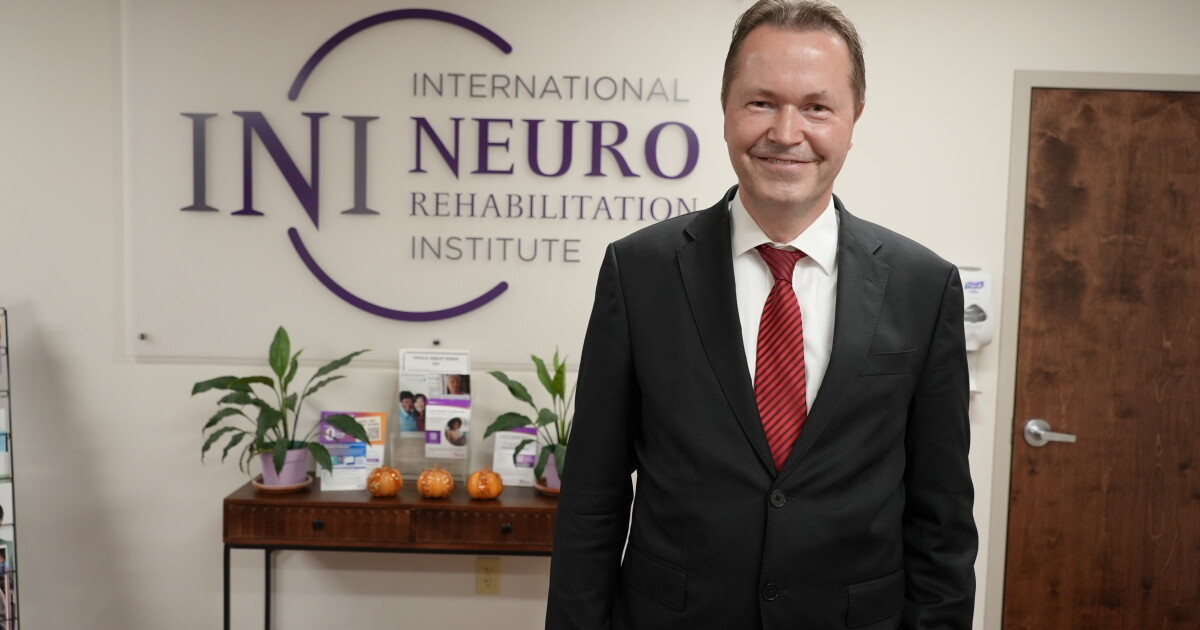
Dr. Daniel Becker, founder and director of the International Neurorehabilitation Institute in Lutherville, Md., said recovery typically plateaus within weeks of injury.
“There’s a small period of time where people get better after an injury, but usually what they don’t get back in the next couple of weeks, that’s it. You’re sort of stuck for the rest of your life,” he told WMAR 2 News Baltimore.
The drug and the scar
NVG-291 targets a protein in scar tissue that blocks nerve regeneration. “Every time you have an injury to the spinal cord, you cause a scar in the spinal cord itself. That drug essentially makes the nerve cells blind, so now they encounter the scar, and they can’t see the blockage; they can grow through this,” Becker said. The self-injected medication is in its third and final clinical phase before potential FDA review. Becker said the first patient was enrolled about six weeks ago.
Eligibility and expansion
WBAL-TV reported the trial seeks participants with traumatic spinal cord injuries — from falls or car crashes — who retain some arm movement and a degree of leg movement. Becker’s office can be reached at 410-828-4629 for screening.
“Now, they can actually grow through a scar and, hopefully, make connections to areas of the spinal cord that were previously not accessible,” Becker told WBAL-TV.
“By doing so, we believe we can potentially give patients function back — anything from walking to feeling to bowel control to bladder control — something that used to be impossible.”
Becker said he hopes the approval process could conclude within the next few years and sees potential applications for multiple sclerosis and stroke.
“I can see it applied to people with multiple sclerosis, maybe with strokes. So ultimately, I think this is gonna open up a door for repair which we never had,” he said.
Keep reading

Farm Credit Organizations Award $383,000 in Rural Community Grants Across Western North Dakota
Farm Credit organizations in western North Dakota announced 19 grants totaling $383,000 on Monday through the Rural Community...
Tallahassee Directory Lists 21 Independent Vets, 9 Corporate Sites
A new directory tracking veterinary ownership in Tallahassee, Florida, identifies 21 verified independent veterinary practices and nine known...

Fayetteville State Broncos Visit Unbeaten Augusta Jaguars in Tuesday Non-Conference Matchup
Fayetteville State will visit unbeaten Augusta on Tuesday in a non‑conference women’s basketball matchup at George A. Christenberry...

Portland Officer Released After Gunfire Exchange With Stolen Vehicle Suspect
Officer and suspect shot during exchange of gunfire Monday at 9:15 a.m. near Northeast 119th Avenue and Halsey...