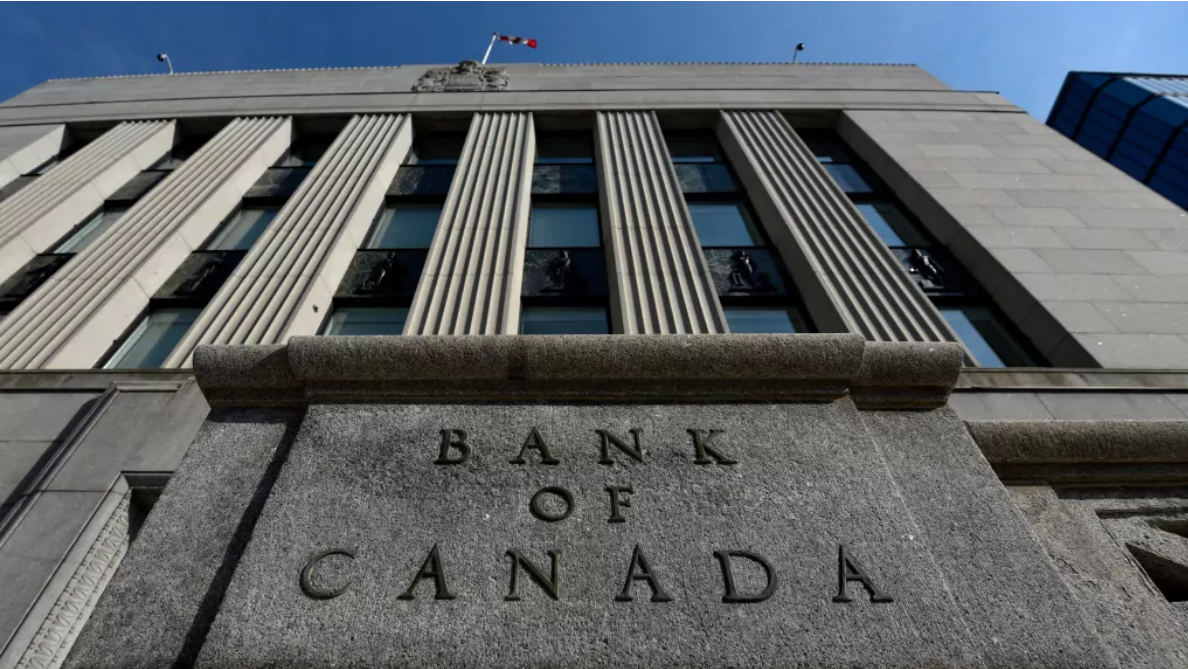
The Bank of Canada ended a prolonged “wait-and-see” approach on Wednesday, October 28, 2026, raising its benchmark interest rate by 25 basis points to 2.50%. This move, the first increase in over three years, aims to curb inflation driven by Middle East conflict and rising energy costs, though it injects fresh volatility into a housing market already struggling with construction cost spikes and regional labor instability, Canadian Mortgage Professional Magazine reported.
The Bottom Line:
The central bank said on Wednesday morning it was raising that trendsetting interest rate by 25 basis points to a level of 2.50%, ending its long wait-and-see approach on the rate question.https://t.co/zVa5MRcPZe
- Policy Shift: The benchmark rate rose 25 basis points to 2.50%, with forecasts suggesting a further move to 2.75% by Q1-2027.
- Inflation Trigger: September inflation ticked up to 3.1%, primarily driven by high gas prices and energy costs.
- Housing Risk: Mortgage arrears in Ontario hit 0.32% in Q2, with CMHC predicting continued rises through mid-2027.
The 25-Basis-Point Canary in the Coal Mine
In the world of central banking, a quarter-point hike is rarely about the immediate cost of a single mortgage payment; it is a signal of intent. The Alpha Metric here is the 25-basis-point shift, which serves as a tactical hedge against “spillover.” By moving now, the Bank of Canada is attempting to prevent elevated energy prices from filtering into broader consumer goods and services.
Reading the raw data from the central bank’s Wednesday morning announcement, the move is a direct response to September’s 3.1% inflation print. The bank is effectively buying time—roughly a few months—to assess if input costs are becoming structural. CIBC economist Andrew Grantham projects a hold in December followed by another move in January, which would land the policy rate at 2.75%, the midpoint of the neutral range.
The move is an admission of past hesitation. Dr. Sherry Cooper, chief economist at Dominion Lending Centres, noted that the bank’s current communications show a desire to “avoid the debacle” of 2022-23, when policymakers were too slow to raise rates.
The Main Street Bridge: Why This Hits the American Pocketbook
More critically, the “subdued” outlook for the Canadian housing market—as described by senior deputy governor Carolyn Rogers—creates a drag on North American economic growth. When borrowing costs rise in a market already facing “prolonged weakness,” as Royal LePage president and CEO Phil Soper puts it, the resulting slowdown in construction and consumer spending can dampen demand for U.S.-made building materials and machinery.
Regional Fractures in the Ontario Corridor
The impact of this hike is not uniform across the map. While some brokers argue a quarter-point move is negligible for current homeowners, the institutional data suggests a more precarious reality in specific hubs. According to Canada Mortgage and Housing Corp. (CMHC), financial pressure is heavily concentrated in the Greater Toronto and Hamilton Area and southwestern Ontario.
Aled ab Iorwerth, deputy chief economist for CMHC, pointed to a dangerous confluence of factors: trade tensions hitting the automotive industry and rising mortgage arrears. Ontario’s arrears rate reached 0.32% in the second quarter. While this is below historical peaks, the trend line is moving upward toward 2027.
“The mortgage system is adjusting, but these early warning signs, particularly in parts of Ontario, need to be monitored closely,” ab Iorwerth stated.
This creates a stark contrast in market sentiment. While Don Kottick of Re/Max Canada suggests that balanced conditions provide “room to negotiate” for buyers, the macro data suggests that for many in Ontario, the “room” is shrinking as labor-market uncertainty meets higher debt servicing costs.
Smart Money Tracker: Institutional Sentiment
The primary question, as posed by Phil Soper of Royal LePage, is whether this is a “one-time adjustment” or the start of a sustained tightening cycle.
The bond market, however, remains skeptical of a massive surge. CIBC’s Andrew Grantham noted that two-year bond yields barely moved following the decision, suggesting that the “smart money” already priced in a modest increase. The prevailing institutional view is that core inflation will not accelerate as much as the Bank of Canada fears, potentially allowing rates to plateau at 2.75% for the remainder of 2027.
With tariffs and trade tensions weighing on manufacturing, the Bank of Canada is raising rates to fight inflation while financial pressure is monitored in parts of Ontario.
The trajectory of the Canadian housing market now depends on whether the 2.50% rate is a ceiling or a floor. If Q1-2027 brings the predicted hike to 2.75%, the “early warning signs” in Ontario may evolve into a broader systemic drag on the national economy.
Disclaimer: The information provided in this article is for educational and market analysis purposes only and does not constitute financial, investment, or legal advice. Always consult with a certified financial professional before making investment decisions.
Related reading

Childhood friends visit Seattle for culinary tour and Sounders match
A rental mansion in East Queen Anne with a balcony overlooking Lake Union served as the base of...
Virginia’s 2nd District: Navy Families and Iran War Shape Key House Race
In Virginia's 2nd Congressional District, the upcoming election has become a proxy for the human and economic toll...

PM General Manager at Cook Out: High Pay with a 4 Day Work Week
Cook Out is seeking a Restaurant PM General Manager, offering a salary between $55,000 and $80,000. The position...

Utah vs. Michigan: Morgan Scalley Thrives While Kyle Whittingham Struggles
In 2026, the contrasting fortunes of Utah and Michigan have sparked a debate over coaching decisions and program...