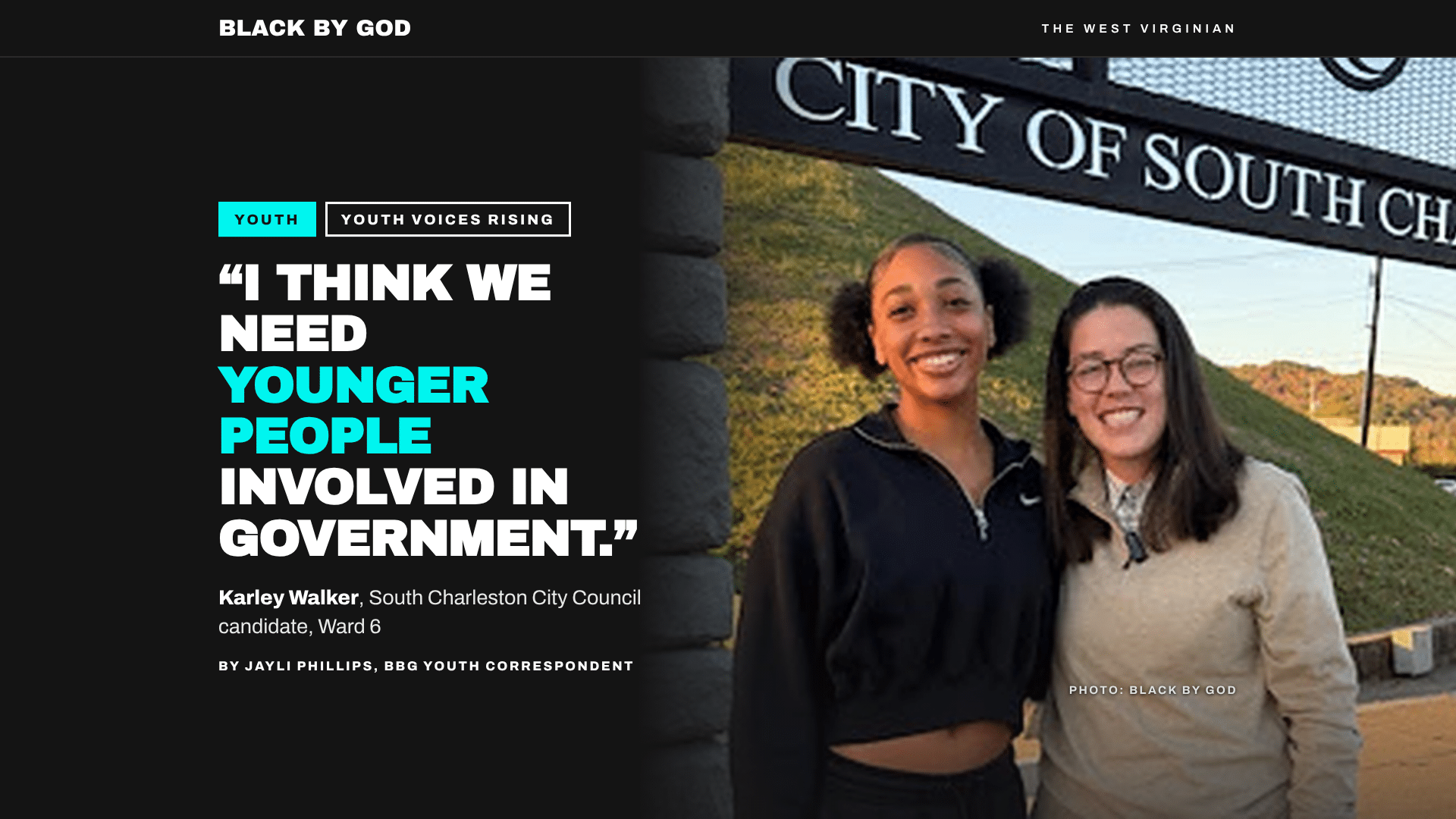
In a recent interview, 23-year-old BBG Youth Correspondent Jayli sat down with Karley Walker, the Democratic candidate for South Charleston City Council’s Ward 6 seat, to discuss her campaign, her connection to the community, and the stakes of the upcoming November 3 general election. Walker, a former girls basketball coach at South Charleston Middle School, is running against Republican incumbent Bob Lilly, a race that has drawn attention for its focus on youth engagement and local governance. The interview, published by Blackbygod.org, offers a rare glimpse into the motivations of a young candidate navigating the complexities of municipal politics.
The Candidate’s Vision: Youth, Community, and Civic Renewal
Walker’s decision to run stems from a belief that “we need younger people involved in government.” She described herself as someone who “says, ‘Don’t talk about it, be about it,’” highlighting a generational shift she sees as critical for South Charleston’s future. Her campaign emphasizes revitalizing community spaces, such as the neglected Glendale pool in her ward, which she envisions transforming into a skate park and outdoor activity hub. “It’s important for our youth to get involved, spend time outside, and stay active,” she said, underscoring a platform rooted in both infrastructure and social engagement.
Walker’s campaign also reflects a legacy of female leadership. Her grandmother was the first woman to run for mayor of South Charleston, and her mother currently serves as the city’s first female City Council president. This familial history, she noted, “pushes me to keep the momentum going.” Yet, she acknowledges the challenges of breaking into a political landscape dominated by older, established figures. “My parents’ generation and the generation before them have done a great job keeping the city running,” she said. “To keep that alive, we need more people my age getting involved.”
The Mechanics of Running: From Primary to General Election
Walker’s path to the general election was straightforward: she was the only Democrat in Ward 6 to file for the primary, securing her spot without opposition. The primary process, she explained, requires candidates to “file to run for office” by a specific deadline and then navigate the voting process. South Charleston residents must be registered voters in their respective wards, and candidates are limited to running in the district where they live. Walker, who has lived in South Charleston for most of her life, sees this rule as a way to ensure local representation.
The upcoming November 3 election marks the culmination of her campaign. Early voting runs through October 31, with Election Day set for November 3. Walker’s opponent, Bob Lilly, the current council member for Ward 6, has not been interviewed for this story. However, the race has drawn attention for its potential to shift the balance of power in a city where local elections often go unnoticed by broader media coverage.
A Community Rooted in Family and Tradition
Walker’s deep ties to South Charleston are evident in her reflections on growing up in the city. “Growing up in South Charleston is like being part of a family,” she said, emphasizing the tight-knit nature of the community. Despite living away for five years—during college and a brief stint in Charlotte—she has remained committed to the city. “I’ve only lived away for about five years,” she noted. “Some of that time was when I was in college, and then I lived in Charlotte for a year after I graduated. Growing up in South Charleston is like being part of a family.”
This sense of belonging informs her campaign. She praised the city’s “top-notch” services but argued that “the same reason I’m running” is the need for more young voices in government. Her vision for South Charleston includes not just infrastructure projects but also a cultural shift toward inclusivity and innovation. “We need to change a little bit,” she said, framing her candidacy as part of a broader movement to modernize local governance.
The GoodParty.org Pledge: A Nonpartisan Path?
Walker’s campaign is also notable for her affiliation with GoodParty.org, a nonpartisan organization that helps candidates run without backing from major political parties. According to the GoodParty.org website, candidates who take their pledge commit to serving “people first, independent of both major parties and big-money interests.” Walker’s profile on the platform highlights her dedication to “nonpartisan, independent” politics, a stance that sets her apart from traditional party-aligned candidates like Lilly.
The GoodParty.org model has gained traction in recent years, particularly in local races where voters often feel disconnected from national political debates. With 13,000+ independents winning with the organization’s support, Walker’s campaign could signal a growing trend toward grassroots, issue-focused politics. However, critics argue that nonpartisan candidates may lack the institutional support needed to effect meaningful change. “There’s a risk of being seen as a outsider,” one local political analyst noted in a separate interview. “But if you can build trust, it can also be a strength.”
The Devil’s Advocate: Skepticism About Youth in Politics
Not everyone is convinced that younger candidates like Walker are the solution to South Charleston’s challenges. Some residents question whether her inexperience could hinder her ability to navigate the complexities of city governance. “Young people bring fresh ideas, but they also need to learn the ropes,” said Mark Thompson, a lifelong South Charleston resident. “I hope Karley can bridge that gap, but I worry about the learning curve.”
Others point to the broader political climate, where local elections often suffer from low voter turnout. “Even if Karley wins, the real test will be whether she can mobilize the community,” said Sarah Lin, a political science professor at West Virginia University. “Local politics is about relationships, not just policy.” These concerns highlight the delicate balance Walker must strike between idealism and pragmatism.
What’s at Stake: The Future of South Charleston’s Youth
For many young residents of South Charleston, Walker’s campaign represents a rare opportunity to see their voices reflected in local government. The city’s middle school girls basketball team, which she coached to an undefeated season and a Kanawha County championship, has become a symbol of community pride. “Our team’s success showed what’s possible when we work together,” Jayli, the interviewer, noted. “Karley’s campaign is an extension of that spirit.”
The election on November 3 will determine whether that vision gains traction. For now, Walker remains focused on her message: “Go vote. Get out and vote. This is a crucial election.” With early voting underway, the outcome could set a precedent for future races in the region, where youth engagement and nonpartisan politics are increasingly seen as pathways to civic renewal.
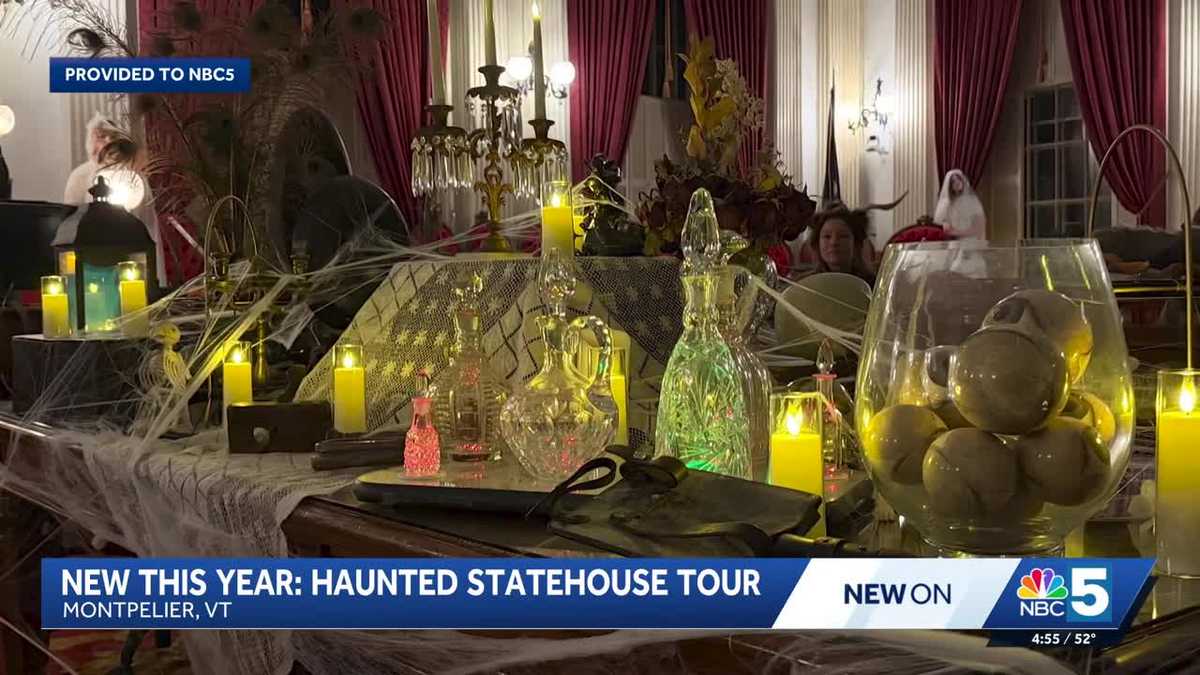
Vermont Statehouse Launches Haunted Ghost Tours in Montpelier
The Vermont Statehouse in Montpelier has launched haunted tours, transforming the historic seat of government into a seasonal...

Utah Jazz analysis highlights Keyonte George and Ace Bailey impact
The Utah Jazz have opened the NBA season with a 1-3 record, a start that has prompted a...

Inmate Escapes Tennessee Prison: Jacob Morley Still At Large
The escape of a convicted murderer from a Tennessee correctional facility this past weekend is the latest failure...

In a recent keynote address at Austin Tech Week, a veteran technology leader argued that Austin’s
In a recent keynote address at Austin Tech Week, a veteran technology leader argued that Austin's ascent as...