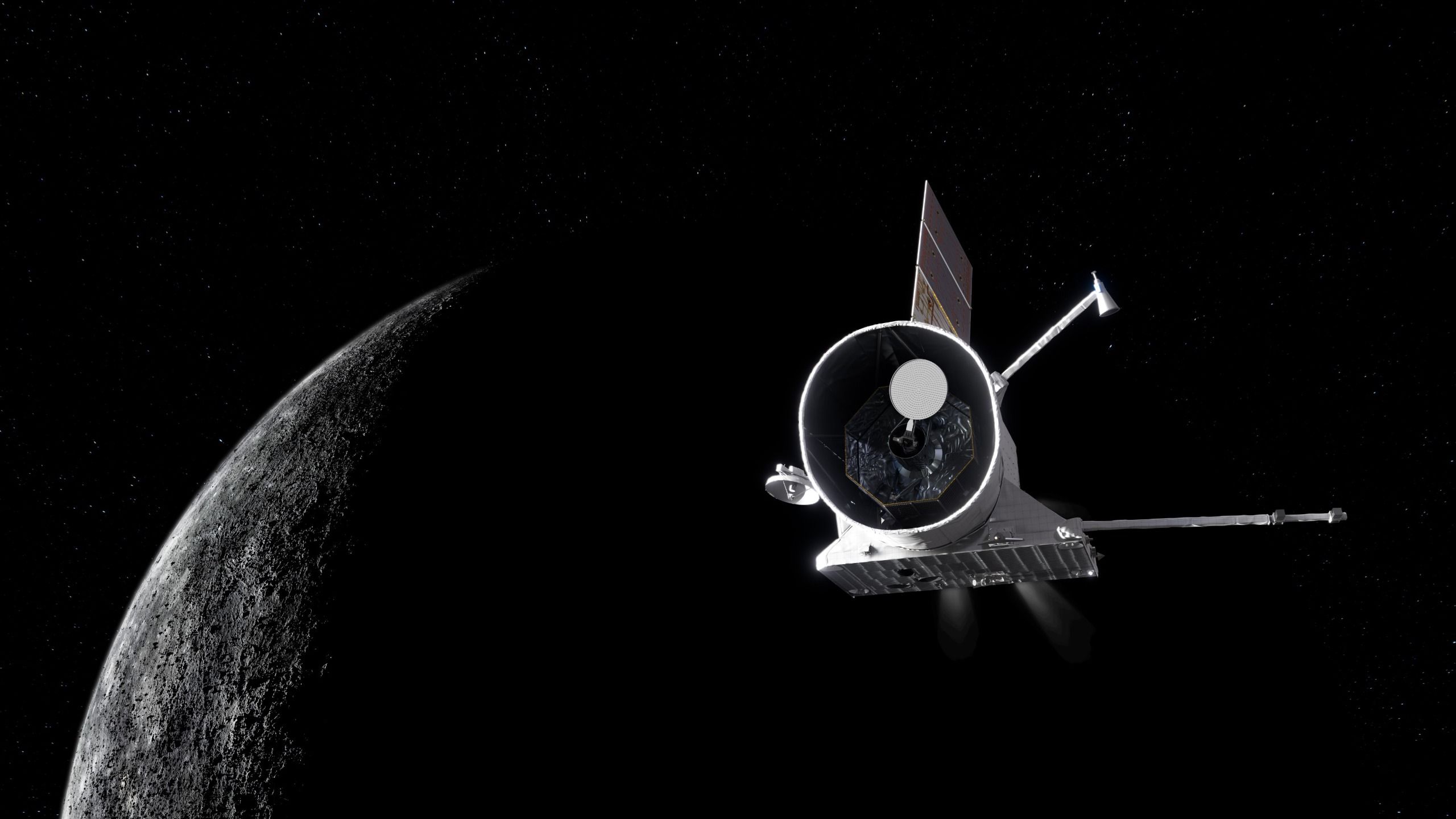
The European-Japanese BepiColombo mission entered orbit around Mercury on Saturday after an eight-year journey, becoming only the second spacecraft to circle the solar system’s innermost planet. The European Space Agency confirmed orbital capture on Saturday evening, posting on X: “We've heard back from Bepi — the spacecraft is now in contact with the ground and the teams at ESOC are busy assessing the telemetry. Flight Dynamics already has confirmed it achieved orbital capture around Mercury!”
Arrival After a Looping 10-Billion-Kilometer Journey
BepiColombo launched on October 20, 2018, aboard an Ariane 5 rocket from Europe’s Spaceport in Kourou, French Guiana.
Rather than flying directly to Mercury, the mission followed a trajectory that included one flyby of Earth, two of Venus and six of Mercury over roughly seven years, using planetary gravity to shed the enormous speed gained falling toward the Sun. ESA’s journey tracker records the total distance traveled at roughly 10.2 billion kilometres (6.35 billion miles).
Yesterday, we confirmed BepiColombo’s successful capture into orbit around Mercury. During the manoeuvre, the thruster burn was shorter than planned due to a software issue. The spacecraft is safe & teams at ESOC are working to understand what happened. Updates provided on…
The flight time was extended by about a year after an issue with the spacecraft’s solar panels reduced power available for the Mercury Transfer Module’s electric thrusters, according to Space.com.
Orbital Insertion Burn Cut Short by Software Issue
Saturday’s orbital insertion relied on a 37-minute engine burn that began at 1:24 p.m. EST (1824 GMT). The mission team later disclosed that the thruster burn was shorter than planned due to a software issue. “The spacecraft is safe & teams at ESOC are working to understand what happened,” the team said via X on Sunday afternoon. Updates were expected Monday.
Today, two new spacecraft are about to orbit Mercury for the first time in a decade! Europe and Japan’s BepiColombo mission has arrived at our innermost planet, to unlock its biggest secrets. Story by me in Scientific Americanhttps://t.co/ebjI1a405X
Confirmation of success did not arrive for several hours after the burn, as the spacecraft was out of contact during the maneuver. The European Space Operations Centre (ESOC) in Darmstadt, Germany, ultimately verified orbital capture.
Two Orbiters Begin Science Phase in April 2027
BepiColombo carries two science orbiters that will eventually separate and operate simultaneously: ESA’s Mercury Planetary Orbiter (MPO) and JAXA’s Mercury Magnetospheric Orbiter, called Mio. The Mercury Transfer Module released both orbiters on September 3, beginning the arrival phase expected to last about six months.
Mysterious Mercury is about to get a visitor – after spacecraft's eight-year epic voyage https://t.co/XDApL2NcZm
MPO will spend the coming months adjusting its path until it reaches its science orbit by March 2027. The main research phase for both spacecraft is scheduled to begin in April 2027. Mio will study Mercury’s magnetic field and the surrounding space environment, while MPO maps the surface and interior. Operating two spacecraft at once will let researchers distinguish changes caused by the planet itself from those driven by the solar wind.
First X-Ray Astronomy From the Cruise Phase
Before orbital insertion, the UK-built Mercury Imaging X-ray Spectrometer (MIXS) aboard MPO captured its first astronomical observations after the transfer module separated, giving the instrument an unobstructed view. Over 39 hours, the spacecraft executed 55 orientation changes to observe the Crab Nebula, roughly 6,500 light-years away. MIXS delivered slightly sharper angular resolution than during pre-launch laboratory tests in 2015, with no detectable radiation damage after eight years in space, according to ScienceDaily.
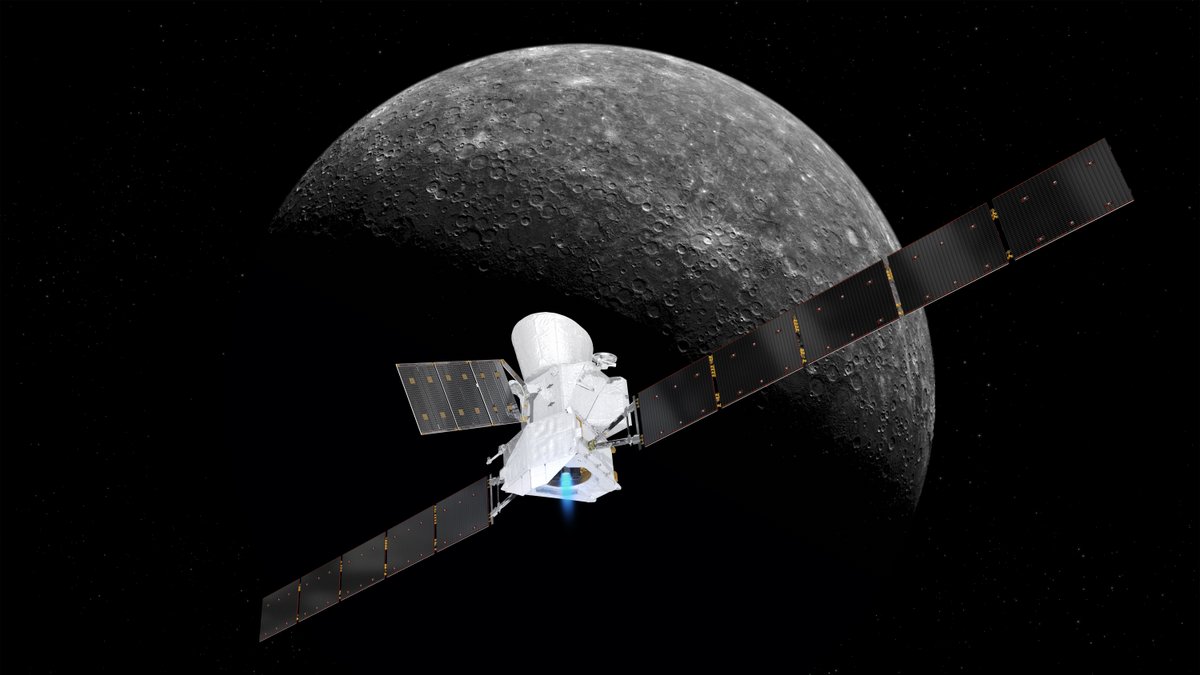
The European Space Agency (ESA) leads the BepiColombo mission in partnership with JAXA, operating the Mercury Planetary Orbiter (MPO) and managing mission control through the European Space Operations Centre (ESOC) in Darmstadt, Germany, which confirmed orbital capture on Saturday. ESA’s Mercury Transfer Module propelled the composite spacecraft across a recorded 10.2 billion kilometres using electric thrusters and nine planetary flybys between the 2018 launch and 2025 arrival.
Beyond Mercury, ESA launches and operates uncrewed missions to the Moon, Mars, Jupiter, Venus, the Sun, and various comets and asteroids, while also running space telescopes, Earth observation satellites, and the Ariane 6 launch vehicle programme from Europe’s Spaceport in Kourou, French Guiana.
Only the Second Orbiter at Mercury
Only two spacecraft have previously visited Mercury: NASA’s Mariner 10, which flew past three times in the 1970s, and Messenger, which became the first to orbit the planet in 2011 before ending its mission in 2015. BepiColombo is named for Italian scientist Giuseppe “Bepi” Colombo, whose calculations enabled Mariner 10’s Mercury flybys.
Reaching a stable orbit around Mercury requires more energy than sending a spacecraft to Pluto, ESA has said, because the Sun’s gravity accelerates approaching craft to speeds that Mercury’s weak gravity cannot easily capture.
We've heard back from Bepi – the spacecraft is now in contact with the ground and the teams at ESOC are busy assessing the telemetry. Flight Dynamics already has confirmed it achieved orbital capture around Mercury! Early next week we'll share the next update with the upcoming…
After an eight-year voyage towards the sun, the BepiColombo spacecraft can finally begin its mission to unpick the many mysteries of our solar system's smallest planet https://t.co/ib65uF3G1E

Type 2 Diabetes Tied to 53% Higher Alzheimer’s Risk, 4.7 Cases Per 1,000 Person-Years
People with type 2 diabetes develop Alzheimer's disease at a rate of roughly 4.7 new cases per 1,000...

Kompas Questions Constitutional Basis for Three Vice Presidents Proposal
Kompas.com has questioned the constitutional reasoning behind a proposal by Regional Representative Council (DPD) Chairman Sultan Baktiar Najamudin...

Polly Hudson’s Husband Didn’t Notice AI-suggested Replies
An iOS update pushed Apple Intelligence onto writer Polly Hudson’s phone, and the suggested replies it generated fooled...
Common Medications Leave Lasting Changes in Gut Microbiome Years After Use
Researchers found lasting microbiome changes linked to antidepressants, beta-blockers, proton pump inhibitors and benzodiazepines. Benzodiazepines showed effects comparable...