
Tennessee Subterranean Authority Member Expresses Doubt Over Boring Company Tunnel
A member of the newly formed Tennessee board tasked with overseeing the construction of Elon Musk’s Nashville tunnel project has admitted he would be hesitant to take the inaugural ride through the underground thoroughfare, citing long-standing flood concerns regarding the Cumberland River. Former state Sen. Bill Ketron of Murfreesboro, serving on the Subterranean Transportation Infrastructure Coordinator Authority, stated on Monday that while he is aware of a recent environmental study detailing potential geological hazards, his primary hesitation centers on water containment.
The 9.5-mile Music City Loop is designed to transport passengers in all-electric Tesla vehicles through a 13-foot-wide tube buried 30 to 60 feet underground, connecting downtown Nashville near the state Capitol to the Nashville International Airport. Republican lawmakers have championed the initiative as a viable method for easing highway congestion across Nashville interstates. Yet, despite touring a completed section of the subterranean route and receiving assurances that local limestone is exceptionally hard—with concrete barriers prefabricated in Nevada—Ketron expressed reservations.
They say that they will, but I don’t think I want to be one of the first ones riding through it.
Ketron’s caution echoes similar questions he raised in 2017 during a failed $1 billion downtown tunnel proposal pushed by then-Mayor Megan Barry, a project that ultimately fizzled after her resignation and the collapse of a broader $5.2 billion transportation plan. At the time, he warned that boring too close to the Cumberland River risked inundating the entire structure.
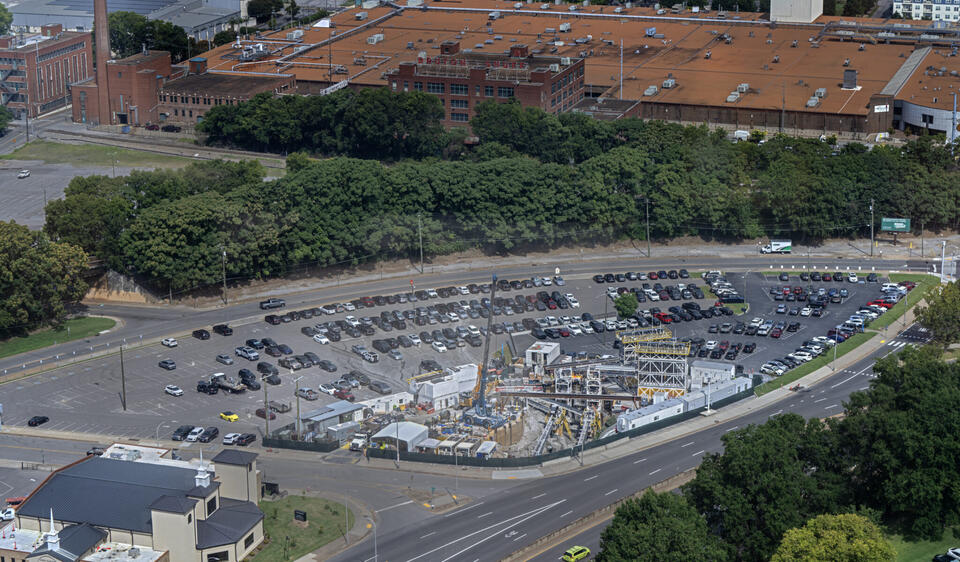
Karst Geology and Environmental Concerns
The current hesitation among some state figures is further fueled by a comprehensive analysis from the Southern Environmental Law Center (SELC). According to the SELC report, the designated route for the Music City Loop must navigate complex layers of bedrock characterized by caves and sinkholes, known scientifically as karst geology. The organization warns that excavation through these formations increases the risk of triggering additional sinkholes, groundwater contamination, and surface settling.
While The Boring Company’s environmental impact assessment asserts that the project will actively avoid tunneling through identified karst development areas, the SELC contends that avoiding these zones is nearly impossible given the route’s path beneath Browns Creek, Mill Creek, and the Cumberland River itself. Furthermore, public records requests have highlighted a “karst mitigation plan” relying on test wells and multichannel analysis of surface waves to detect underground voids. The report also flags potential hazards related to the disturbance of historically contaminated sites, including the former Aladdin Industries property on Murfreesboro Road near the airport.
Political Pushback Over State Oversight
The arrangement has drawn sharp criticism from local lawmakers who argue that the state bypassed municipal decision-making to fast-track the venture. Democratic state Sen. Heidi Campbell of Nashville pointed to independent hydrogeological warnings indicating that construction could drive toxic materials deeper into local aquifers.
Instead of demanding answers, the state handed Elon Musk our public right-of-way, cut Nashville out of the decision and took the company’s own paid-for report at its word.
Campbell argued that local taxpayers ultimately bear the financial risk for any structural failures or sinkholes that emerge along the Murfreesboro Road corridor. In facilitating the project, Tennessee transferred the underground right-of-way directly to The Boring Company, establishing the Subterranean Transportation Infrastructure Coordinator Authority to manage oversight. Bill Lee’s administration defended the land transfer by pointing to the substantial financial investment the company is making on behalf of the state. As planning and construction push forward, a spokesperson for the Tennessee Department of Transportation did not immediately respond to inquiries directed to Commissioner Will Reid.
Kentucky State University Appoints New Student Success Leaders
Kentucky State University has appointed Myiah Clemons and Jasmine Prince to key roles on its Student Success team,...

Find Your Used Chevrolet Tahoe for Sale at Eddy’s Chevrolet in Wichita
Sedgwick County Driving Demands and the Full-Size SUV Solution Wichita families rack up miles fast, whether they are...

No Clear Winner in Pivotal Israeli Election as Netanyahu Faces Tight Race
Israel's High-Stakes Turnout Yields No Clear Winner in Tight Parliamentary Race With a majority of the votes counted...

Indianapolis Trick-or-Treat Hours Set for 6 to 8 p.m
As the countdown to Halloween reaches its final hours, communities across Central Indiana are locking down their schedules,...