
“It’s a game changer,” Michael Alosco, co-director of clinical research at the Boston University CTE Center, told ESPN.
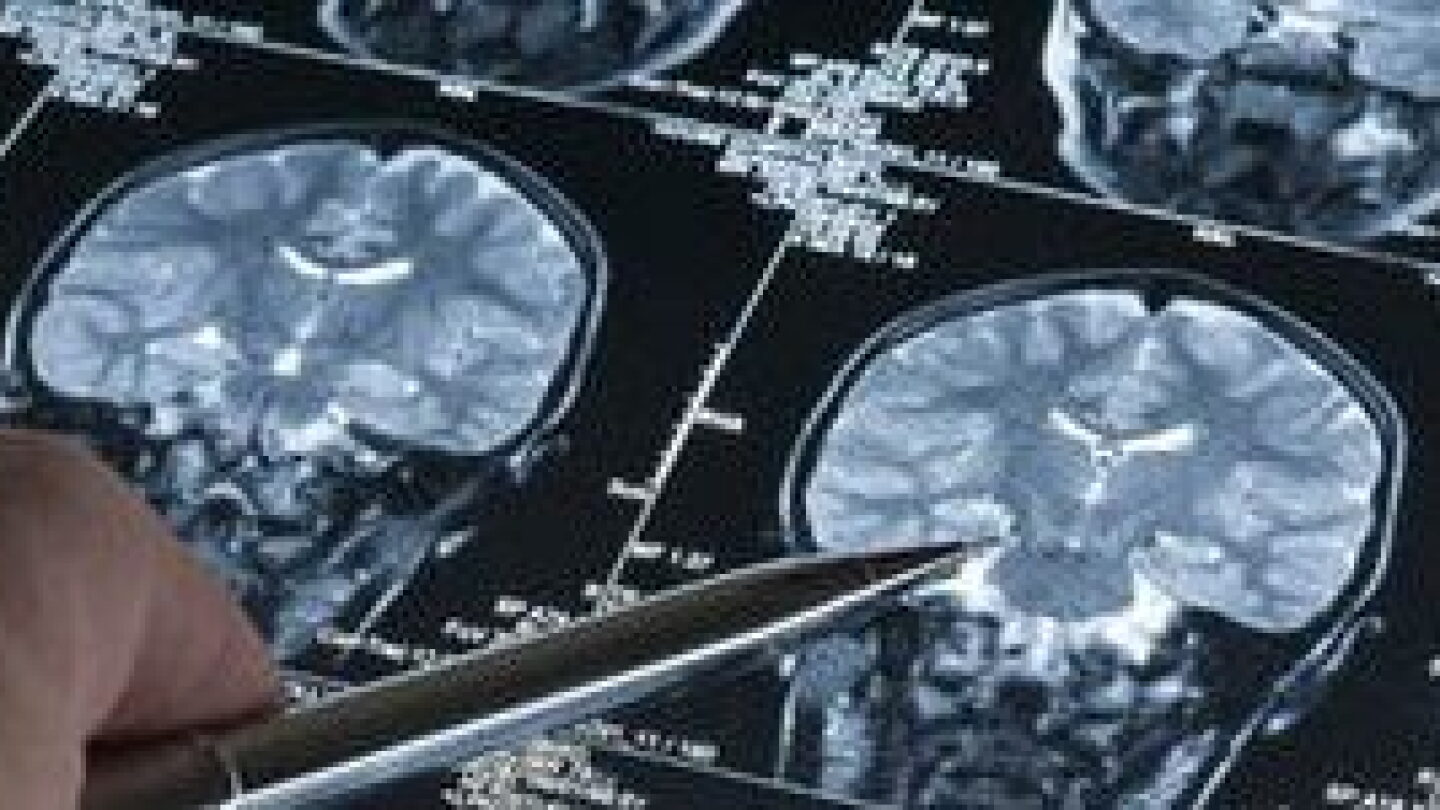
Two studies published Thursday in the Journal of the American Medical Association show that a blood test measuring a specific tau fragment can detect advanced chronic traumatic encephalopathy in living patients, a goal researchers have chased for decades.
The Boston Globe reported that the BU and Banner Health study examined stored blood from 21 former football players — professionals, college athletes, and one high school player — who later donated their brains. Autopsies confirmed CTE in 18 of them, most at advanced stages. The blood biomarker, endogenously cleaved microtubule-binding region tau 243 (eMTBR-tau243), was significantly higher in those with advanced disease than in players with early-stage CTE or no disease.
A separate team at Washington University in St. Louis reached the same conclusion using a different cohort of 11 CTE cases. Both papers were presented at a scientific meeting in Boston before publication.
Biomarker links tau fragment to CTE severity
The test tracks a tau fragment originally developed for Alzheimer’s research. Tau normally stabilizes neurons, but in Alzheimer’s it tangles inside cells. The St. Louis researchers stumbled onto the CTE link when a patient with high biomarker levels turned out to have CTE, not Alzheimer’s, at autopsy. They then tested 11 confirmed CTE cases and found elevated levels that correlated with disease severity.
BU’s larger sample — 16 advanced CTE cases, two early-stage, and three without the disease — showed the same pattern. Five donors who had both CTE and Alzheimer’s registered the highest levels of all. A second Alzheimer’s biomarker, however, did not rise in pure CTE cases, suggesting the two proteins together could distinguish the diseases, Alosco told The Boston Globe.
“What was really quite striking was just the difference,” Alosco said. “The high-stage CTE concentrations were just so much higher than anyone else.”
Small samples, selected donors
Outside experts caution that the work is preliminary. The BU cohort included almost no early-stage CTE and only three donors without the disease.
“The sample size was way too small for us to make any guesses and any estimates as to what the diagnostic thresholds and things like that are,” said Ramon Diaz-Arrastia, a neurology professor at the University of Pennsylvania Perelman School of Medicine, who was not involved in the research, speaking to The Boston Globe.
Derek Monroe, an assistant professor of exercise and sport science at UNC Chapel Hill, told The Boston Globe the donors are not representative of all football players, let alone the broader population. “Before we know how this test performs, it must be studied in a broader group of people: those with and without a history of head impacts, with and without symptoms, followed over time,” he said.
Rudolph Castellani, a neuropathologist at Northwestern University, added that abnormal tau appears in several neurodegenerative diseases that often overlap in older adults. An accompanying JAMA editorial by Günter Höglinger and Carla Palleis of Ludwig Maximilian University of Munich stressed the need for far larger studies, while calling the dual findings “an important step.”
From autopsy to clinical trial
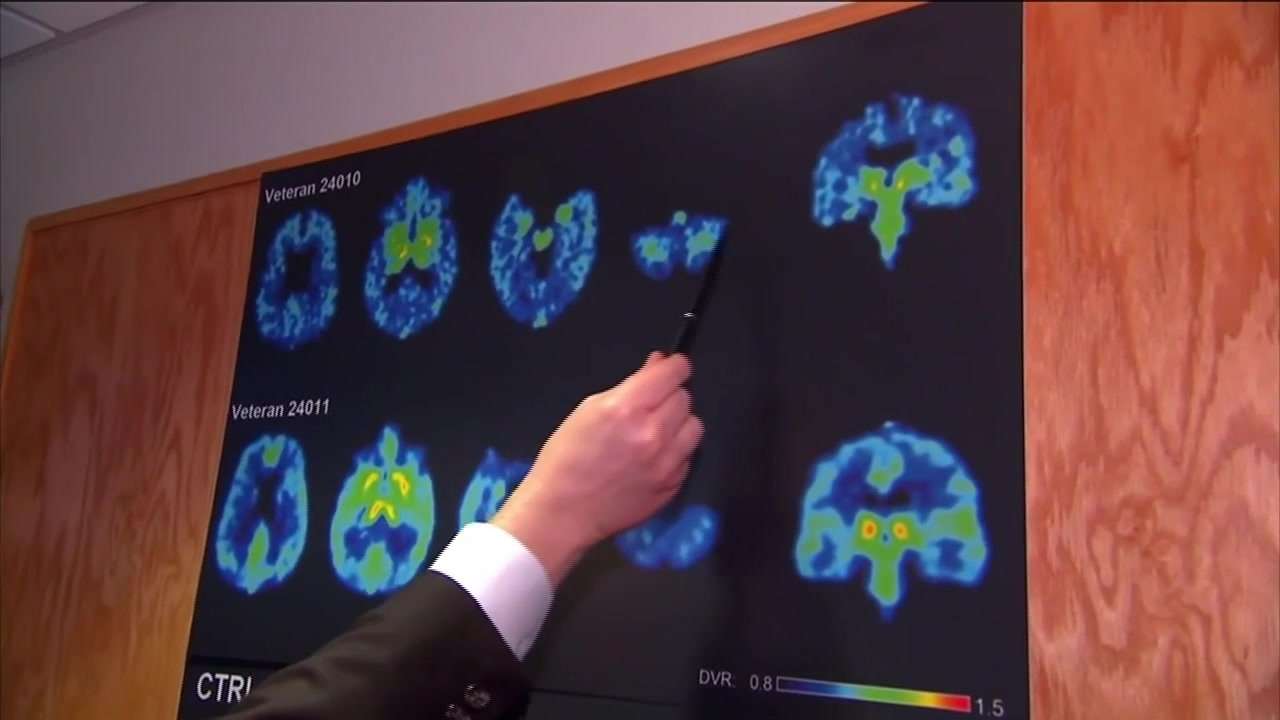
Currently, CTE can only be diagnosed by examining brain tissue after death. That barrier has blocked treatment development — researchers cannot enroll living patients in trials or measure whether a drug works. A validated blood test would change that.
“If future studies validate these findings, this blood test will allow us to detect CTE with a high level of accuracy and open the doors to clinical trials and treatment,” Alosco said in a BU statement quoted by ESPN.
The stakes are visible in the families who donated brains for the research. Richard McElroy, a former Mississippi State lineman who died in January at 74 with stage 4 CTE, was one of the 21 BU donors. His wife, Janice Howard McElroy, told The Boston Globe that his personality shifted in his early 50s — sudden rages, heavy drinking — and she thought it was a midlife crisis.
“He had the most generous, loving heart,” she said. Their daughter, Kristina McElroy, said the family still wishes the test had existed in time to help him, but “it still makes us feel amazing that this can be his legacy. He’s helping other people.”
Players face a new calculus
If a clinical test arrives, active players will confront a painful choice. Minnesota Vikings safety Joshua Metellus told ESPN he probably wouldn’t want to know while still playing: “I think it’ll change the way I play.” Others say they would want the information. Leagues at every level would then have to decide whether a positive result disqualifies an athlete from competition.
Alosco told ESPN he is “cautiously optimistic that we can really understand this finding and move it forward in the next five years or so.” More donors are enrolling in longitudinal studies now, he said, positioning researchers to run the larger validation studies the field demands.
The Boston University CTE Center was formed as part of the university’s Alzheimer’s Disease Center, established in 1996. In 2008, it partnered with the Department of Veterans Affairs and the Concussion Legacy Foundation to create the VA-BU-CLF Brain Bank, the world’s first tissue repository dedicated solely to CTE research. The bank now holds more than 600 brains, including 325 diagnosed with CTE, representing 70 percent of known cases globally.
The two JAMA studies are available at jamanetwork.com.

Julianstown Bypass Plans Divide Village Over M1 Link and Western Routes
"There is huge traffic, bumper to bumper. And when it's not bumper to bumper, it's like a speed...

Resistance Training Cuts Lean Mass Loss With Tirzepatide, Trial Finds
A single randomized trial just upended the prevailing wisdom about muscle loss on GLP-1 drugs — and the...

Cyclone Akvan Makes Landfall Near Gopalpur Friday as Weakened Cyclonic Storm, Third in 24 Days
Cyclone Akvan slammed into the Odisha coast near Gopalpur around 8:30 a.m. Friday, the third cyclone to strike...

MHRA and GSK Publish Data: Needle-Free Strep A Vaccine Shows Promise in Mice
Researchers have spent decades chasing a Strep A vaccine and coming up empty; this month a UK regulator’s...